Crypto & Digital Assets News
Updated 16 November 2026
Digital assets represent the transition of financial value onto programmable ledgers, encompassing cryptocurrencies, stablecoins, and tokenised versions of traditional assets like bank deposits and gold. For financial services professionals, this topic covers the technical and regulatory infrastructure required to issue, custody, and trade these assets within a regulated framework. It sits at the intersection of decentralised finance (DeFi) and traditional finance (TradFi), and increasingly runs on institutional-grade blockchain infrastructure.
This sector matters now because the industry is moving from experimental pilots to live production environments. Banks and payment providers are adopting digital assets to solve long-standing inefficiencies in cross-border payments, where 89% of APAC respondents in a Morph report cited delays as a primary pain point. Regulators in jurisdictions like the UK, UAE, and USA are formalising frameworks, forcing a shift away from offshore models toward federally supervised entities. For investors and fintechs, digital assets offer new revenue streams through tokenised yield and programmable settlement.
Institutional Integration and Stablecoin Adoption
Our recent coverage highlights a significant move toward institutional-grade infrastructure. Alta recently secured $80M to build blockchain systems for regulated institutions, while MidChains partnered with Standard Chartered to bridge digital assets with traditional banking under the UAE's VARA framework. In the US, both Galaxy Digital and Ripple have sought or secured OCC approval for National Trust Bank charters to provide federally regulated custody and trading.
Stablecoins have emerged as a primary growth driver. OpenPayd reported a $107M revenue run rate, with stablecoin orchestration accounting for 30% of that growth. Major players are scaling these services; for instance, DCS DeCard and Visa expanded stablecoin payments to 70 markets, and Coinflow enabled 82 million Samsung Wallet users to convert stablecoins to USD. Meanwhile, tokenisation is entering core banking, with SoFi launching SOFIE, the first national bank-issued tokenised deposit, and Ant International achieving real-time cross-bank liquidity via the HKMA EnsembleTX project.
Regulation and Security Frameworks
Compliance remains the most critical factor for adoption, cited by 96% of respondents in recent APAC research. To address this, TRM Labs launched Beacon Concierge to assist law enforcement in tracing illicit funds, and Episode Six introduced 'Verified Backing' to provide real-time confirmation of asset reserves. As the UK's FCA prepares for a formal regime in 2027, firms like Zumo and SaaScada are launching compliant routes for wealth managers to offer crypto services.
This page tracks the technical deployments, regulatory shifts, and institutional partnerships defining the digital asset economy.
Video interviews
 Money20/20 Vegas 2026: BNY's Carl Slabicki on the Evolution of Instant Payments and Tokenisation 12 November 2026
 Sibos 2026: Swift's Nick Kerigan on the launch of a live blockchain ledger 11 November 2026
 Money20/20 Vegas 2026: Keyrails' Rajpal Khangura on stablecoin-powered B2B payments 4 November 2026
 Sibos 2026: European Central Bank's Mayte Arráez González on the Digital Euro 3 November 2026
 Sibos 2026: BNP Paribas' Bruno Mellado on the future of payment rails and tokenisation 2 November 2026
 Sibos 2026: Citi's Bis Chatterjee on stablecoin partnerships and interoperability 29 October 2026
 Sibos 2026: XDC Network's Atul Khekade on Tokenised Infrastructure and AI 16 October 2026
 Sibos 2026: FIS' Jim Johnson on Orchestrating Intelligence and Digital Assets 15 October 2026
 Sibos 2026: Chainlink Labs' Sergey Nazarov on the convergence of TradFi and DeFi 15 October 2026
 Sibos 2026: Dfns' Jared Klee on Why Banks Can't Run a Fiat Bank and a Digital Assets Bank Side by Side 14 October 2026
 Sibos 2026: Temenos' Mick Fennell on Tokenisation 3.0 and the Rise of "TradTok" Banking 14 October 2026
 Sibos 2026: Banking Circle's Amith Avtar on Stablecoins and Fiat Integration 14 October 2026
Thought leadership
 Seasons Co-Founder Says Web3 Communities Must Move Beyond Marketing to Drive Sustainable Growth 12 November 2026
As the Web3 industry matures, focusing only on protocol development and user adoption is simply not enough for sustainable growth. Long-term participation depends on whether users understand the… Crypto Trades Chaos for Caution: How Stellar’s Meridian Signals a New Institutional Era 30 October 2026
The Stellar Meridian conference in Lisbon signals a shift as the blockchain industry trades chaos for caution to attract institutional Wall Street investors. ZX Squared Capital’s Zheng Called the Last Bitcoin Bottom and This Time, He Says $80,000 Is the Final Window 9 October 2026
ZX Squared Capital’s CK Zheng identifies $80,000 as the final window for Bitcoin investment as institutional adoption prepares to shift the four-year cycle.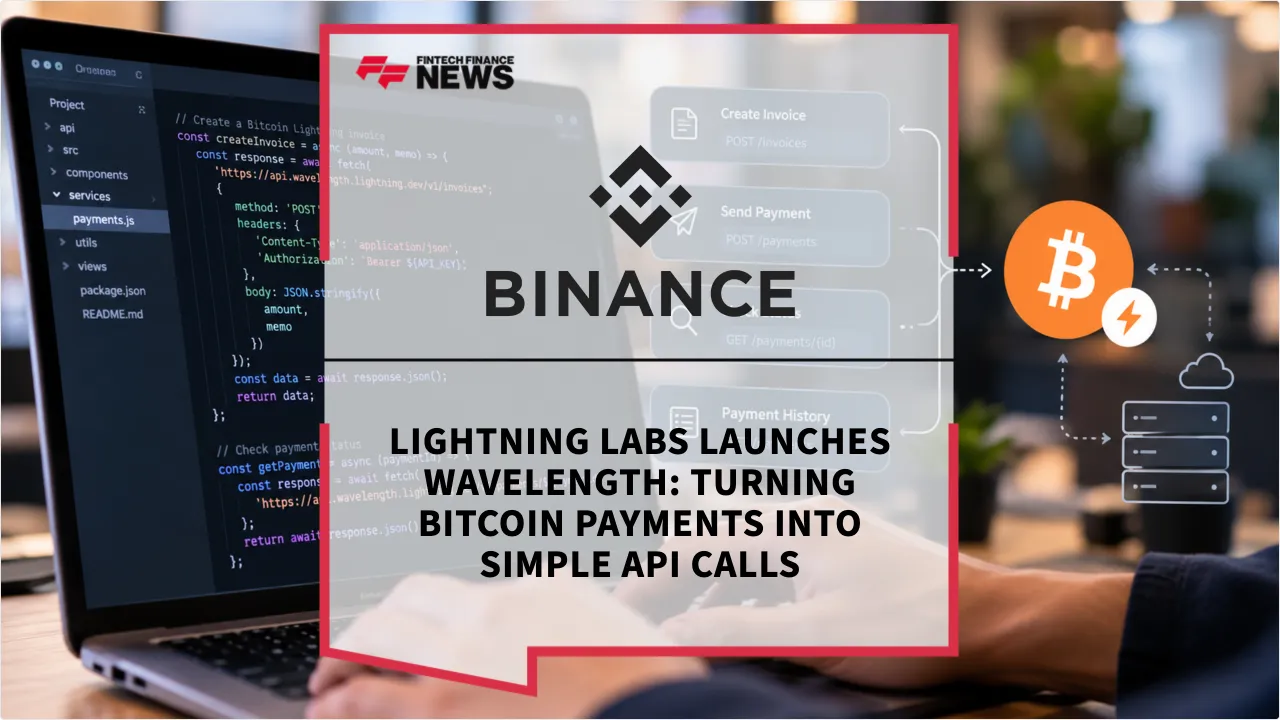 Bitcoin Payments Are Turning Into Ordinary Software Calls 2 October 2026
Lightning Labs launches Wavelength, a toolkit turning Bitcoin payments into simple API calls. Developers can now skip node management and deploy in weeks. Tokenized Treasuries Are Becoming Collateral. That Raises the Stakes. 1 September 2026
Tokenized US Treasuries have reached $16.17 billion in value, shifting from passive yield assets to active institutional collateral. See what this means for DeFi. Beyond Trading: How Binance’s $280 Billion Payments Network Is Redefining the Crypto Exchange Landscape 29 July 2026
Binance Pay surpasses $280B in transaction volume and expands its merchant network to 20M+ points of sale, signaling a major shift in global crypto payments. When a Tokenized Stock Is Not Really a Stock: Understanding Ownership, Rights, and Redemption 22 July 2026
Is your digital token a real share? Explore the legal realities of tokenized stock ownership, from synthetic contracts to 24/7 trading risks in DeFi. Liza Shulman on the Institutional Shift: Turning Blockchain Capabilities into Scalable Partnerships 3 July 2026
Liza Shulman outlines the next phase of blockchain adoption: how institutions like J.P. Morgan and BlackRock are turning tech into scalable business products.
Latest Crypto & Digital Assets news
 TRM Labs Launches Beacon Concierge to Help Law Enforcement Seize Illicit Crypto Funds 13 November 2026
TRM Labs has launched Beacon Concierge, a managed service that allows law enforcement to trace and freeze illicit crypto funds across any blockchain through a unified network of issuers and exchanges. Alta Secures $80M to Build Institutional-Grade Blockchain Infrastructure for Global Finance 13 November 2026
Alta has raised $80M to build institutional-grade blockchain infrastructure that enables instant, compliant, and private global asset movement for regulated financial institutions. MidChains and Standard Chartered Partner to Bridge Digital Assets and Traditional Banking 13 November 2026
MidChains has partnered with Standard Chartered to provide institutional digital asset services, including fiat settlement and segregated accounts, under the UAE's VARA regulatory framework. Coinflow and Bastion Partner to Enable Instant Stablecoin Payouts for Samsung Wallet Users 12 November 2026
Coinflow and Bastion have partnered to enable 82 million Samsung Wallet users in the U.S. to instantly convert stablecoins into USD and transfer them to bank accounts or debit cards. Griffin Secures $20M Series B to Scale Agentic Banking and Stablecoin Infrastructure 12 November 2026
Griffin has raised $20M in Series B funding led by Octagon Partners to expand its UK banking infrastructure into card issuing and stablecoin payment services. SoFi Bank Expands SoFiUSD Stablecoin to Polygon for Faster Digital Dollar Payments 12 November 2026
SoFi Bank has expanded its SoFiUSD stablecoin to the Polygon network, allowing 17 million members to buy, sell, and settle digital dollars directly within the SoFi app via the Polygon Open Money… DCS DeCard and Visa Expand Stablecoin Payments to 70 Global Markets 12 November 2026
DCS DeCard is expanding its stablecoin-linked card issuing to 70+ markets globally via Visa, enabling businesses to use digital assets for corporate spend and consumer payments. Green Dollar Stablecoin Proposes Digital Tax Payment System to Zimbabwe Revenue Authority 11 November 2026
Green Dollar Stablecoin and Africa Investors Hub have proposed allowing taxpayers to settle customs duties and taxes via GDC to the Zimbabwe Revenue Authority (ZIMRA). Maharashtra Minister Ashish Shelar Addresses Unchained Summit India on Digital Innovation and Asset Tokenisation 11 November 2026
Maharashtra Minister Ashish Shelar addressed Unchained Summit India, emphasizing regulatory compliance, consumer safety, and asset quality for expanding real-world asset tokenisation. WasabiCard Launches Local Card Issuing Across 100+ Markets with Stablecoin Settlement 11 November 2026
WasabiCard has launched a local card issuing solution across 100+ markets, enabling businesses to settle card programs in stablecoins while users spend in local currencies. Morph Report: 96% of APAC Respondents Cite Regulatory Compliance as Key to Stablecoin Adoption 11 November 2026
Morph's new report finds that 96% of APAC respondents view regulatory compliance as the top driver for stablecoin adoption, while 89% suffer from traditional cross-border payment delays. OpenPayd Hits $107M Revenue Run Rate as Stablecoin Adoption Surges 10 November 2026
OpenPayd has reached a $107M annualised revenue run rate, fueled by a surge in stablecoin orchestration which now accounts for 30% of the firm's growth. Coinbase Integrates Morpho to Launch Gold-Backed Loans via Tokenized PAXG 10 November 2026
Coinbase has launched gold-backed loans powered by Morpho on Base, enabling users to borrow USDC against tokenized gold (PAXG) directly within the Coinbase app. Bottomline Integrates USDC for Near Real-Time Enterprise Stablecoin Payments 10 November 2026
Bottomline has integrated USDC stablecoin payments into its enterprise platform, enabling businesses to manage digital assets and fiat currency within a single, unified treasury workflow. CryptoFest 2026 Returns to Cape Town as Security, Stablecoins and Institutional Demand Take Centre Stage 9 November 2026
Bitcoin Events announces CryptoFest 2026 in Cape Town, focusing on institutional crypto adoption, stablecoin retail payments, and the regulatory impact of the COFI Bill on the African Web3 ecosystem. Xapo Bank Launches 2% Bitcoin Cashback and 4.6% APY to Drive Passive Crypto Returns 9 November 2026
Xapo Bank has launched 2% Bitcoin cashback on card spending and up to 4.6% APY on USD savings, allowing members to earn passive BTC rewards without selling assets. Emirates NBD’s Liv Integrates First CBUAE-Registered Stablecoin USDU via Aquanow 9 November 2026
Emirates NBD's digital bank Liv has integrated USDU, the first CBUAE-registered USD-backed stablecoin, via a partnership with Universal and Aquanow to offer regulated digital asset access. W Group Unveils Hashbank: A Fully Licensed Digital Bank Bridging Web2 and Web3 Economy 6 November 2026
W Group's hashbank is a fully licensed digital bank bridging Web2 and Web3, allowing 60,000 global users to manage 150+ digital assets and fiat in one app. Arab Bank Switzerland Expands to Abu Dhabi with New Digital Asset Advisory Hub 5 November 2026
Arab Bank Switzerland has launched a new digital asset advisory office in Abu Dhabi's ADGM, appointing industry veteran Valérie Noël as CEO to lead its regional expansion. Ant International Achieves Real-Time Cross-Bank Liquidity via HKMA EnsembleTX Tokenisation 3 November 2026
Ant International has achieved real-time cross-bank liquidity management using tokenised deposits via HKMA’s EnsembleTX, enabling 5-minute interbank settlements and 24/7 automated treasury operations. Wirex Appoints Lord Ranger of Northwood as Board Advisor for UK Digital Asset Expansion 2 November 2026
Wirex has appointed Lord Ranger of Northwood as Board Adviser to Wirex Labs to lead its UK digital asset strategy and navigate upcoming FCA regulations. ECB Selects SIA and Nexi as Network Service Providers for Digital Euro Pilot 2 November 2026
The European Central Bank has selected SIA and Nexi as network service providers to build the connectivity infrastructure for the digital euro pilot, targeting full readiness by 2029. Routable Rebrands to Launch Integrated Stablecoin and Tokenized Deposit Offerings 2 November 2026
Routable will operate under a new brand while rolling out integrated stablecoin and tokenized deposit offerings over the coming quarters. Wirex to Host New Stablecoin Infrastructure Conference, Full Stack London 2 November 2026
Wirex is launching Full Stack London on Nov 12, 2026, a closed-door conference focused on the technical infrastructure and regulatory frameworks required to scale stablecoin payments globally. ECB Selects Nexi and Deutsche Telekom to Power Digital Euro Connectivity 30 October 2026
The European Central Bank has selected Nexi and Deutsche Telekom to provide the 10-year Network Service Provider connectivity infrastructure for the digital euro. LBank Launches Pre-IPO Market with Tokenized Kalshi-Linked Assets 30 October 2026
LBank has launched a Pre-IPO market allowing users to trade tokenized assets linked to private companies, starting with a Kalshi-linked offering backed 1:1 by underlying shares. Binance Crypto Heist: Why Self-Custody is the Only Defense Against Exchange Hacks 30 October 2026
Following the Binance crypto heist, RootstockCollective's Charlie Hayward warns that centralized exchanges are high-value targets and urges a shift to self-custody. Zumo CEO Nick Jones: HTX Exit Signals End of 'Erratic' Offshore Crypto Era 30 October 2026
Zumo CEO Nick Jones states that HTX's exit from the UK marks the end of erratic offshore crypto models as the FCA prepares for a formal regulatory regime in 2027. Galaxy Digital Files for National Trust Bank Charter to Bring Crypto Under Federal Oversight 30 October 2026
Galaxy Digital has applied to the OCC to establish Galaxy National Bank, a national trust bank designed to provide federally regulated crypto custody, trading, and staking services. NH Nonghyup Bank Partners with MoonPay and Finger for Digital Asset Financial Services 30 October 2026
NH Nonghyup Bank has partnered with MoonPay and Finger to develop digital asset-based financial services, including cross-border remittance and corporate payment settlement solutions. Revolut Appoints Nilesh Khatwani as Global Head of Institutional Sales for Crypto Expansion 30 October 2026
Revolut has hired Nilesh Khatwani from Crypto.com as Global Head of Institutional Sales – Crypto, based in Dubai, to lead its international expansion into institutional digital asset services. Ripple and Coinbase Partner to Launch RLUSD Stablecoin Across Major Trading Platforms 30 October 2026
Ripple and Coinbase have partnered to bring the RLUSD stablecoin to Coinbase's retail and institutional platforms, supporting XRPL, Base, and Ethereum networks. ADGM Introduces Region's First Comprehensive Crypto Mining Guidance Framework 28 October 2026
ADGM's Registration Authority has issued the region's first dedicated crypto mining guidance, creating a clear commercial licensing framework for Proof-of-Work and Proof-of-Stake operators in Abu… Ripple Secures OCC Approval for Ripple National Trust Bank to Scale Institutional Digital Assets 28 October 2026
Ripple has received final OCC approval for Ripple National Trust Bank, a federally supervised entity to manage RLUSD stablecoin reserves and provide institutional digital asset custody. Money20/20 USA 2026: AI Agents and Stablecoins Take Center Stage in Las Vegas 26 October 2026
Money20/20 USA 2026 concluded with a focus on AI agents and stablecoins, featuring major partnerships from Visa, Mastercard, and Coinbase to scale digital asset infrastructure. SoFi Launches SOFIE: The First National Bank-Issued Tokenized Deposit for Consumers 22 October 2026
SoFi has launched SoFi Earn (SOFIE), the first national bank-issued tokenized deposit for consumers, offering 4.40% APY with FDIC insurance and 24/7 blockchain liquidity. Two in Five Americans Likely to Switch Banks for Crypto Services, NCA Research Reveals 20 October 2026
The National Cryptocurrency Association reports that 42% of Americans are likely to switch to banks offering crypto services, highlighting a massive communication gap in the industry. American Fintech Council Urges Treasury for Clear Stablecoin Framework Under GENIUS Act 20 October 2026
The American Fintech Council (AFC) has urged the U.S. Treasury to establish a clear stablecoin framework under the GENIUS Act to protect consumers and support cross-border payment innovation. Euronet and Fireblocks Partner to Launch Stablecoin-Backed Card Issuing for Banks and Fintechs 20 October 2026
Euronet and Fireblocks have launched a white-label stablecoin-backed card issuing solution, allowing banks and fintechs to offer digital asset spending at any merchant network. Blockchain for Good Alliance and UNDP Launch Two-Year Cybersecurity Initiative for Global Development 19 October 2026
The Blockchain for Good Alliance and UNDP have launched a two-year programme to strengthen blockchain cybersecurity and digital safety for public institutions and development projects.
Companies in Crypto & Digital Assets
- Financial Conduct Authority 23 stories
- Coinbase 11 stories
- Mastercard 9 stories
- Ripple 9 stories
- Visa 9 stories
- Ethereum 8 stories
- HSBC 8 stories
- MoonPay 8 stories
- Swift 8 stories
- Bitget 7 stories
- Solana 7 stories
- Standard Chartered 7 stories
Frequently asked questions
What are the primary use cases for digital assets in banking?
Banks use digital assets primarily for instant settlement, cross-border payments, and liquidity management. Recent developments include Ant International using tokenised deposits for 24/7 automated treasury operations and SoFi launching tokenised deposits (SOFIE) to offer consumers blockchain liquidity with FDIC insurance. These assets allow institutions to move value without the delays associated with traditional correspondent banking networks.
How are stablecoins being integrated into retail payment networks?
Integration occurs through partnerships between crypto issuers and established payment rails. For example, Coinflow and Bastion enable Samsung Wallet users to convert stablecoins to USD for bank transfers. Additionally, Euronet and Fireblocks have launched white-label stablecoin-backed cards, while WasabiCard allows businesses to settle card programmes in stablecoins while users spend local currency at any merchant accepting major card brands.
Who are the leading providers of digital asset infrastructure?
The market includes specialised technology firms and established financial players. Key infrastructure providers mentioned in our coverage include Fireblocks for card issuing, TRM Labs for forensic tracing, and Alta for institutional blockchain systems. In the banking sector, Griffin and Cross River Bank provide the core infrastructure for fintechs to integrate stablecoins like USDC and RLUSD into traditional treasury workflows.
What are the main regulatory challenges for digital asset firms?
The primary challenge is navigating the transition from offshore models to formal domestic regulation. In the UK, the FCA is preparing a formal regime for 2027, leading firms like Wirex to appoint specialist advisors. In the US, companies like Galaxy Digital are seeking National Trust Bank charters to ensure federal oversight. Compliance is the top priority for 96% of APAC industry participants according to Morph.
How is tokenisation being applied to real-world assets?
Tokenisation is being applied to assets like gold and private company shares to increase liquidity. Coinbase recently integrated Morpho to allow users to borrow USDC against tokenised gold (PAXG). Similarly, LBank launched a pre-IPO market using tokenised assets linked to private companies like Kalshi. These developments allow for fractional ownership and 24/7 trading of assets that were previously restricted to traditional market hours.