Bitcoin Payments Are Turning Into Ordinary Software Calls
By Lauren Towner · 2 October 2026
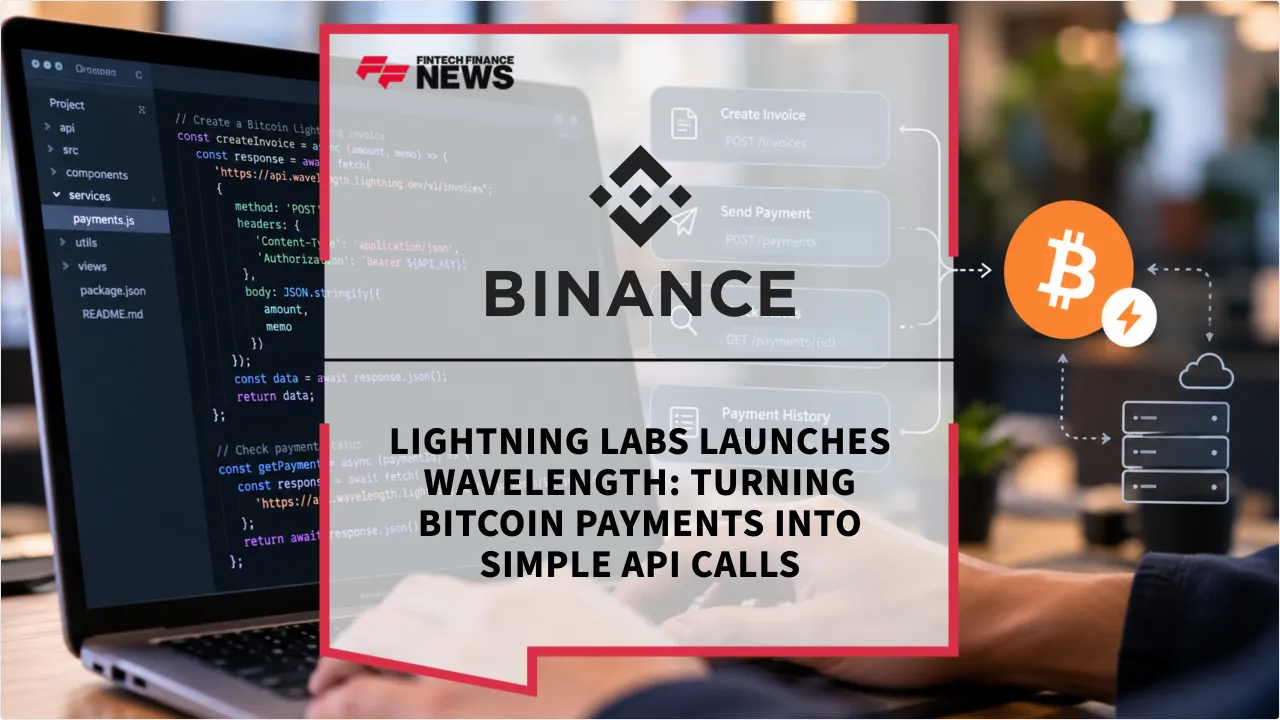
Developers no longer need to run a Lightning node to accept it.
Most people who check the bitcoin price look at a number on a screen. The consumer view of Bitcoin is a ticker, a chart, a headline. Fintech developers deal with something else entirely, turning a payment network into functions their software can call.
This change is more consequential than any price swing. Building a payment product used to mean managing nodes, channels, and routing by hand. Increasingly, it means calling an API and then specialized infrastructure handles the rest.
The Problem With Raw Bitcoin Integration
The Bitcoin and Lightning networks aren’t turnkey checkout systems. A fintech application still needs software that connects raw network activity to familiar concepts. Product teams already understand invoices, balances, payment status, and transaction history. Without that translation layer, every team ends up solving the same problem twice.
APIs Turn Network Operations Into Calls
Lightning Labs' LND stack already shows what this translation looks like in practice. It exposes REST and gRPC interfaces to create invoices, list them, retrieve payments, and decode payment requests. The LND API reference documents those operations, and they read like an ordinary backend service. Nothing about the interface feels like blockchain architecture anymore.
That has real consequences for the people funding a roadmap. A payment team can quote a timeline in weeks, not quarters. They call documented endpoints instead of reverse-engineering peer-to-peer messages.
This is what abstractions look like in code. A developer sends a request, and the payment API creates an invoice. A customer pays it, and the infrastructure process runs underneath. The application receives a status update that it can log, display, or act on.
Wavelength Cuts Bitcoin to a Few Commands
Lightning Labs pushes that idea further with Wavelength, an alpha toolkit released on July 21, 2026. The company designed it to add self-custodial Bitcoin payments to an app without running nodes or managing liquidity. Its interface reduces the core workflow to a handful of commands, including create, balance, recv, send, and activity.
Those five commands cover the entire life cycle of moving Bitcoin. Spin up a wallet, check the balance, and generate something a customer can pay. Send funds elsewhere, then pull the payment history.
A developer can wire that into a REST client or embed the SDK directly. It can also reach an AI agent through tool calls. It’s the same underlying capability with three entry points.
Payments still travel as BOLT 11 invoices, Lightning’s standard format. The application does not need to assemble routing details from scratch. The invoice packages everything the payment needs, as detailed in the Wavelength launch post.
Wavelength is still in the early stages, open on Signet and testnet, with mainnet access available by invitation only. Nobody should treat it as a finished, universally available payment rail yet. It’s the clearest current example of where this category is heading.
Payment Status Becomes a Data Problem
Sending money isn’t a single yes-or-no function. Lightning Labs’ SendPaymentV2 API streams updates as payment moves, including status, fees, and failure reasons. A fintech app needs that texture. A payment can succeed, fail, or sit in between, and the interface has to say which.
This mirrors a separation financial software relies on elsewhere. The interface, the business logic, and the underlying rails stay distinct. Bitcoin infrastructure exposed through APIs lets a product evolve its front end without every layer needing to understand Lightning routing.
History works the same way. LND’s list payments call returns outgoing records, and Wavelength’s activity command normalizes that into a usable payment history. Infrastructure only becomes useful once you can pull transactions programmatically, not just watch them on a block explorer.
Winson Liu, global lead of Binance Wallet, made a related point in January 2026, when the wallet added AI-powered features. “Information overload is one of the biggest challenges in today’s fast-moving crypto markets,” he said. The same logic applies to payment infrastructure, with fewer raw details and more usable structure.
The Liquidity Still Sits Below the Interface
Routing, or liquidity, doesn’t disappear. Someone still needs inbound capacity and working channels for Lightning payments to move. Lightning Labs’ Loop tools address that by covering channel liquidity and fallback paths when a direct route comes up short. The API doesn’t eliminate that complexity; it just moves it below the application layer.
Wavelength also extends into AI territory by exposing its functions to agents through Model Context Protocol calls. The interesting part isn’t machines paying machines. It’s that the same API can serve human-facing apps and automated ones without a separate integration path.
A Familiar Pattern in Financial Software
Cards, banking rails, and foreign exchange (Forex) all went through the same transition. Developers no longer needed to understand settlement networks once APIs packaged that complexity into callable services. Bitcoin payment infrastructure is following the same arc.
Identity checks, Forex, and lending decisions have all migrated behind similar interfaces over the past decade. Each move turned an entire category of infrastructure into a service call instead of an in-house project. Bitcoin is simply the latest financial rail making that same move.
Nobody creates a modern fintech app by writing card network software from scratch. The same standard is arriving for Bitcoin. Success isn’t measured by developers mastering Lightning routing in depth. It’s an API dependable enough that most of them never have to.