Payments News
Updated 16 November 2026
The payments landscape is the foundational layer of the global financial system, comprising the mechanisms through which value is exchanged between consumers, businesses, and governments. For the financial services professional, this sector represents a complex intersection of legacy clearing houses, card schemes, and emerging distributed ledger technologies. It is no longer merely a back-office function but a primary driver of customer experience and institutional liquidity management.
The Shift Toward Instant and Intelligent Settlement
The urgency for modernisation is driven by several factors: the demand for 24/7 availability, the need to reduce cross-border friction, and the rise of agentic AI in transaction initiation. As domestic real-time rails become the global standard, the focus has shifted to the 'last mile' of payments. Research from GoCardless and Aryza recently highlighted the stakes for lenders, noting a 24% surge in UK late payments, a trend that necessitates more efficient collection and settlement tools. Furthermore, regulators and industry bodies, such as The Payments Association, are increasingly advocating for payments to be classified as critical national infrastructure to ensure long-term security and economic growth.
Innovation in Rails and Digital Assets
Recent developments tracked by our editorial team show a dual focus on upgrading traditional infrastructure and integrating stablecoins into mainstream workflows. Swift has reported that 50% of global payments now reach recipient banks within 40 seconds, meeting G20 speed targets, though domestic frictions remain a challenge. In North America, Payments Canada has launched its Real-Time Rail (RTR) to enable 24/7 instant settlement.
Simultaneously, the use of digital dollars is expanding. SoFi Bank has extended its SoFiUSD stablecoin to the Polygon network, while Bottomline has integrated USDC into its enterprise platform for near real-time treasury management. Card issuing is also evolving; WasabiCard and a partnership between Euronet and Fireblocks have introduced solutions that allow businesses to settle card programmes in stablecoins. On the consumer side, Starling Bank has debuted 'Talk to Transact,' using agentic AI to allow voice-prompted payments, while InDebted has deployed AI voice agents to improve collections success.
This page tracks the technical upgrades, regulatory shifts, and product launches defining the next generation of global value transfer.
Video interviews
 Orchestrating the Future of Global Payment Rails 12 November 2026
 Money20/20 Vegas 2026: BNY's Carl Slabicki on the Evolution of Instant Payments and Tokenisation 12 November 2026
 Closing the Weekend Gap in Global Payments 12 November 2026
 Sibos 2026: Crédit Agricole Payment Services' Etienne Bernard on Agentic AI and Partnerships 9 November 2026
 Sibos 2026: Federal Reserve Financial Services' Amy Burr on cross-border payments 5 November 2026
 Money20/20 Vegas 2026: IDEMIA Secure Transactions' Anne Markle on phygital payments 5 November 2026
 Money20/20 Vegas 2026: Keyrails' Rajpal Khangura on stablecoin-powered B2B payments 4 November 2026
 Money20/20 Vegas 2026: Payroc's Conn Byrne on AI-Native Payments 4 November 2026
 Money20/20 Vegas 2026: Velocity's Eric Queathem on Upgrading Payment Infrastructure 4 November 2026
 Sibos 2026: BNP Paribas' Bruno Mellado on the future of payment rails and tokenisation 2 November 2026
 Sibos 2026: Bank of America's AJ McCray on making cross-border payments feel local 2 November 2026
 Money20/20 Vegas 2026: NMI's Steven Pinado on the Evolution of Embedded Payments 30 October 2026
Thought leadership
 EXCLUSIVE: "Out of the Lab!" - Lewis Lei Sun, HSBC in 'The Paytech Magazine' 13 November 2026
HSBC's Lewis Lei Sun reveals the bank's roadmap for digital currency, including tokenised deposits in 6 markets and a new Hong Kong dollar stablecoin launch. EXCLUSIVE: "Making The Global Local" - AJ McCray, Bank of America in 'The Paytech Magazine' 12 November 2026
Bank of America is set to revolutionize cross-border payments by Q4 2026, using CashPro and AI to make global transfers feel like local transactions. EXCLUSIVE: "What We Build and What We Buy" - Biswarup Chatterjee, Citi Services in 'The Paytech Magazine' 9 November 2026
Citi's Biswarup Chatterjee explains the 'BoB' strategy for digital asset infrastructure, highlighting partnerships with Coinbase and the focus on compliance. EXCLUSIVE: "The Missing Piece" - Nick Kerigan, Swift in 'The Paytech Magazine' 6 November 2026
Swift's new blockchain-based ledger is now live with 13 banks, facilitating 24/7 tokenised cross-border payments and bridging the gap with traditional banking. EXCLUSIVE: "Engineered at the Centre, Personal at the Edge" - Hussam Nasser and Bassel El Sabban, G+D in 'The Paytech Magazine' 5 November 2026
Saudi Arabia surpasses Vision 2030 goals as electronic payments hit 85%. Explore how G+D is powering the Kingdom's world-leading payments infrastructure. EXCLUSIVE: "Too Much Information!" - Amber Henderson-Smart, HSBC in 'The Paytech Magazine' 4 November 2026
HSBC launches HSBCnio, an API-first platform designed to orchestrate corporate payments and simplify complex rails like tokenised deposits and real-time schemes. EXCLUSIVE: "The Grandfather of Payments" - Philippe Serres, G+D in The Paytech Magazine 3 November 2026
Giesecke+Devrient (G+D) leverages 170 years of experience to mentor fintechs, providing the modern payment infrastructure and security needed to scale globally. EXCLUSIVE: "Banking Beyond The Prompt" - Suresh Ramamurthi, NetXD and Lon Huffman, LJ Huffman Ventures in 'The Paytech Magazine' 2 November 2026
NetXD launches LIAM, a Large Intelligent Agentic Memory layer designed to make agentic banking safe by giving customers control over their AI's data access. EXCLUSIVE: "The Infrastructure Era" - Victor Mithouard, Mambu and Emma Hagan, ClearBank in 'The Paytech Magazine' 30 October 2026
Mambu and ClearBank partner to deliver cloud-native banking infrastructure, helping financial institutions overcome legacy constraints and 40% compliance costs.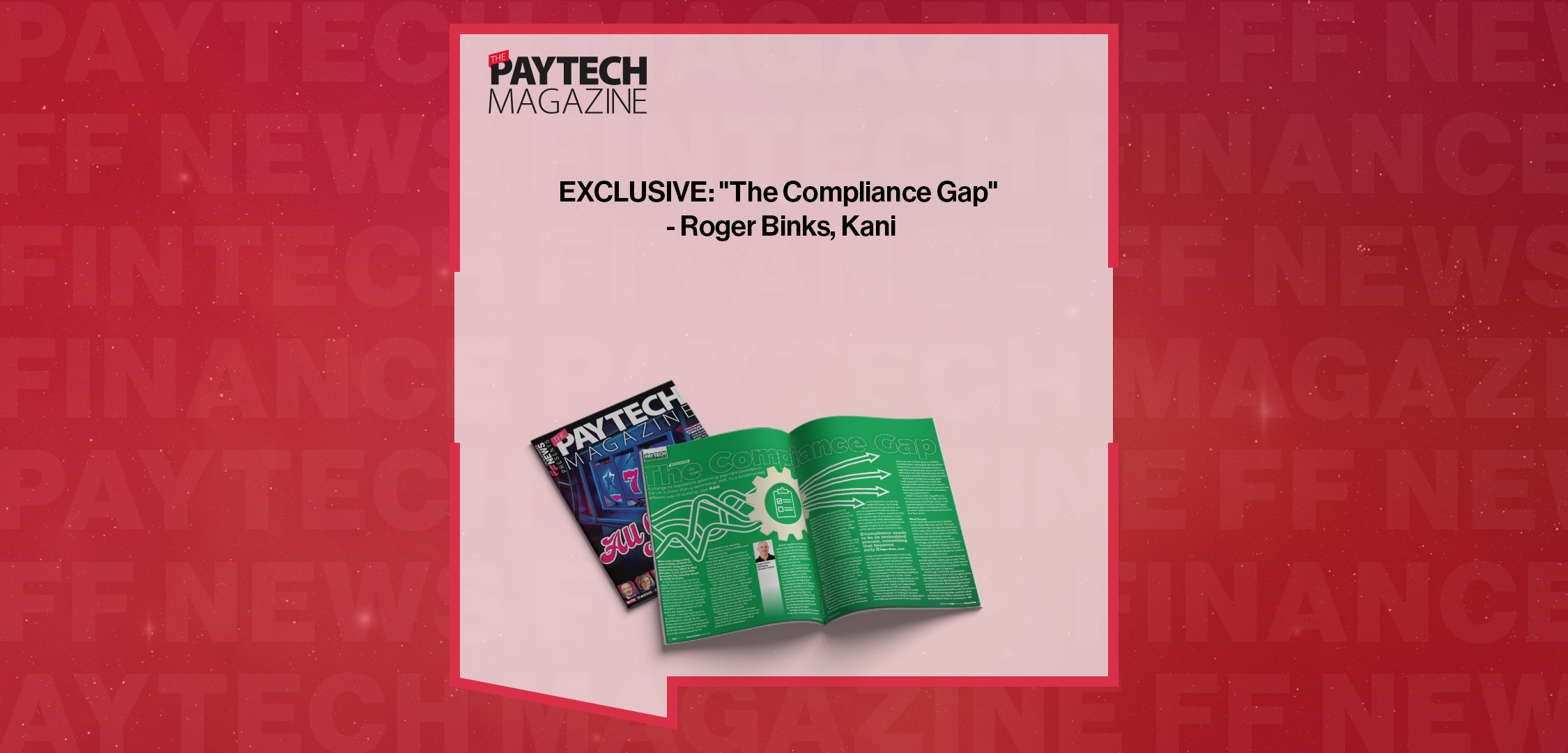 EXCLUSIVE: "The Compliance Gap" - Roger Binks, Kani in 'The Paytech Magazine' 29 October 2026
Kani reveals 90% of UK payment firms are failing new FCA CASS 15 safeguarding rules. Discover why daily reconciliation and automation are now critical.
Latest Payments news
 Starling Bank Debuts 'Talk to Transact' Voice Payments via Agentic AI 12 November 2026
Starling Bank has launched 'talk to transact,' an agentic AI feature allowing customers to initiate payments using natural language voice prompts through the Starling Assistant. UK Late Payments Surge 24% as Research Exposes Growing Divide in Consumer Lending 12 November 2026
GoCardless and Aryza research shows UK late payments rose 24% last year, with mid-market lenders hit hardest while large firms use AI to maintain stability. SoFi Bank Expands SoFiUSD Stablecoin to Polygon for Faster Digital Dollar Payments 12 November 2026
SoFi Bank has expanded its SoFiUSD stablecoin to the Polygon network, allowing 17 million members to buy, sell, and settle digital dollars directly within the SoFi app via the Polygon Open Money… Swift Hits G20 Speed Targets as 50% of Global Payments Arrive in Under 40 Seconds 12 November 2026
Swift reports that 50% of cross-border payments now reach recipient banks within 40 seconds, though domestic 'last mile' frictions still account for 80% of total transaction time. Creditstar Group Enters Everyday Payments with New Monefit Credit Card Launch 12 November 2026
Creditstar Group has launched the Monefit credit card in Estonia, marking its expansion from specialized lending into everyday consumer payments with a 20% fixed-rate, no-fee product. DCS DeCard and Visa Expand Stablecoin Payments to 70 Global Markets 12 November 2026
DCS DeCard is expanding its stablecoin-linked card issuing to 70+ markets globally via Visa, enabling businesses to use digital assets for corporate spend and consumer payments. Green Dollar Stablecoin Proposes Digital Tax Payment System to Zimbabwe Revenue Authority 11 November 2026
Green Dollar Stablecoin and Africa Investors Hub have proposed allowing taxpayers to settle customs duties and taxes via GDC to the Zimbabwe Revenue Authority (ZIMRA). Payments Canada Launches Real-Time Rail to Transform National Instant Payments 11 November 2026
Payments Canada has launched the Real-Time Rail (RTR), a national 24/7 instant payment system enabling real-time settlement and data-rich ISO 20022 messaging for businesses and consumers. WasabiCard Launches Local Card Issuing Across 100+ Markets with Stablecoin Settlement 11 November 2026
WasabiCard has launched a local card issuing solution across 100+ markets, enabling businesses to settle card programs in stablecoins while users spend in local currencies. InDebted Launches AI Voice Agent to Transform Global Collections and Double Payment Plan Success 11 November 2026
InDebted has launched Voice, an AI voice agent for collections that doubles the rate of kept payment plans and supports multilingual outreach in markets like the UAE. Experian Boost Update: UK Tenants Can Now Add Rent Payments to Credit Reports for Better APR 10 November 2026
Experian Boost now includes rent and bill payments in credit profiles, allowing UK users to potentially reduce APR by 22% and save an average of £340 per year on interest. Bottomline Integrates USDC for Near Real-Time Enterprise Stablecoin Payments 10 November 2026
Bottomline has integrated USDC stablecoin payments into its enterprise platform, enabling businesses to manage digital assets and fiat currency within a single, unified treasury workflow. The Payments Association Warns Global Cross-Border Targets Risk Masking High Costs 10 November 2026
The Payments Association and Payall warn that global cross-border payment targets risk masking high costs and delays, urging a shift toward measuring actual customer outcomes and security. Mojaloop Foundation Powers Launch of NimbaPay: Guinea’s New National Instant Payment System 10 November 2026
Mojaloop Foundation has powered the launch of NimbaPay, Guinea's national instant payment system, which processed $2.18 million in transactions within its first three months. The Payments Association Unveils 2030 UK Strategy to Secure Critical National Infrastructure 10 November 2026
The Payments Association has launched its Payments Manifesto 2027, calling for UK payments to be recognized as critical national infrastructure to drive growth and security by 2030. Telleroo Evolves into Full Financial Hub with Business Savings and Inbound Payments Launch 3 November 2026
Telleroo has launched business savings accounts (3.34% AER) and inbound payment features, supported by its new FCA EMI licence, to provide a unified financial hub for UK SMEs and accountants. BioCatch Launches Global Advisory Board to Combat Government Payment Fraud 3 November 2026
BioCatch has launched a public-private advisory board featuring former IRS and ATO chiefs to help global governments prevent fraud in tax and welfare payments. 27th NextGen Payments & RegTech Forum Returns to Limassol, Cyprus 2 November 2026
The 27th NextGen Payments & RegTech Forum returns to Cyprus on Nov 19, 2026, gathering 250+ leaders to discuss European payment regulations, agentic AI, and DORA compliance. PensionHunter Launches Global Infrastructure to Trace Lost Pension Members Across Borders 28 October 2026
PensionHunter has launched a global identification infrastructure to help pension funds trace lost members and beneficiaries across international borders using official local records. 26th NextGen Payments & RegTech Forum Arrives in Austin, Texas 26 October 2026
QUBE Events hosts the 26th NextGen Payments & RegTech Forum in Austin on Nov 10, 2026, focusing on real-time payments, fraud prevention, and AI-driven compliance. Datos Insights Unveils 2026 Impact Award Winners for Commercial Banking and Payments 21 October 2026
Datos Insights has announced the 20 winners of its 2026 Impact Awards, recognizing top-tier innovation in commercial banking and payments across AI, customer experience, and digital channels. Fintech Leaders Convene at Checkout.com HQ to Debate AI Accountability and Trust 21 October 2026
The Started Advisory Board convened fintech leaders at Checkout.com to discuss the critical need for AI accountability, trust, and human oversight in financial services. Flex Expands Beyond Rent to Build the Payment Layer for Life’s Essential Bills 20 October 2026
Flex has expanded its payment platform beyond rent to include mortgage, auto, and utilities, allowing 3.5 million users to split essential bills and avoid $39M in monthly late fees. Euronet and Fireblocks Partner to Launch Stablecoin-Backed Card Issuing for Banks and Fintechs 20 October 2026
Euronet and Fireblocks have launched a white-label stablecoin-backed card issuing solution, allowing banks and fintechs to offer digital asset spending at any merchant network. Palindrome and Blevins Franks Partner to Automate Cross-Border Wealth Management via Agentic AI 19 October 2026
Palindrome has partnered with Blevins Franks to deploy agentic AI that automates cross-border wealth management and compliance workflows for UK advisers serving clients in Europe. EPC Launches SCARLET to Standardise EU Digital Identity Wallet Acceptance for Payments 19 October 2026
The European Payments Council has launched SCARLET, a standardisation framework to ensure EU Digital Identity Wallets are accepted consistently for payment authentication by over 3,000 PSPs. Paymentology Partners with Asia United Bank to Accelerate Digital Payments in the Philippines 19 October 2026
Paymentology has partnered with Asia United Bank (AUB) to provide a cloud-native issuer-processor platform for the HelloMoney e-wallet, supporting cross-border QR payments in 60 countries. UAE and Georgia Central Banks Ink Strategic Deal to Boost Cross-Border Payments and Fintech Innovation 15 October 2026
The Central Bank of the UAE and the National Bank of Georgia have signed an MoU to cooperate on cross-border payments, fintech innovation, and financial supervision to enhance bilateral stability. Pliant Secures FCA EMI License to Drive UK B2B Payments Expansion 14 October 2026
Pliant's UK subsidiary has secured full FCA authorisation as an Electronic Money Institution (EMI), allowing the B2B payments fintech to issue commercial cards and offer payment services directly in… Bottomline Secures Spot in Chartis RiskTech100® 2027 for Payments Fraud Defense 9 October 2026
Bottomline has been named to the Chartis RiskTech100® 2027 ranking, recognizing its Payments Fraud Defense solution for innovation in AI-driven behavioral analytics and secure business payments. Group-IB Uncovers $2M GCC Fraud Scheme Exploiting Government Payment Portals 9 October 2026
Group-IB has uncovered a $2M fraud scheme in the GCC where criminals bypass 3DS security via eSIM swaps and GPS spoofing to pay legitimate government bills with stolen credit cards. Federal Reserve Financial Services Appoints Kim Robbins as Chief Payments Executive 9 October 2026
Federal Reserve Financial Services has appointed Kim Robbins as Chief Payments Executive to oversee the nation's retail, wholesale, and FedNow instant payment services starting November 2026. UAE and Morocco Central Banks Sign MoUs to Interlink Payment Systems and CBDCs 8 October 2026
The Central Bank of the UAE and Bank Al-Maghrib have signed MoUs to interlink payment systems, collaborate on CBDC development, and strengthen Islamic finance cooperation. Rain Files OCC Application to Launch National Trust Bank for Stablecoin Payments 6 October 2026
Rain has applied to the OCC to establish Rain National Trust Bank, a New York-based national trust bank designed to provide federal oversight for stablecoin custody, reserve management, and issuance. Basware Finalises Trustpair Acquisition to Combat Global Payment Fraud 5 October 2026
Basware has completed its acquisition of Trustpair, integrating automated payment fraud prevention into its invoice lifecycle management platform to secure B2B payments for over 6,500 global… Payments Canada Welcomes 6 New Members as Real-Time Rail Modernization Accelerates 2 October 2026
Payments Canada has approved six new members, including Nium and Remitly, following legislative changes that expand access to national payment infrastructure ahead of the Q4 2026 Real-Time Rail… RBC Eliminates Transfer Fees for Same-Currency International Payments in EUR, GBP, and HKD 1 October 2026
RBC has launched zero-fee International Money Transfers for EUR, GBP, and HKD accounts, allowing Canadians to send foreign currency directly without CAD conversion. Levl Hits $10B Annualized Payments Volume as Stablecoin Adoption Surges 1 October 2026
Levl has surpassed $10 billion in annualized payments volume, representing a 5x increase since March 2026 as fintechs migrate to stablecoin infrastructure for global payouts. Wellesley Hills Financial Launches WHF Fintech & Payments Institute for Middle-Market Growth 28 September 2026
Wellesley Hills Financial has launched the WHF Fintech & Payments Institute, an operator-led advisory practice providing fractional executives to help fintech and B2B software firms optimize unit… Solana Foundation Recruits Binance and Polygon Executives to Drive Global Payments Strategy 25 September 2026
Solana Foundation has appointed Rachel Conlan (CSO) and Jamal Raees (GM Payments) to drive institutional adoption and scale onchain payment infrastructure for the Token Supercycle.
Companies in Payments
- Mastercard 23 stories
- Visa 19 stories
- Swift 10 stories
- Adyen 9 stories
- ACI Worldwide 8 stories
- Alacriti 6 stories
- Stripe 6 stories
- The Payments Association 6 stories
- Alipay 5 stories
- BPC 5 stories
- Coinbase 5 stories
- HSBC 5 stories
Frequently asked questions
What are real-time payments?
Real-time payments (RTP) are systems that enable the instantaneous clearing and settlement of funds, operating 24/7. Recent examples include the launch of the Real-Time Rail (RTR) by Payments Canada and the NimbaPay system in Guinea, powered by the Mojaloop Foundation. These systems use data-rich ISO 20022 messaging to provide more information with every transaction, allowing businesses and consumers to move money with immediate finality.
How is AI being used in payments?
Artificial Intelligence is being integrated into both the front-end and back-end of payment flows. Starling Bank has introduced 'Talk to Transact,' which uses agentic AI to allow customers to initiate payments via voice prompts. On the operational side, InDebted uses AI voice agents to manage collections, while firms like Payroc are developing AI-native payment infrastructures to automate complex workflows and improve transaction success rates.
What role do stablecoins play in modern payment systems?
Stablecoins are increasingly used as a settlement layer to provide faster, cheaper digital dollar transactions. SoFi Bank uses its SoFiUSD on the Polygon network for member settlements, while Bottomline has integrated USDC for enterprise treasury workflows. Additionally, companies like DCS DeCard and WasabiCard enable businesses to issue cards that settle in stablecoins while allowing users to spend in local fiat currencies across global merchant networks.
What are the main challenges in cross-border payments?
According to Swift, while 50% of cross-border payments reach recipient banks in under 40 seconds, the 'last mile' of domestic processing accounts for 80% of total transaction time. The Payments Association and Payall have noted that global targets often mask high costs and security risks. To address this, banks like Bank of America and HSBC are focusing on localising global payments to reduce friction and improve transparency.
How are payment providers addressing fraud?
Providers are using a combination of data analytics and collaborative frameworks to mitigate risks. BioCatch has established a global advisory board with former tax and welfare chiefs to combat government payment fraud. Meanwhile, The Payments Association is pushing for the UK payment system to be recognised as critical national infrastructure to enhance security. Other firms, such as Bottomline, focus on fraud prevention within faster payment workflows to protect enterprise users.