EXCLUSIVE: "Out of the Lab!" - Lewis Lei Sun, HSBC in 'The Paytech Magazine'
By Lauren Towner · 13 November 2026
In brief: HSBC is expanding its digital currency focus, launching tokenised deposits in six markets and preparing a regulated Hong Kong dollar stablecoin to meet institutional treasury demand.
| Live Markets | 6 |
|---|---|
| New Product | Hong Kong dollar-denominated stablecoin |
| Core Focus | Tokenised deposits and Wholesale CBDC |
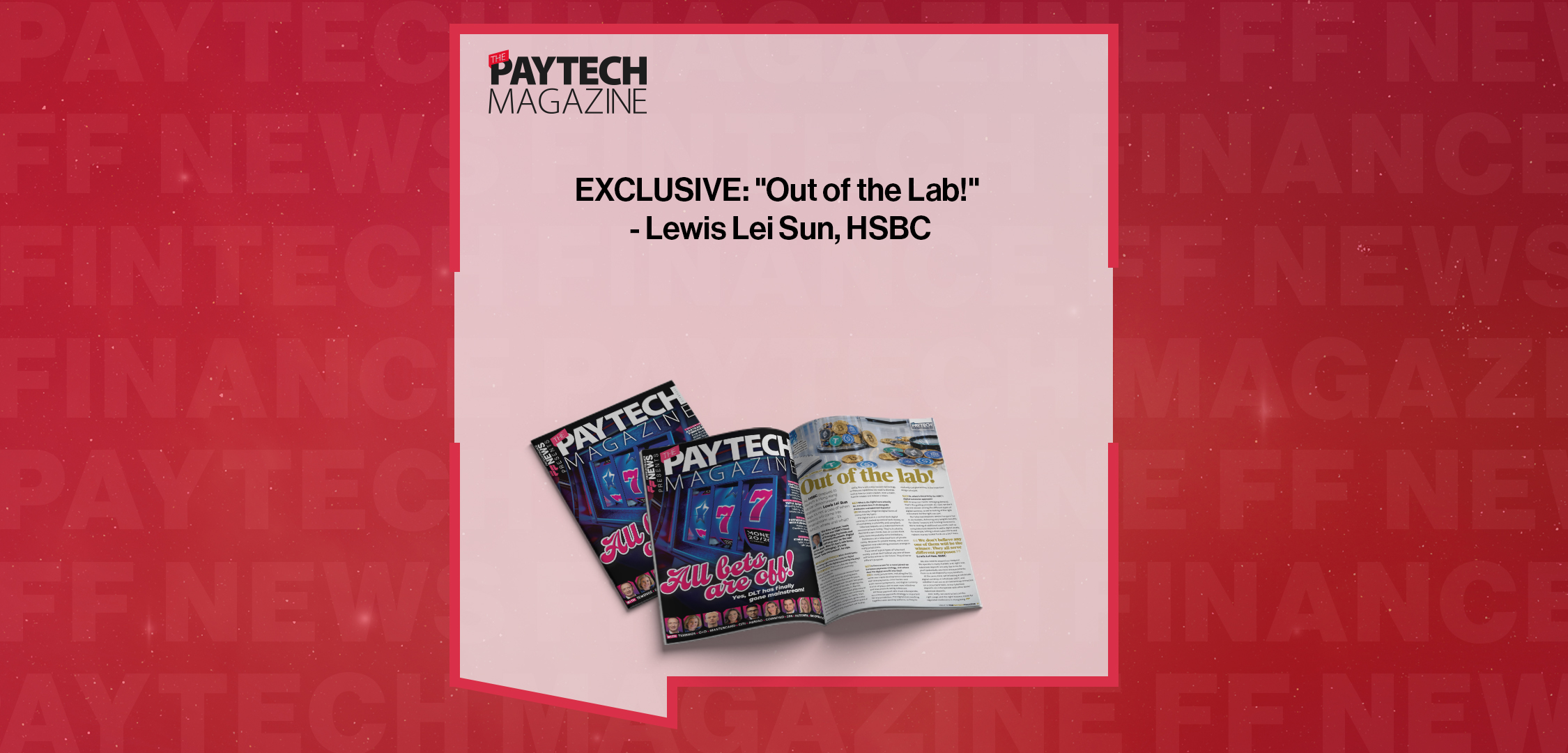
As HSBC prepares to launch a Hong Kong dollar-denominated stablecoin. Lewis Lei Sun says it’s not a case of when tokens will come into mainstream use – it’s which, where and what? This time last year, Lewis Lei Sun was HSBC’s Head of Emerging Payments and Domestic Payments. Digital currency was ‘on the side’ of his desk. Now it’s Sun’s sole focus. No longer ‘emerging’, it’s very much ‘now and present’, he says.
THE PAYTECH MAGAZINE What should banks be doing right now to be ready for digital currencies like the digital euro coming into play?
LEWIS LEI SUN There are a few key aspects, and, as banks, we need to be extremely mindful of them.
The first is that commercial demand from the customer has to be the starting point. Digital money has been discussed for years, but what has changed over the past two years is that it’s come out of the labs; it’s going into production and being used day in, day out.
The second is the role the bank plays around trust and confidence. Clients use us primarily because we’re trustworthy. So, clearly, from a risk management, compliance, governance and authentication and authorisation point of view, we have a very important role to play.
Lastly, this is still a very nascent technology so there are capabilities we need to develop such as how we create a wallet, mint a token, transfer a token, and redeem a token.
TPM What is the digital euro actually for, and where does it sit alongside stablecoins and tokenised deposits?
LLS We broadly categorise digital forms of money into key types. The digital euro is a central bank digital currency. It’s backed by central bank money, so it’s completely trustworthy and compliant. Tokenised deposits are a tokenised form of commercial bank money. They’re trusted by that bank’s own clients, but, on a cross-bank basis, there are probably some limitations.
Stablecoins are a tokenised form of private money. Because it’s private money, we’ve seen legislation and rulemaking processes emerge in many jurisdictions.
These are all typical types of tokenised money, and we don’t believe any one of them will be the winner in the future. They all serve different purposes,.
TPM Is there a case for a more joined-up European payments strategy, and where does the digital euro fit into that?
LLS In many jurisdictions, including the EU, we’ve seen rapid development in domestic real-time payments, cross-border and cross-currency payments, and digital currency. In a lot of places we’ve seen new initiatives and new products being rolled out.
All these payment rails must interoperate, so a cohesive payments strategy is important for any jurisdiction. The digital euro working together with existing systems, so they’re mutually complementary, is the important design principle.
TPM So, what is the priority for HSBC’s digital currencies approach?
LLS To serve our clients’ emerging demand. That’s the guiding principle. As I said, we don’t see one winner among the different types of digital currency, so we’re looking at the right instrument for the right use case.
Our tokenised deposits service has gone live in six markets, delivering very tangible benefits for clients’ treasury and funding movements. We’re looking at additional use cases, such as using tokenised deposits to settle digital assets, for example, letting a client subscribe to and redeem money market funds on a 24/7 basis.
We also need to expand our footprint. We operate in many markets and, right now, tokenised deposits are only live in six. So you’ll potentially see more announcements from us as we expand to more locations. At the same time, we’re looking at wholesale digital currency, or wholesale CBDC, and whether it can act as an overarching connection on a cross-bank basis, so our tokenised deposits can interoperate with other banks’ tokenised deposits.
And, lastly, we want to test out the right usage and the right issuance model for regulated stablecoins in Hong Kong.
Frequently asked questions
What is HSBC's strategy for digital currency?
HSBC's strategy is driven by commercial customer demand, focusing on tokenised deposits, wholesale CBDCs, and regulated stablecoins. The bank has already deployed tokenised deposit services in six markets to improve treasury and funding movements, and is currently testing a regulated stablecoin model in Hong Kong.
How many markets have HSBC tokenised deposits?
HSBC has launched its tokenised deposits service in six markets. The bank intends to expand this footprint further, allowing clients to settle digital assets and redeem money market funds on a 24/7 basis.
Will there be a single winner in digital currencies?
No, HSBC believes that different forms of digital money—including CBDCs, tokenised deposits, and stablecoins—will coexist. Each serves a different purpose, such as the digital euro providing central bank backing while tokenised deposits facilitate commercial bank transactions.