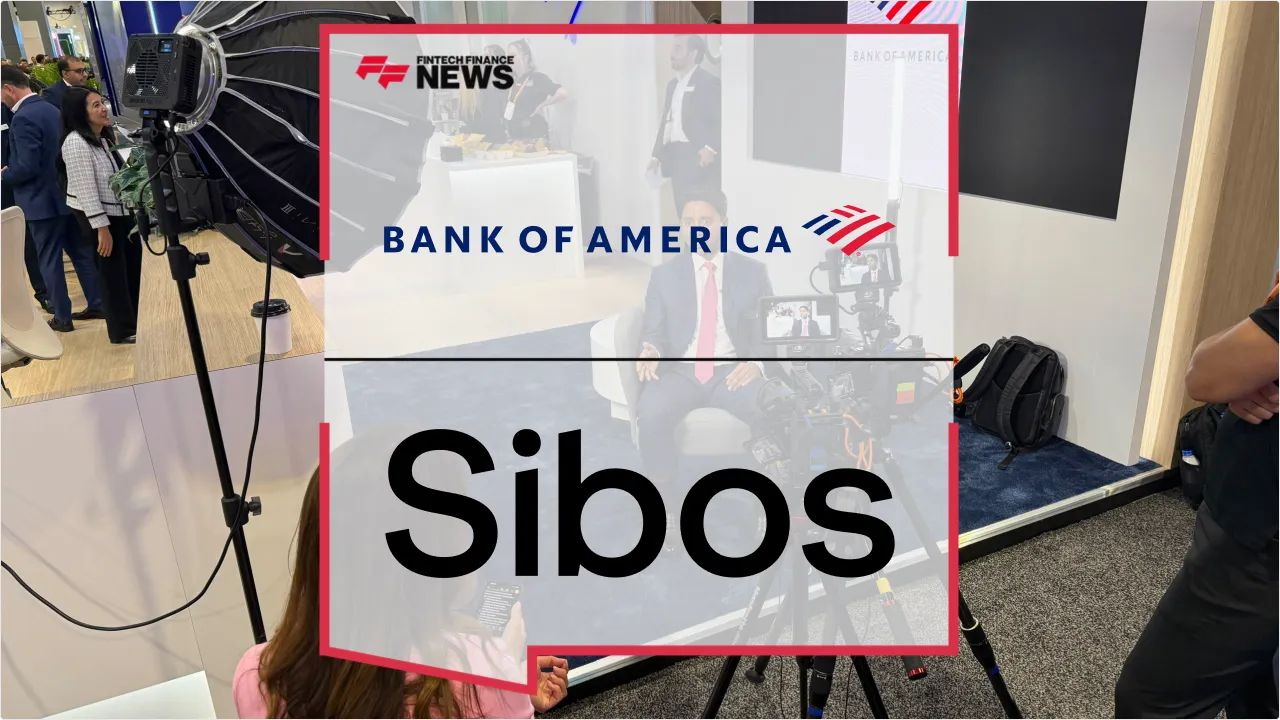
Sibos 2026: Bank of America's AJ McCray on making cross-border payments feel local
By Ali Paterson · 2 November 2026
In brief: AJ McCray explains how Bank of America is removing the friction from international money movement to provide a local payment experience for global clients.
| Event | Sibos 2026 |
|---|---|
| Key Speaker | AJ McCray, Bank of America |
| Organization | Bank of America |
| Primary Market | Global |
Quick Summary
The complexity of moving money across borders remains a significant hurdle for global businesses. AJ McCray of Bank of America explains at Sibos 2026 how the institution is working to remove these constraints to ensure international transfers feel like a local experience for both consumers and corporate clients.
What does a local experience mean for cross-border payments?
According to AJ McCray, the vision for Bank of America is to take away the difficulties and constraints associated with moving money across different countries and currencies. For a client, a local experience is defined by three key factors:
- Speed: The expectation that a payment arrives quickly, regardless of the destination.
- Certainty: The assurance that the specific amount of money sent is exactly what arrives at the destination.
- Transparency: Knowing exactly when a payment has landed through automated notifications.
While these elements are standard in domestic contexts, AJ McCray notes they become more difficult when money moves through multiple banks and currency conversions. The bank's strategy focuses on removing these hurdles to provide a seamless flow.
Why is the bank focusing on low-value cross-border flows?
The decision to prioritise low-value, high-volume payment flows was driven directly by client feedback. AJ McCray explains that Bank of America starts every product development cycle by looking at unsolved customer problems. Many clients, particularly those in the gig economy or small businesses sending money to overseas beneficiaries, expressed a need for smoother international transactions.
By improving these flows, the bank helps its clients look better to their own end-customers. When the payment experience is a smooth part of the overall service, it enhances the reputation and product delivery of the companies using the bank's infrastructure.
How are data and AI changing corporate treasury?
The transition from legacy reporting to real-time data is a major shift for treasurers. AJ McCray observes that the industry is moving away from an era of end-of-day reports. Instead, treasurers are now using real-time ingestion of information to improve treasury forecasting and optimise their financial structures.
On the Artificial Intelligence front, Bank of America is focusing on the intersection of the treasury and accounting departments. AI is being deployed to help answer critical questions regarding who to pay and when to pay them. Specifically, the bank is using AI to:
- Manage invoice and remittance information.
- Tie together data from the accounting desk with the treasury desk.
- Match physical and electronic invoices with outgoing payments to streamline workflows.
FF NEWS TAKE:
Bank of America is clearly responding to the consumerisation of B2B payments by focusing on the local feel of international transfers. By prioritising the user experience for low-value flows, they are addressing a high-growth area of the market where speed and certainty are non-negotiable. Furthermore, their application of AI to bridge the gap between treasury and accounting shows a sophisticated approach to solving back-office friction, moving the bank beyond simple transaction processing and into the role of a strategic data partner.
Frequently asked questions
What is Bank of America's primary goal at Sibos 2026?
The bank aims to learn from clients and partners about their strategies while sharing its own vision for the future of payments to identify new opportunities for partnership.
How is AI being used to help corporate accounting departments?
AI is used to connect the accounting and treasury departments by matching invoice and remittance information with payments, helping teams manage piles of electronic and physical invoices more efficiently.
What are the main frictions in traditional cross-border payments?
Friction typically arises from the involvement of multiple banks and currency changes, which can lead to delays, uncertainty about the final amount received, and a lack of real-time notifications.
Part of our Sibos 2026 coverage.