Bonds, Interest, and Pastries: Fintech Meetup Europe 2026
By Lauren Towner · 12 October 2026
By Chantal Swainston
It’s a truth universally acknowledged that a fintech event in possession of good fortune must be in want of a giant padel court.
As Fintech Meetup made its European debut in Lisbon, industry players from far and wide gathered to see what the latest contender would bring to a crowded market.
Having built its reputation in Vegas, where the American business mentality felt like the spine of a hugely successful conference, the question was whether the organisers could hold onto what made that event great while making it fit a perhaps more cynical European audience.
And try they did. From a padel court that sat slap bang in the middle of the hall, to a roomy smoking area that saw more vogues than vapes, FME certainly leaned into its new European personality in every way but one.
What remained, was its ruthlessly efficient networking program:
Investing in bonds: As per its moniker, Fintech Meetup prides itself on its networking. The pre-arranged 15 minute 1-2-1s mean you’re on a tight schedule, but you can pack in a worthwhile stack of introductions in a matter of hours. My personal diary included time with Veronique Steiner at J.P. Morgan, Katie Hafford at Finimize, Kaley Addo at Upvest, and Emanuela Meini at London & Partners. What can I say, I’ve always had a talent for finding brilliant women in fintech.
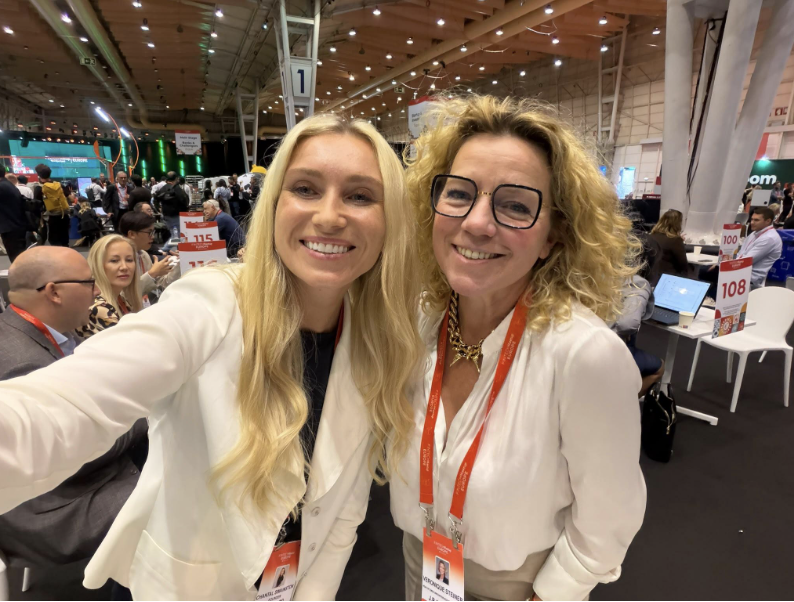
Gary Dempsey had opened proceedings by asking whether the event could compress months of introductions into three days. From my seat at the tables, it felt like a credible ambition. (Though, if I’d had a euro for every time someone compared the set up to speed dating, I could have raised a small pre-seed.)
It’s a running joke that events tend to be where people who already know each other come together time and time again. For me in Lisbon, I spent far more time with new connections. In that sense, it has certainly lived up to its name.
Interest rates rising: There was almost a glut of good topics and speakers, so much so that the hardest part was choosing where to be, followed closely by scribbling notes fast enough with a Nutella waffle balanced precariously on your lap. (Wispr Flow did some excellent heavy lifting for me here… Yes it can pick up microphone speakers in a busy conference hall - so fill your boots!)
But organisers had considered the FOMO of good content too. A daily newsletter reminded you of the great stuff you’d seen and, inevitably, the great stuff you hadn’t - so if you’re yet to look over Hannah Duncan’s brilliant daily re-caps do check them out.
Doug and Gary’s overarching theme was "Built to Last”: a question about what makes financial businesses durable, and what established institutions and fintechs might learn from one another.
Two discussions particularly stayed with me.
On “Credit Where Credit’s Due”, moderated by Valerie Kontor, the panel challenged the idea that Europe simply needs more capital. Money is available, went the argument; getting it to the right businesses, at the right price, across fragmented markets is the difficulty.
There was also a challenge to lenders’ enthusiasm for alternative data. Before searching for something new, how well are they using the financial information already available?
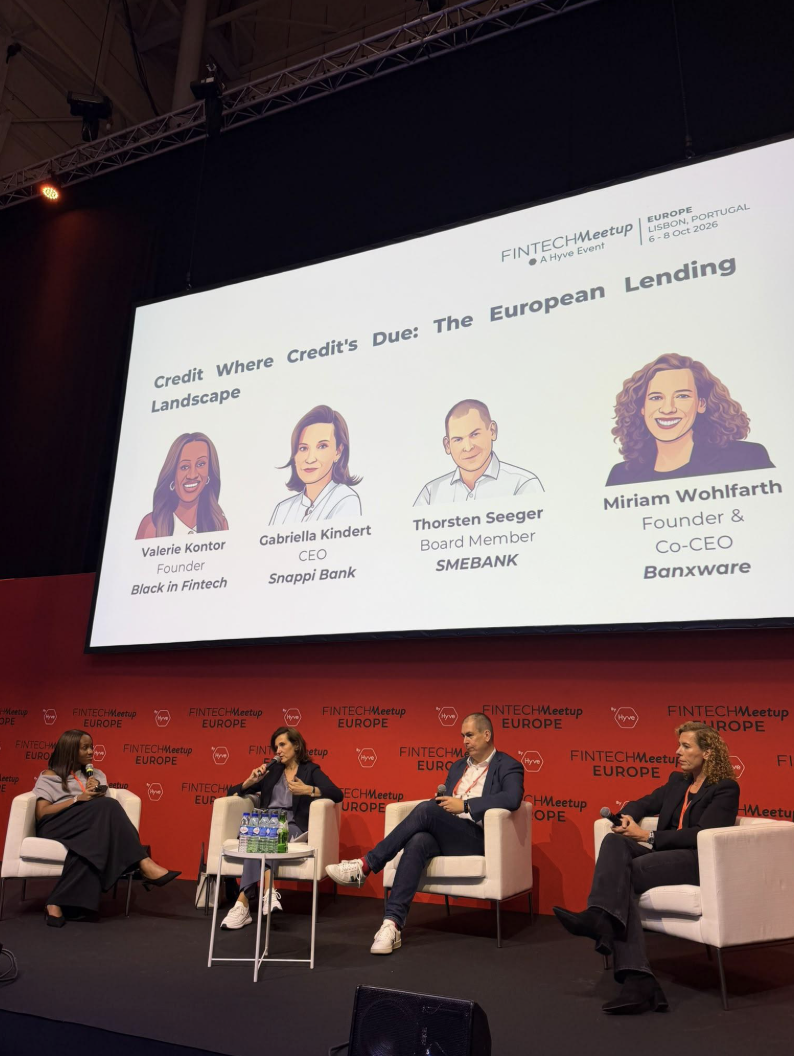
As someone running their own business, I appreciated the discussion about whether senior bankers understand SME owners’ pressures. A customer paying late when you have salaries to cover is a very immediate problem. In that moment, speed and understanding are absolutely critical.
Monzo’s EU CEO, Michael Carney, supplied a different example of understanding customers: an exclamation mark.
Customers had said one in a payment notification made them anxious, so Monzo simply removed it. So tiny really, but it was a memorable detail because the situation was so recognisable. After all, your bank can tell you that a payment is approaching without sounding quite so excited about it.
Carney also described the option for customers using Monzo’s gambling block to write a note to their future selves if they later wanted to remove it. Payment blocks can be so useful, but banks also need to allow people to do what they want with their money, so hearing how they manage that balance in an emotional rather than merely logistical way was fascinating.
And those details gave weight to his broader argument about European expansion. Technology and experience can travel, but understanding how people manage money in each market takes work.
Much like translating a conference, success elsewhere gives you a foundation, not instant success.
Social capital: Good conversations continued well beyond the meeting tables. It helped of course by the fact Lisbon is a wonderful city to 'have to go to' for work.
All big events are unfortunately the victim of taking place in what feels like an aeroplane hangar, but hotel rooftops, a buzzing city not 15 euros away in a Bolt, and outrageously easy access to baked goods, I (and many others clearly) were willing spill out of the conference and into wider Lisbon for the evening.
Whether you made it to Fintech Under the Hood’s food tour of Lisbon, drinking cherry brandy in the street and eating traditional sardines and bifanas, or StartedPR’s sunset rooftop drinks, the liquid assets on offer were exceptional. Alongside these were many eclectic dinners taking place through the city, where conversations were more about star-signs than dollar signs. As has always been the case, stepping away from the booths allows people to stop selling, and simply be themselves.
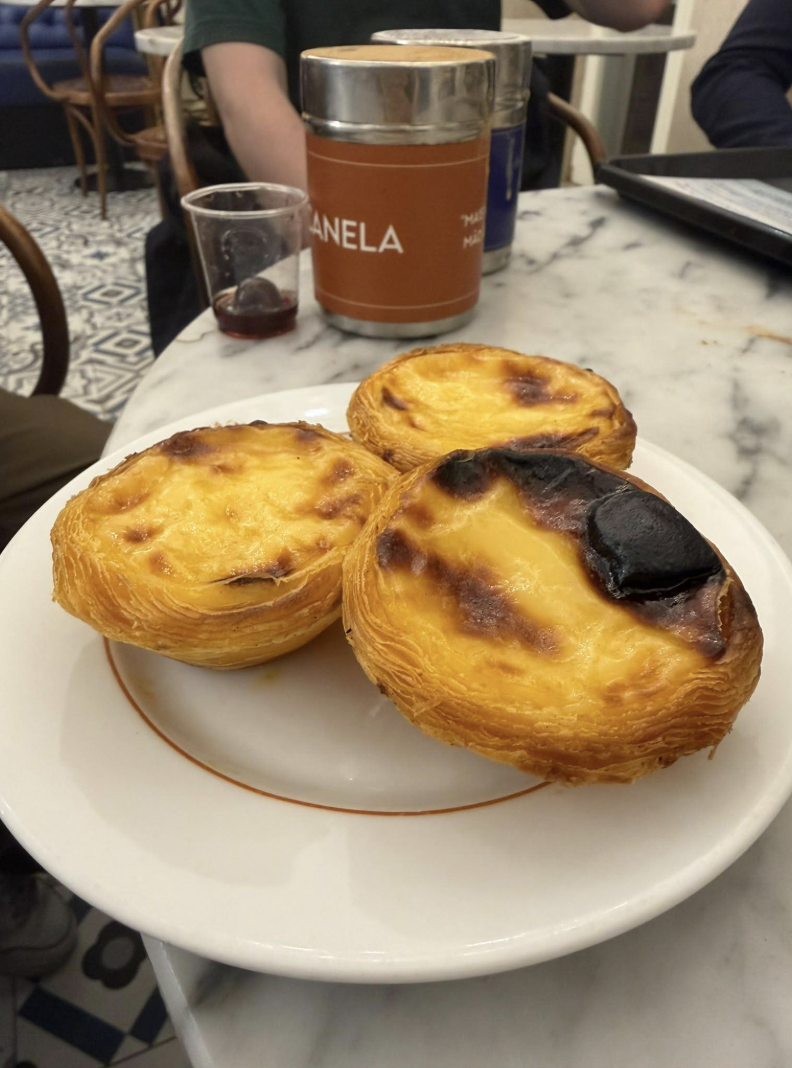
While the evenings might have been more social than educational, I did learn that comparing the deeply traditional ‘Bacalhau à Brás’ to a Scottish Kedgeree was not a way to impress the locals.

By day three, some attendees were taking a more patient approach to getting started, but the programme was less forgiving, with Tom Matsuda moderating a session on velocity and loyalty, and Dan Lowther expertly navigating conflicting opinions on digital sovereignty. Doug had evidently forgotten to schedule a recovery period.
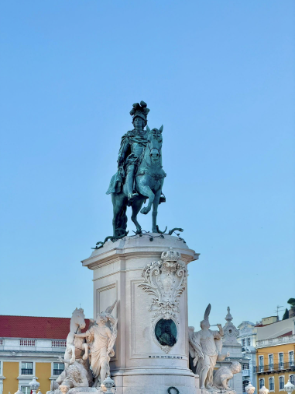
A final scramble at the waffle stand provided the last networking opportunity before we were ushered into the sunshine. Those with late flights found one more coffee opportunity; those with better planning headed into Lisbon for a few more days. An investment decision I’ll be reviewing next time.
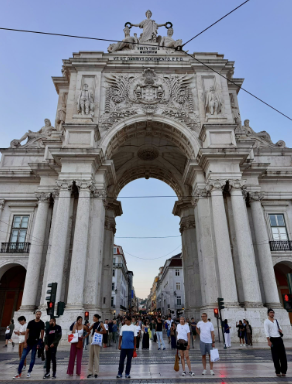
So, did the Vegas formula translate? For me, absolutely. I met far more new people than familiar faces, heard ideas that stayed with me, and genuinely enjoyed being there. Gary, Doug and the team put a huge amount of work into this first European edition, and the warmth and openness of the people there made it something worth coming back for.
Paris has been rumoured for next year, which lots of people are pleased about for the travel convenience. Naturally, I’m bullish on more pastries.
Part of our Fintech Meetup Europe coverage.