EXCLUSIVE: "The ˊNewˋ Correspondent Banking System" - Tsvetanka Nankova, Deutsche Bank in 'Discover Sibos'
By Lauren Towner · 9 October 2026
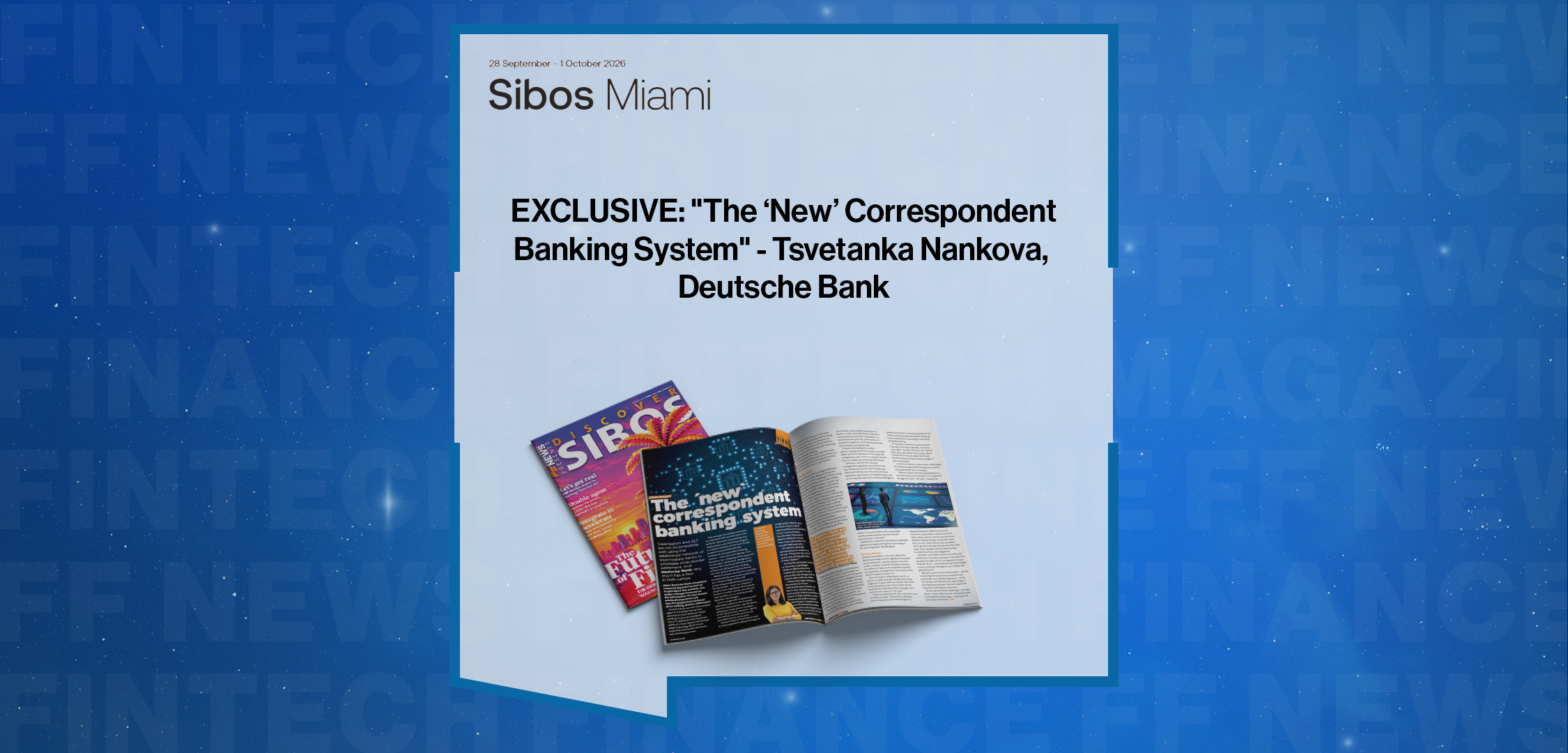
Tokenisation and DLT are not incompatible with using the established network of intermediary banks in wholesale cross-border settlement. And Deutsche Bank very much has a foot in both camps
When Deutsche Bank completed a treasury payment as part of Project Agorá this summer, the media coverage focussed on the tokenisation of cross-border wholesale payments and how the project had achievedall-or-nothing atomic settlement. Deutsche Bank was the intermediary agent for a €10,000 transaction executed on chain between Lloyds Banking Group and CaixaBank, one of 17 payments that tested the ability of a multi-layered distributed ledger technology (DLT) to turn sequential cross-border processes into simultaneous ones.
The average transaction time was an impressive 80 seconds from start to finish. But what was perhaps less talked about was that Project Agorá is a hybrid solution to the well-known problems associated with the traditional correspondent banking system – cost, time and opacity. It’s a blueprint for a stepping stone approach to next-gen settlement, designed to capture the structural benefits of DLT without shutting out the existing two-tier global banking framework.
What it proved was that it is possible to substantially accelerate settlement on a shared ledger while still preserving jurisdictional autonomy for the banks – and, no, it doesn’t require new regulatory frameworks to do it. In other words, the old and new worlds can co-exist but with dynamic advantages.
Such a pragmatic response could ultimately advance the broader case for tokenisation, specifically in wholesale trade where multiple actors (businesses, lawyers, agents and banks) must be convinced, corralled and co-ordinated. Deutsche Bank itself doesn’t pi its future global trading strategy on a single system, either, but, given the almost 20 years of global experimentation around tokenisation and DLT, Tsvetanka Nankova, Deutsche Bank’s Global Head of Sales for Institutional Cash and Trade Finance, believes banks have now got to get to grips with it.
“As institutions, we’ve been experimenting across multiple areas,” she says. “The question now is how do we take that and bring scale to some of these initiatives?”
She describes correspondent banking as ‘becoming a truly intelligent, always-on digital business across multiple rails’, and she’ll be keen to advance that view among peers at this autumn’s Sibos conference in Miami. Deutsche Bank began investigating the potential for DLT as an international payment solution way back in 2014. The bank remains an active member of the R3 Corda Network (which is a likely contender to become the permanent platform for Agorá) and last year it completed its first euro-denominated cross-border payment on the Singapore-based fintech infrastructure provider Partior’s blockchain.
At the same time it continues to improve the traditional rails of correspondent banking. For example, this year it has developed the AutoConvert feature of its FX4Cash platform, which reduces settlement times by automating foreign exchange handling.
“Transactional FX is one of the areas that’s going to deliver additional revenue streams for financial institutions such as Deutsche Bank, so it’s a key focus for us,” says Nankova.
The role of AI
While FX4Cash relies on a highly automated rules-based system, Nankova believes AI is going to be central to banking’s shift from being a ‘volume and balance sheet-based industry to a data and digital solutions industry’. But banks, even banks as big as Deutsche Bank, need to be highly focussed on where it can deliver them a competitive advantage.
She says: “What is important is that AI and data are not simply driving the development of very fancy dashboards. They should really be driving opportunities across cashflow optimisation, payments routing, liquidity management and so on. There are lots of ways it can drive improvement for our clients and also generate new revenue flows.”
Specific areas where Nankova believes AI can make a crucial difference are operations, transaction monitoring and cash flows.
“Operations teams handle a lot of inquiries and investigations, and at Deutsche Bank we already use AI to ensure inquiries we receive are routed to the right partners or colleagues, so they are resolved professionally and swiftly,” she says. “Thanks to ISO 20022 and the improvements it has brought to data, we’re seeing a significant reduction in the number of alerts generated by our transaction monitoring systems. By using AI, we can swiftly clear the false positives and focus on the alerts that matter.
“Specifically in the revenue-generating space, AI can be used to forecast cashflows, which allows us to schedule payments on behalf of clients more efficiently. Treasurers at corporates and financial institutions are absolutely looking for the optimisation of liquidity management as the world becomes more complex and fragmented.
“They are also looking for swifter decision-making and AI can enable us to take better and faster decisions in the credit risk management space. But it is crucial to ensure that our models are extremely well tested.
“Banking is built on trust and our management, regulators, and clients have zero tolerance for errors. One mistake can absolutely take you out of business or have significant repercussions on everything you do. So, the way we implement artificial intelligence matters. It must be done with responsible velocity and by making sure that we still have a human in the loop.”
Despite AI’s capability, she believes a blanket approach to implementing the technology is the last thing banks should adopt.
Be more fintech
Nankova has spoken in the past about the fintech advantage and the agility of monoline service providers, and says being ‘more like a tech company’ is key for financial industry incumbents if they are to respond as quickly to customers’ and regulators’ demands as the sector’s newest entrants do.
“But we need to understand, and it’s a shift in mindset, that we cannot own every single touch point with our clients. We need to be extremely smart about what we do because there are only a few strategic bets that we can invest in,” she says. “They’re costly, but you also need the time to focus on these. Ultimately, ruthlessly prioritising what we’re focussing on is going to be critical, and ensuring that we are really concentrating on the areas where we have a competitive advantage rather than doing everything.
“In the past, I think the mindset across financial institutions was like, ‘oh, this is new, right? Sounds a bit sexy. Let’s look at that!’ And, you know, they maybe added a little bit of tactical value short term, but they were not necessarily strategic to your institution.”
In terms of where a major bank’s advantages lie, Nankova argues that boardrooms need to remember that size can matter.
“Balance sheet and risk intermediation is an area where new entrants in our space will struggle to scale,” she says. “Having that regulated balance sheet is extremely important, especially in times of turmoil. That’s when clients are less worried about whether a [technology] ecosystem looks fancy or not. They’re more worried about who’s going to provide the liquidity that they need, who’s going to provide the backing to meet their financial obligations.
“Another area where I think we as financial institutions have been strong, is that execution at scale through a lot of rich operational data that we sit on – and certainly new technologies such as artificial intelligence can employ that going forward.”
Being focussed on the task at hand – namely improving the trade finance machine and specifically cross-border payments – while not being committed to one technology, is how Nankova believes Deutsche Bank will succeed in serving its customers.
“Ensuring that we’re investing in strategic areas – areas where we can absolutely have a competitive advantage – is going to be extremely important.”