A Chess Game Played in Cash: What We Heard at Retail Bank Transformation Europe
By Matthew Burls · 19 November 2026

By Matthew Burls, FF News, Retail Bank Transformation Europe
Most fintech conferences spend their energy on apps. At Retail Bank Transformation Europe, the best conversations I had were about the machine in the wall. Datos Insights' annual London gathering, which grew out of the branch transformation conference FF News has been covering for the best part of a decade, brought more than 250 senior executives from banks, regulators and technology providers to the Park Plaza London Riverbank on 17 and 18 November. FF News was there as media partner, and I spent day one on the exhibition floor with the companies that build, run and protect the world's cash machines.

The questions on the agenda
Datos built the two days around questions every retail bank now faces. How do you keep the primary relationship when customers spread their money across many providers? And what is a branch for when so many journeys start on a phone? The numbers behind them are stark. UK high street banks hold 83% of primary relationships, but only 26% of recent new account openers chose their existing bank. The global ATM installed base fell 7% between 2020 and 2024.
Day one opened with Matt Kamisher-Koch, Datos' UK Commercial Director, on the industry outlook, followed by keynotes from Joe Gallagher of NCR Atleos on what will define banking's next decade and Karoly Treso of Raiffeisen Bank International on staying relevant as AI scales. The afternoon split into resilience and regulation, including a UK versus EU panel on whether more prescription really means more resilience, and cash, cost and access, with sessions from LINK, NatWest, and Auriga with Batopin on Belgium's ATM pooling journey. Komerční banka, which cut its product range from 598 to 31 and lifted end-to-end digital sales from under 5% to 55%, was among the banks sharing lessons from the front line.
An arms race inside the ATM
What struck me most on the floor was how much effort goes into stopping people breaking into cash machines, and how inventive the people trying are. Fraud is rising, attacks on ATMs are increasing year on year, and one exhibitor told me stories of machines in the US being chained to trucks and dragged down the street.
Other attacks are quieter and more technical. One conversation was all about encryption on the USB connections inside the machine, a route attackers use to get at the ATM, and how manufacturers lock it down.
What I hadn't expected was how openly the manufacturers share what they're seeing. Companies that compete for the same bank contracts tell each other when a new kind of attack is happening. In a room full of rivals, that was a surprise.
If this happens, then this
Oberthur Feerica, the cash protection specialist, talked me through the next line of defence. If attackers do get into an ATM, dye-staining systems can cover the notes in ink and make them unusable. The thinking runs in layers: stop the attack if you can, and if you can't, make sure the cash is worthless to whoever takes it.
It's like a chess game. If this happens, then this happens, then this, and at every move the aim is the same: protect the cash.
Cash is having a moment
Almost everyone I spoke to said the same thing: cash is coming back in a big way. With so many attacks going on in the world right now, and the Binance hack still fresh, physical cash is looking like a safer bet than some cryptocurrencies. Plenty of people on the floor told me they always carry cash, just in case something goes wrong or they can't get to an ATM.
I also asked exhibitors on camera about black sky events, the kind of large-scale, long-lasting infrastructure failure that knocks out power and payments together. Most were happy to take the question on. One company preferred not to answer.
On the floor
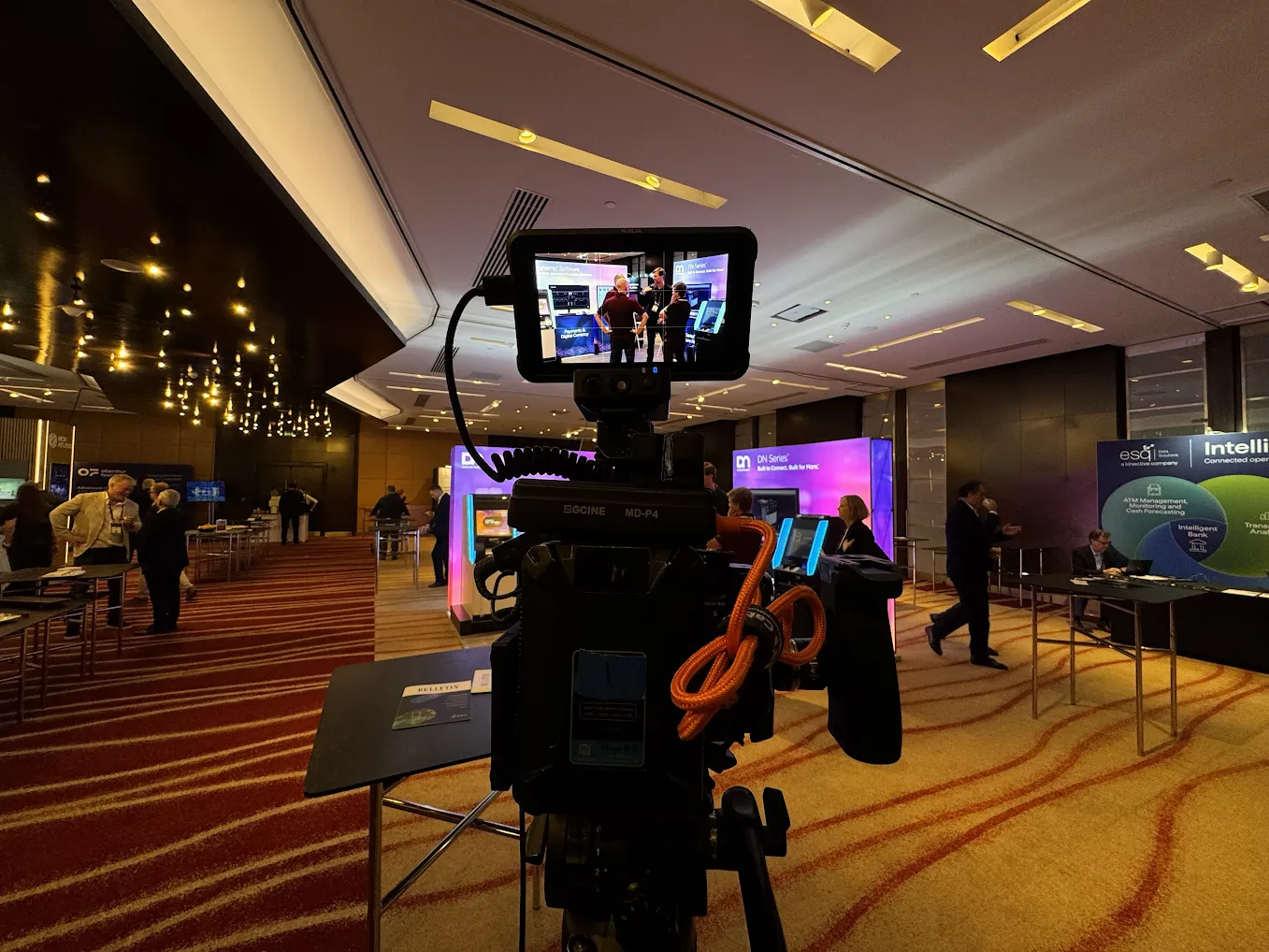
The machines themselves were flashy and beautifully designed, every one of them, and every one connected to the internet. There was plenty of fake cash on the stands too. I did ask to borrow a set of keys to see whether I could get them copied. Nobody let me.
Diebold Nixdorf's Helena Müller shared the stage with Komerční banka's Jana Švábenská on building an ecosystem around customer needs, and Plumery was one of six firms in the afternoon Innovation Showcase, alongside Malcom, Memcyco, NamSys, Silverflow and Unblu.
We filmed interviews on the floor with Diebold Nixdorf, NCR Atleos, Auriga, KAL ATM Software, Oberthur Feerica and Plumery, and those will follow on FF News.
The verdict
Cash and self-service usually get talked about in terms of decline, and that 7% fall in the ATM base is real. But the room didn't feel like an industry winding down. It was full of companies building secure, well-engineered machines that banks buy all over the world, and they were more focused on the next attack than on the last ATM. If cash is becoming a resilience asset as much as a convenience, the people protecting it are going to matter more, not less.