


Breaking News
Oleg Boiko Highlights the Leadership Traits That Define Business Survival
Finstar Financial Group founder calls for clarity, focus, and ruthless prioritisation as geopolitical instability reshapes global markets.
Oleg Boiko, founder of Finstar Financial Group and one of the pioneers of the global fintech sector, has shared his strategic perspective at a time when businesses worldwide are operating under increasing pressure and complexity. Drawing on decades of experience in financial services and international investments, and having navigated multiple global downturns, Oleg Boiko offers a direct and practical framework for leaders facing these challenges today.
A Crisis Already Underway
“It makes sense to start with something simple: preparing for the future,” Oleg Boiko says. “This may sound obvious, but in practice, it is one of the most difficult tasks because the future arrives very quickly and almost always unexpectedly.”
Oleg Boiko is unambiguous about the current moment. What businesses are witnessing today can already be considered a global crisis, one that began as geopolitical but could quickly evolve into an economic crisis affecting nearly all industries. For any business today, it is no longer enough to simply follow what is happening in the world. Leaders must understand how global developments are likely to affect their own operations and make deliberate, informed decisions before conditions force their hand.
“We are witnessing large-scale shifts in global politics, which will inevitably be followed by economic changes. Political decisions by major global players can alter the balance of power at any moment. Forecasting a precise picture of the future becomes almost impossible.”
His guiding principle, tested across years of both growth and decline, is that when conditions tighten, clarity matters more than optimism.
The Audit Imperative
A crisis, in Oleg Boiko’s framework, is a moment of compression. Revenues decline, opportunities narrow, yet expenses continue as if nothing has changed. This imbalance makes a rigorous internal audit not only advisable but unavoidable. It is rarely a comfortable process, but it is a necessary one.
“Everything that is not essential to the business, everything that does not deliver results in the near term, must be reconsidered or put on hold. This is not about lowering ambitions. It is about surviving long enough to realise them.”
He is equally direct on the danger of distraction. In stable times, leaders can pursue multiple projects simultaneously. In turbulence, that habit becomes dangerous.
“In a crisis, focus is not a choice. It is a survival skill.”
Chasing unfamiliar areas or fashionable trends only increases risk. Starting something new simply because it appears popular almost always ends in failure when macroeconomic pressure is already high.
Survival Mode vs. Strategic Mode
A common fear among leaders is that focusing on immediate survival means sacrificing the future. Oleg Boiko’s response is measured: those with the capacity to think strategically should not abandon long-term projects entirely. But the reality is that most leaders today are not in strategic mode.
“Survival demands ruthless prioritisation. Most leaders in a crisis are not in strategic mode. They are in survival mode.”
History reinforces this: a crisis is a poor time for radical reinvention. New markets are captured by those who have worked in them for years.
“The smartest move during a downturn is not to reinvent yourself, but to strengthen what you already do well.”
This means finding new angles, adjacent markets, and additional revenue streams within existing areas of expertise.
The Assets That Matter Most
Two resources whose importance rises sharply in difficult periods are social capital and self-understanding. Trust-based relationships, built over years on reputation, reliability, and mutual respect, become among the most valuable assets a business holds.
“Social capital becomes visible only when markets fail. Trust opens doors that even money cannot.”
At the individual level, Oleg Boiko emphasises that an internal audit applies not only to the business but to the leader as well. Effective decisions are impossible without honest self-assessment: understanding one’s genuine strengths, limitations, and the leadership style that truly fits one’s nature.
“There is no universal leadership style, only the one that matches who you truly are. Self-understanding is not philosophy. It is a practical tool.”
Those who do this work honestly, confronting uncomfortable questions about where they are strong, where they fall short, and where they are not being truthful with themselves, are best positioned to build strategies grounded in reality rather than in trends or external expectations.
A crisis strips away illusions and reveals things as they truly are. Those who meet that clarity with honesty, both about their business and about themselves, do not merely survive. They emerge stronger.
- Oleg Boiko Highlights the Leadership Traits That Define Business Survival Read more
- Infosys Expands Strategic Collaboration with DNB Bank ASA to Modernize Financial Crime Operations Read more
- Broadridge Appoints Kunimi Yatani Premier Account Leader for Japan Read more
- Safe and Compliant Deployment of Financial AI Agents at Full Scale Read more
- EXCLUSIVE: “Simplifying Complexity in Global Money” – Nathan Best, Equals in ‘The Fintech Magazine’ Read more
Oleg Boiko Highlights the Leadership Traits That Define Business Survival
Share this post: Share on LinkedIn Share on X (Twitter) Share on Facebook Share on […]

EXCLUSIVE: “Simplifying Complexity in Global Money” – Nathan Best, Equals in ‘The Fintech Magazine’
Share this post: Share on LinkedIn Share on X (Twitter) Share on Facebook Share on […]

EXCLUSIVE: “Blooming Good Returns” – Karishma Jaycee, Mambu in ‘The Fintech Magazine’
Share this post: Share on LinkedIn Share on X (Twitter) Share on Facebook Share on […]

EXCLUSIVE: “In a Good POS-ition” – Harry Sohota, Aevi and Alan Moss, Newland Payment Technology in ‘The Fintech Magazine’
Share this post: Share on LinkedIn Share on X (Twitter) Share on Facebook Share on […]

EXCLUSIVE: “Payments Re-Engineered” – Nigel Thacker, Silverflow and Victor Padee, Aevi in ‘The Fintech Magazine’
Share this post: Share on LinkedIn Share on X (Twitter) Share on Facebook Share on […]
Fraud Trends 2026: AI Scams, Deepfakes, and Emerging Threats
Share this post: Share on LinkedIn Share on X (Twitter) Share on Facebook Share on […]
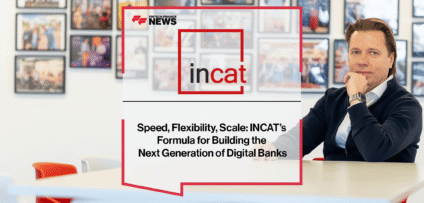
Speed, Flexibility, Scale: INCAT’s Formula for Building the Next Generation of Digital Banks
Share this post: Share on LinkedIn Share on X (Twitter) Share on Facebook Share on […]
Oleg Boiko Highlights the Leadership Traits That Define Business Survival
Share this post: Share on LinkedIn Share on X (Twitter) Share on Facebook Share on […]
Infosys Expands Strategic Collaboration with DNB Bank ASA to Modernize Financial Crime Operations
Infosys (NSE, BSE, NYSE: INFY), a global leader in AI-first business consulting and technology services, today announced the expansion of its strategic collaboration with DNB Bank ASA (DNB), Norway’s largest bank, to modernize its Financial Crime (FinCrime) operations using NICE Actimize X-Sight Enterprise platform. Through this engagement, Infosys will help DNB transform fragmented, legacy systems into a unified, intelligence-driven, cloud-native platform that enhances risk insights, improves detection accuracy, and strengthens multi-jurisdiction regulatory compliance.
Broadridge Appoints Kunimi Yatani Premier Account Leader for Japan
Broadridge Financial Solutions, Inc. (NYSE: BR) today announced that Kunimi Yatani has joined the company as Premier Account Leader (PAL) for Japan, effective immediately. Based in Tokyo, Yatani will report to Mark Gidley, Head of EMEA & APAC Account and Commercial Management, and will lead strategic engagement across some of Broadridge’s most important Japanese client accounts. He will focus on strengthening senior-level connections, unlocking new growth opportunities, and advancing a more coordinated enterprise approach across Broadridge’s global business.

Safe and Compliant Deployment of Financial AI Agents at Full Scale
Share this post: Share on LinkedIn Share on X (Twitter) Share on Facebook Share on […]
EXCLUSIVE: “Simplifying Complexity in Global Money” – Nathan Best, Equals in ‘The Fintech Magazine’
Share this post: Share on LinkedIn Share on X (Twitter) Share on Facebook Share on […]
New Partnerships Bring Ripple’s USD-backed Stablecoin RLUSD to Türkiye
Ripple, the leading provider of blockchain-based enterprise solutions across traditional and digital finance, today announced that its enterprise-grade, USD-backed stablecoin Ripple USD (RLUSD) is now available to institutions in Türkiye through three new partnerships with BiLira, Bitexen and Bitlo.

Conferma Eliminates Fax Across APAC, Accelerating Global Shift to Digital Virtual Card Delivery
Conferma, the leading provider of virtual card technology for business travel, has expanded its global programme to eliminate fax, rolling out a full shutdown across Asia Pacific. From 1st June, hotels across APAC will no longer receive virtual card information via fax – regardless of where the booking originates.