

Breaking News
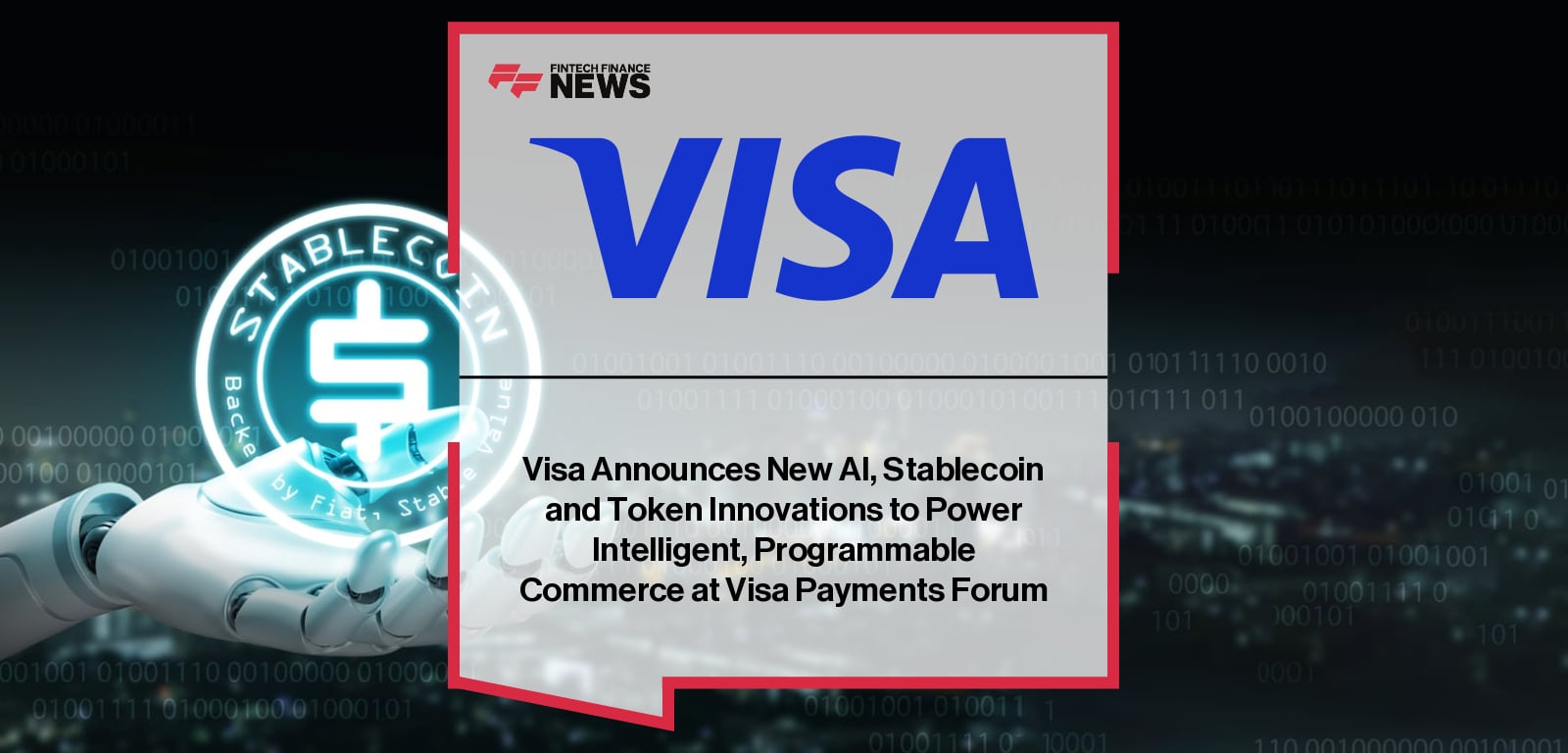
Visa Announces New AI, Stablecoin and Token Innovations to Power Intelligent, Programmable Commerce at Visa Payments Forum
WHY THIS MATTERS: Visa’s latest announcements signal a definitive pivot from facilitating simple card transactions to orchestrating the future of “agentic commerce.” As AI agents increasingly autonomously initiate and execute complex financial tasks, the industry faces a profound trust and security challenge. Visa’s move to build the infrastructure—such as the Agentic Directory and token-based assurance—positions it as the essential, neutral layer for this new paradigm. Simultaneously, by scaling stablecoin settlement and tokenized deposits, Visa is effectively bridging the gap between legacy banking and on-chain efficiency. This isn’t just an incremental update; it’s a strategic effort to ensure that as commerce moves from human-led to machine-led, Visa remains the indispensable pipe through which global value flows. For banks and merchants, this modular approach validates that modernization does not require “rip and replace” tactics, but rather the intelligent integration of tokenized, programmable money.
At Visa Payments Forum 2026, Visa (NYSE: V) announced new AI, stablecoin and token capabilities designed to help clients unlock the next generation of commerce. These innovations reflect a simple objective: ensuring trust, security and control evolve alongside increasingly fast, automated and intelligent commerce experiences.
In a keynote presentation, Jack Forestell, Chief Product & Strategy Officer at Visa, outlined how two foundational shifts—artificial intelligence and stablecoins—are transforming both the front end and back end of money movement, and how Visa is enabling clients to participate.
“AI is transforming the front end of commerce. Stablecoins are reshaping the back end,” said Forestell. “Visa’s role is to enable it to work securely, reliably and at global scale, for every participant in the ecosystem.”
Powering the Front End of Commerce—and How It Gets Built—with AI
Visa detailed how AI is reshaping how transactions are initiated, authorized and trusted—while also accelerating how new commerce experiences are designed, developed and delivered, particularly as AI agents increasingly act on behalf of consumers and businesses.
Visa Intelligent Commerce, the company’s platform for agentic commerce, provides the trust, controls and connectivity needed for AI agents to securely discover, initiate and complete transactions.
To support this shift, Visa is working across the ecosystem—partnering with leading AI platforms, enabling new merchant capabilities and building infrastructure to ensure agent-initiated transactions are transparent and trusted, including:
- Agent Score: Created with New Generation, it allows merchants to evaluate their websites for agentic commerce readiness—specifically, whether AI agents can navigate, understand and complete tasks on a merchant’s website.
- Agentic Directory: Merchants need to know which agents can be trusted to transact on their sites, and agents need confidence that they are interacting with legitimate merchants. The directory includes agents and merchants that Visa has verified as legitimate participants in agentic commerce.
- OpenAI Partnership: a strategic collaboration with OpenAI to enable secure Visa payments within agentic commerce, enabling seamless and trusted payments across OpenAI. Through the partnership, Visa will provide its global network, credentialing capabilities and security infrastructure to support agentic commerce experiences, helping consumers and businesses interact and transact with confidence.
- Large Transaction Model: An AI model trained on billions of transactions to improve fraud detection while increasing authorization performance and reducing false declines—a trade-off the industry has struggled with for years.
Visa also demonstrated early development concepts from its Crypto Labs and developer teams. This included a Command Line Interface proof of concept that lets AI agents pay for digital services directly in the terminal using Visa’s tokenized credentials.
“We believe a growing share of creation and transactions will be led by developers using AI tools,” said Forestell. “We are working with the industry to make cards the best way to pay in the Command Line.”
Enhancing Tokens for AI-Driven Commerce
Visa announced significant enhancements to its tokens, focused on bringing more data, context and assurance into the credentials used in digital commerce.
Today, tokens already carry a highly secure data set purpose-built for digital payments. As commerce extends to new channels and agents, Visa is enriching the data to provide more details on the transaction type, where the token is being used and who is making the payment.
A second key advancement is a token assurance signal. Token use is evaluated throughout its lifecycle—based on provisioning and behavioral history—to generate a signal of trust behind each transaction.
These enhancements provide issuers with stronger signals for authorization decisions, helping reduce false declines for merchants while minimizing friction for consumers.
Designed for AI-driven commerce, these developments embed identity, permissions and behavioral signals more deeply into credentials—allowing trust to travel with the transaction across devices, channels and use cases, including those initiated autonomously by AI agents.
Modernizing the Back End of Money Movement with Stablecoins
Visa also shared progress in modernizing settlement and value transfer through stablecoins and blockchain-based infrastructure.
- Tokenized Deposits: Visa announced it will build the technology layer that can allow banks to turn traditional deposits into programmable, always-on digital money. This gives banks a way to match the speed and flexibility of stablecoins while keeping funds on balance sheet.
- Stablecoin Settlement: Visa is expanding stablecoin settlement pilots across multiple regions, blockchains and currencies. Building on its first stablecoin settlement pilots in early 2025, Visa has moved billions of dollars in stablecoins across VisaNet, with an annualized run rate of approximately $7 billion as of March 2026. With issuing banks already settling seven days a week onchain with Visa, Visa is also working to extend seven-day settlement to include acquirers, increasing flexibility and frequency across the entire ecosystem.
- Stablecoin-Linked Cards: Visa continues to expand stablecoin-linked card programs, enabling consumers and businesses to spend stablecoin balances anywhere Visa is accepted. With more than 160 programs live or in development globally, adoption is expected to accelerate.
Helping Clients Modernize Without Disruption
Across these innovations, Visa emphasized a consistent theme from clients: modernization is essential, but full system replacement is not practical. Visa is addressing this with modular, cloud-native capabilities that integrate with existing infrastructure and enable banks, fintechs, acquirers and merchants to modernize at their own pace.
- For issuers, the Pismo core banking platform enables flexible, real-time banking and processing capabilities with a phased path away from traditional systems.
- For acquirers and merchants, Unified Checkout provides a consistent way to accept both card and non-card payments through a single orchestration layer—supporting evolving commerce models, including AI-driven transactions. Visa Intelligent Authorization uses real-time network signals and advanced models to help acquirers and their merchants optimize authorization approvals and capture incremental spend that might otherwise be declined.
Leading the Evolution of Commerce
Taken together, the announcements at Visa Payments Forum reflect a clear vision: Visa is becoming the platform that connects AI, programmable money, modern infrastructure and global trust so clients can win now and be ready for what’s next.
“History is filled with innovations that never reached scale,” said Forestell. “What determines success is trust, security and global reach. That’s what Visa brings to every new era of commerce – and what we’re building for the future.”
FF NEWS TAKE: Visa is successfully reframing stablecoins and AI agents as enterprise-grade infrastructure rather than experimental novelties. By embedding tokenized security into the fabric of these new models, they are moving the needle from niche curiosity to institutional necessity. The real test now is market adoption; the technology is ready, but the industry must prove its appetite for agent-initiated payments. Watch the merchant uptake of these new token assurance signals closely—this is where the battle for checkout optimization will be won.
People In This Post

Companies In This Post

- Prosci: Mitigating Human-Side Friction: Deploying Research-Backed Change Management and Executive Coaching Rails Read more
- MNP and Caseware Partner to Build the Future of Agentic Audit Read more
- Driving Sustainable Profit in Fintech with Torus, payabl., and Raiffeisen Bank International Read more
- Eastnets: Navigating the New Era of Instant Payments and Global Fraud Prevention Read more
- The Dual-Edged Sword of Artificial Intelligence: Structuring Governance Protocols for High-Velocity Financial Solutions Read more

MNP and Caseware Partner to Build the Future of Agentic Audit
Caseware, the leading AI platform for assurance and financial reporting, today announced, two major milestones with MNP, one of the largest professional services firms in Canada. MNP has selected Caseware to further its audit transformation, deploying Caseware’s full Cloud Engagement Solutions suite across its practice. Simultaneously, MNP has joined the Caseware Agentic Pioneer Program as a founding member — a strategic co-development partnership that will see MNP build and deploy firm-specific AI agents on Caseware’s governed AI platform. Together, these agreements mark a significant step in MNP’s evolution into a cloud-first, AI audit practice.
Satispay Targets up to €120 Million to Support New Financial Services Push
Momentum S.p.A. (the “Company”) — the holding company of Satispay Group, a European fintech platform combining payments and financial services — announces that, as of today, the Shareholders’ Meeting has been convened, in both ordinary and extraordinary session, for 29 June 2026. Among the items on the agenda is a resolution regarding a capital increase, to be offered as a pre-emptive right to existing shareholders, for a maximum amount of €120 million, to support the acceleration of the Company’s growth strategy and evolution into a comprehensive financial platform.

GoHenry to Join Barclays to Help Even More UK Kids Get Smart With Money
GoHenry is entering into an agreement to be acquired by Barclays to accelerate its mission to make every kid smart with money

Bottomline Unveils CFO Suite to Bring Together Governed AI and End-to-End Cash Flow Management
Bottomline announced the launch of its CFO Suite, a modular platform designed to help finance leaders leverage AI

Starling Achieves Record Pricing for Debut Bond as International Investors Oversubscribe Sale
Starling has achieved record pricing for its debut £150m Tier 2 bond, in the first rated public sale by a European neobank

Innovate Finance Launches 4th Annual Pride in FinTech PowerList 2026, With New Mentorship Programme and Leadership Council
Innovate Finance is proud to announce the launch of the fourth Pride in FinTech Powerlist 2026, alongside two landmark new initiatives

Investa Launches ‘Robin Hood’ Rewards Initiative for Users to Share in Its Future Success
Investa is launching a first-of-its-kind reward programme giving early users a financial stake in the platform’s future growth

Prosci: Mitigating Human-Side Friction: Deploying Research-Backed Change Management and Executive Coaching Rails
Share this post: Share on LinkedIn Share on X (Twitter) Share on Facebook Share on […]

MNP and Caseware Partner to Build the Future of Agentic Audit
Caseware, the leading AI platform for assurance and financial reporting, today announced, two major milestones with MNP, one of the largest professional services firms in Canada. MNP has selected Caseware to further its audit transformation, deploying Caseware’s full Cloud Engagement Solutions suite across its practice. Simultaneously, MNP has joined the Caseware Agentic Pioneer Program as a founding member — a strategic co-development partnership that will see MNP build and deploy firm-specific AI agents on Caseware’s governed AI platform. Together, these agreements mark a significant step in MNP’s evolution into a cloud-first, AI audit practice.
Driving Sustainable Profit in Fintech with Torus, payabl., and Raiffeisen Bank International
Share this post: Share on LinkedIn Share on X (Twitter) Share on Facebook Share on […]

Eastnets: Navigating the New Era of Instant Payments and Global Fraud Prevention
Share this post: Share on LinkedIn Share on X (Twitter) Share on Facebook Share on […]

The Dual-Edged Sword of Artificial Intelligence: Structuring Governance Protocols for High-Velocity Financial Solutions
Share this post: Share on LinkedIn Share on X (Twitter) Share on Facebook Share on […]
Satispay Targets up to €120 Million to Support New Financial Services Push
Momentum S.p.A. (the “Company”) — the holding company of Satispay Group, a European fintech platform combining payments and financial services — announces that, as of today, the Shareholders’ Meeting has been convened, in both ordinary and extraordinary session, for 29 June 2026. Among the items on the agenda is a resolution regarding a capital increase, to be offered as a pre-emptive right to existing shareholders, for a maximum amount of €120 million, to support the acceleration of the Company’s growth strategy and evolution into a comprehensive financial platform.

EXCLUSIVE: “Meeting the Challenge of Mythos” – Monica Sasso, Red Hat in ‘The Fintech Magazine’
Share this post: Share on LinkedIn Share on X (Twitter) Share on Facebook Share on […]