Timur Turlov: "Nobody Needs the Best Bank in One Country. They Need the Best Bank in the World" on Freedom Holding Corp's Global Strategy
By Ali Paterson · 3 September 2026
Timur Turlov, founder and CEO of Kazakhstan-based, Nasdaq-listed fintech group Freedom Holding Corp., has outlined his vision for the future of global companies. Freedom Holding already operates across 24 countries, including markets in the United States, Europe and Central Asia. Timur Turlov believes global markets will ultimately be dominated by a handful of companies offering the best services to customers. For businesses, he argues, the goal should therefore be to become the Google or ChatGPT of their respective industries - an ambition that has shaped his own strategy for Freedom Holding.
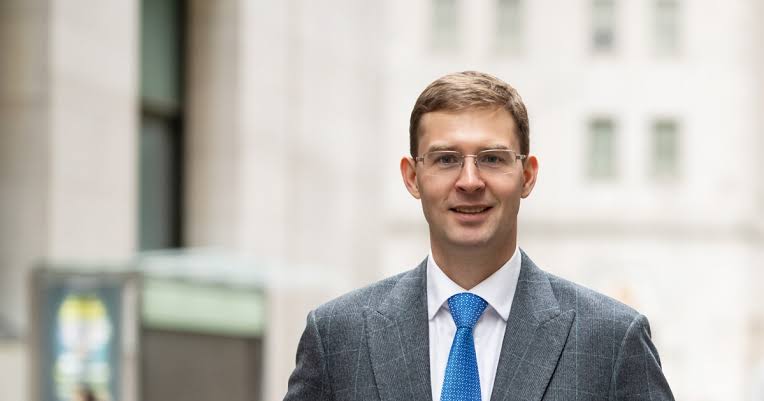
Timur Turlov compares Freedom's future model with global digital platforms that scale a single technological foundation across multiple markets. He believes Freedom can become a global digital service comparable to Google and ChatGPT.
“Google is used all over the world; 70-80% of all AI inference is concentrated in 1-2 companies. I am sure that the same thing will happen with digital banking. People will use the best technology worldwide. Nobody needs the best bank in Kazakhstan, USA or Europe; they need the best bank in the world,” he explains.
Timur Turlov sees an opportunity for Central Asia, where Freedom originated, to participate in the global digital banking race.
“I don't want to build a holding company that has the same name in every country but different businesses. This will not create the synergies we dream of,” Turlov says. According to him, the goal is to take the ecosystem built around Freedom SuperApp in Kazakhstan to other countries: “so that we can fully export our technology.”
Built in Kazakhstan, Adapted Across Markets
The strategy already has a clear roadmap. Freedom Holding Corp. needs to turn its internal infrastructure into a set of components that can be deployed relatively quickly in a new market and adapted to local requirements.
“The whole team is working to put all our systems together into a single kit,” Turlov says. This ready-to-deploy solution, he says, would include an automated banking system, card processing, accounting systems and loyalty programs. A local bank would not have to use all the kit modules at once. “The system should be organized so that each bank could customize it according to regulatory requirements, turning some products on and others off,” the entrepreneur explains.
The modular design is meant to address one of the key challenges of international expansion in financial services: combining a common technological foundation with differences in local regulations and market demand. This approach allows technology itself to scale.
A Test for the Model
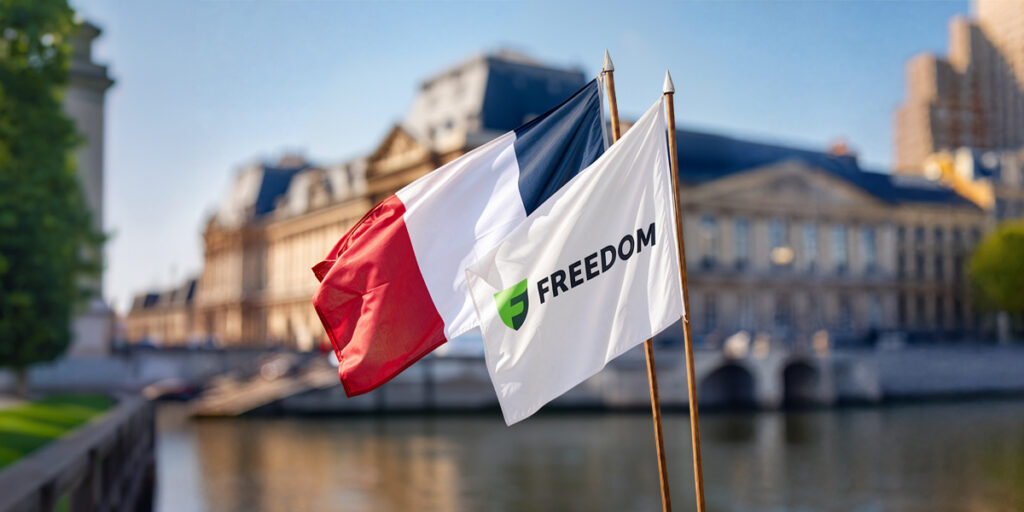
Freedom Holding Corp. plans to test its Kazakhstan-developed model in substantially different regulatory and market environments, including France. In June 2026, the holding announced that it had applied for a banking license in the country. The group plans to use France as a base for expanding its presence in the European market.
“France is one of the two largest economies in Europe, with a big market. It is a prestigious jurisdiction that made it clear to us that it wants to see us there. The French government is interested in investment and is ready to help, despite our unusual geographic position,” Turlov says.
“What Macron did with the Choose France program is amazing. I have not seen anything like it anywhere else in Europe. They were the only ones who actively helped and supported us at every level, from the Ministry to local authorities and business associations,” Freedom Holding’s CEO says.

Beyond the European Market
Beyond Europe, Freedom Holding also plans to roll out its ecosystem in Turkey, where it acquired a 99.32% stake in Turkish Bank A.Ş. and secured a brokerage license, and in Georgia, where, as in France, Freedom plans to obtain a banking license.
Another potential market for Freedom is Pakistan, the world’s fifth-most populous country, with nearly 260 million people. Turlov sees strong potential there because of its large population and the still relatively low use of cashless payments. “Pakistan is a market of the future, in my view,” he says. He estimates that around 80% of the population still makes little or no use of cashless payments, while the government is taking steps to encourage a shift toward a cashless economy.
Unlike more mature markets, Pakistan offers Freedom an opportunity to enter as digital payments gain momentum.
Faster, Rather Than Bigger
Freedom Holding’s ambitious international strategy is backed by strong financial performance. In the first quarter of fiscal 2027, which ended June 30, 2026, the company’s revenue increased by nearly 40% year over year to $732.5 million. Total assets reached $14.05 billion. The banking business’s customer base grew to 5.4 million, while the number of brokerage accounts reached 874,000.
These results show the scale Freedom Holding Corp. has already achieved. For Turlov, however, the next challenge is not just to become bigger, but to bring Freedom’s technology to new markets faster.