

Breaking News

ITC London Day 1: Why the “Future of Insurance” is a Cultural Debt, Not a Tech Deficit
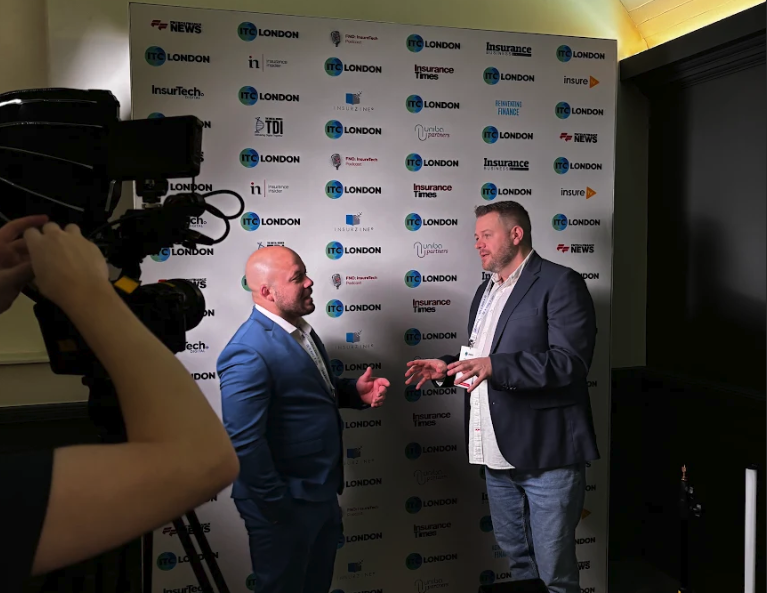
Reporting from the floor of The Brewery, it’s clear that the London Market is suffering from a collective case of “Pilot Fatigue.” After twelve years of POCs and a sudden deluge of AI use cases, the conversation has shifted from what the tech can do to why the operating model can’t keep up.
The energy at ITC London today is electric but grounded. While past years felt like a gold rush of “flashy” AI demos, today’s sessions revealed a sharper, more urgent truth: We have plenty of GenAI prototypes, but almost no way to scale them.
As Scott Sayce, Chief Innovation Officer at DUAL, noted during the opening panel: “The future of insurance is here right now. We just haven’t realized it.”
The “Squishy Bit”: Why Culture is Eating AI for Breakfast
One of the most resonant themes from the Day 1 sessions was the “squishy bit” of the innovation conundrum—talent and culture. While the industry has spent the last decade perfecting the “funnel of use cases,” it has largely ignored the human infrastructure required to actually run them.
The consensus? Innovation isn’t about revolution; it’s about evolution. The fear of “replacement” is being countered by a new narrative: AI as a Teammate.
- The Enhanced Underwriter: AI isn’t coming for the underwriter’s desk; it’s coming to handle the data-drudgery so they can provide better service to brokers.
- The Feedback Loop: Many companies are struggling because their operating models weren’t built for iterative testing. You can’t scale a prototype built in a “lab” if your actual business environment lacks the cloud infrastructure or the “ground-up” engagement to support it.
The Identity Crisis: From Knowledge to Understanding
A profound point raised today touched on the “Fluency Trap.” We are often fooled by the linguistic fluency of LLMs, forgetting that they understand language, but they don’t understand the world.
This is where the “Hero Work” comes in. The industry is currently at a crossroads regarding how to embed human expertise into these systems without erasing the human in the process.
“Our identities are attached to the jobs we do. If we can’t articulate the new value a human brings to an automated process, we lose the talent to other industries.”
The ITC London “Three-Pillar” Strategy
To bridge the gap between strategic vision and operational reality, leaders like Louise O’Shea (CFC) and Arslan Hannani (Aviva) are converging on a three-pronged approach to the “Hero Work”:
| Column | Focus Area | Goal |
| Talent | Ground-up engagement | Moving away from “out-of-the-box” solutions to human-shaped tools. |
| Technology | Nimble architecture | Building tools that aren’t tied to a single LLM provider to avoid “release-day” breakages. |
| Capital | Efficient Flow | Ensuring reinsurers, MGAs, and brokers are digitally synced to move capital faster. |
Protecting the Brain Power
There is a ticking clock beneath the cobblestones of the City. With a significant portion of London Market experts set to retire in the next 15 years, the race is on to transfer that “human understanding” into digital systems before it walks out the door.
As Day 1 closes, the message is clear: You can buy the best AI in the world, but if you don’t bring your people on the journey, you aren’t innovating—you’re just experimenting. We’ve had 12 years of experiments. It’s time for the “small revolution” to begin.
Stay tuned for more coverage from FF News as we dive deeper into the Challenge Lab on Day 2.
People In This Post







- FTT Lending 2026: What is the Biggest Buzzword at FTT Lending 2026? Read more
- The Role of Long-Form Knowledge in a Short-Form Financial World Read more
- nCino Analyst Digital Partner Cuts Commercial Relationship Review Time by Up to 70%, Enabling Financial Institutions to Build an AI-Augmented Credit Workforce Read more
- Lloyds Banking Group Leads Landmark Quantum Computing Experiment Exploring Economic Crime Prevention Read more
- Finexer Is Emerging as the Open Banking Infrastructure UK SaaS Platforms Are Building On Read more

Two Heavyweights Join the Genasys Board
Genasys are pleased to announce that Hugh Hessing and Gavin Routledge have joined Genasys as Non-Executive Directors

Vertafore Delivers on Promise to Save Account Managers Up to Two Hours a Day
Vertafore® announces that its initiative, Project Impact, has delivered on the commitment to give account managers up to two hours of their day back

Feather Insurance: From Overwhelm To Resilience, Most Expats Face A Relocation Reality Check
Feather's Relocation Reality Check examines the pressure points expats face in their first year abroad

Insurtech Koala Wins New Airline Partnership With Volotea
Koala has partnered with European airline Volotea to deliver a suite of modern, customer-centric insurance and passenger protection solutions

PK1Cloud a division of Perr&Knight and Pythia Announce Strategic Partnership to Deliver AI-Powered Intelligence to the P&C Insurance Market
PK1Cloud announced a strategic partnership with Pythia to bring Pythia's AI capabilities directly into PK1Cloud's regulatory and product development workflows

INSTANDA MAX Unlocks AI-Powered, Mass-Scale, Dynamic Underwriting for Commercial Line Insurers
INSTANDA has launched INSTANDA MAX, a breakthrough ‘underwriter-first’ capability that enables commercial line and non-admitted insurers to underwrite tens-of-thousands of complex assets under a single policy

PolicyStreet Secures Second Sovereign Wealth Fund Backing in Series C First Close
PolicyStreet has secured US$21 million in the first close of its Series C funding round, led by Cool Japan Fund (CJF), Japan’s sovereign wealth fund

FTT Lending 2026: What is the Biggest Buzzword at FTT Lending 2026?
Share this post: Share on LinkedIn Share on X (Twitter) Share on Facebook Share on […]
The Role of Long-Form Knowledge in a Short-Form Financial World
Share this post: Share on LinkedIn Share on X (Twitter) Share on Facebook Share on […]

nCino Analyst Digital Partner Cuts Commercial Relationship Review Time by Up to 70%, Enabling Financial Institutions to Build an AI-Augmented Credit Workforce
nCino highlighted new customer results from nCino Analyst Digital Partner, a role-based AI agent which works alongside human credit professionals

Lloyds Banking Group Leads Landmark Quantum Computing Experiment Exploring Economic Crime Prevention
Lloyds Banking Group has completed the first-known experiment into how quantum computing could help to identify money mules

Finexer Is Emerging as the Open Banking Infrastructure UK SaaS Platforms Are Building On
Finexer is an FCA-authorised Open Banking infrastructure provider giving UK mid-market platforms a single API covering the three layers

Lucky Secures $23M Series B Funding to Scale Credit Access Across North Africa
Lucky has solidified its position as a leader in consumer credit, aiming to play a significant role in Egypt’s transformation into a digital & financially inclusive economy

BanCoppel Selects BPC’s SmartVista to Power Its Instant Credit Cards Issuance Across Mexico
BanCoppel has chosen BPC to modernize its cards and payments operations on the next-generation SmartVista platform