

Breaking News
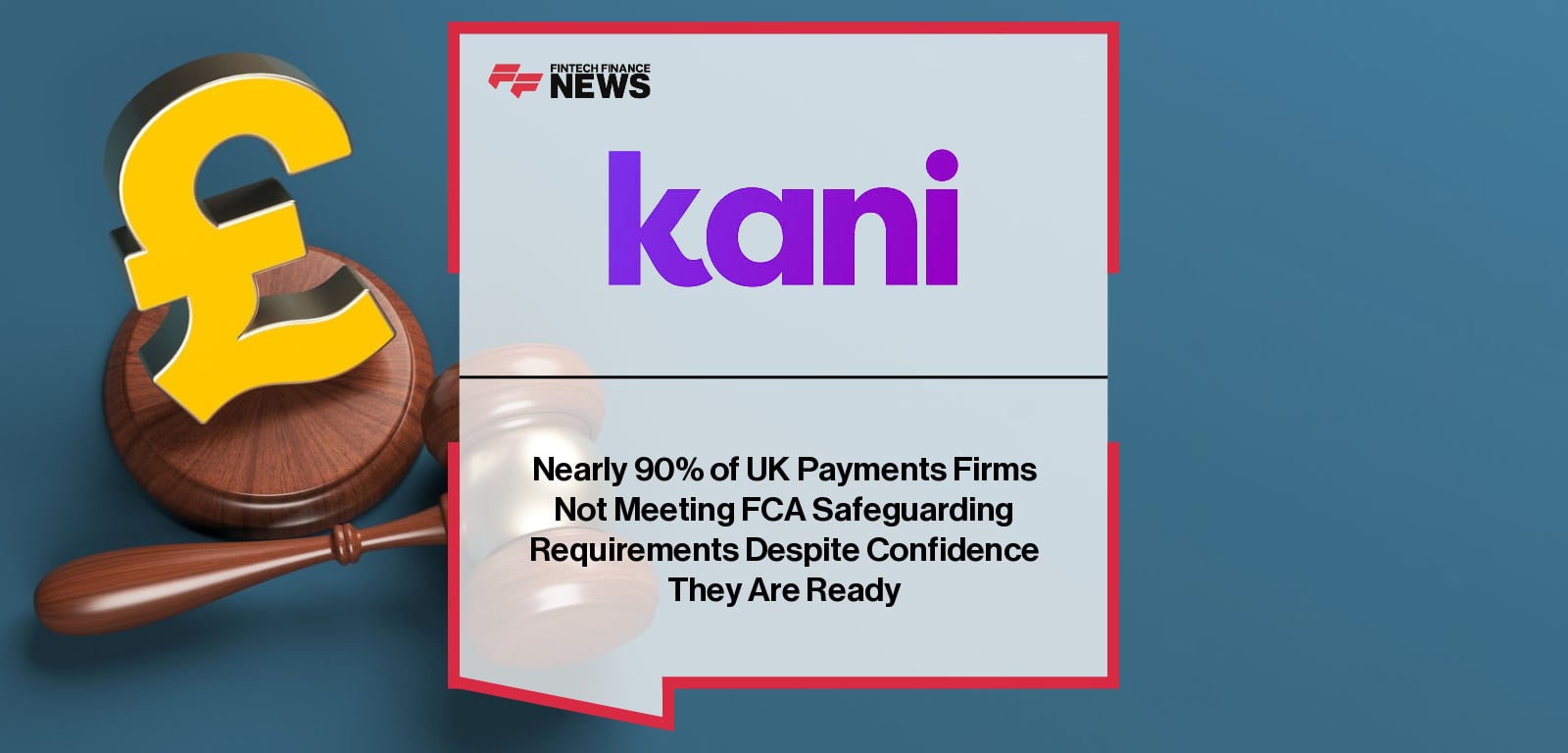
Nearly 90% of UK Payments Firms Not Meeting FCA Safeguarding Requirements Despite Confidence They Are Ready
Nearly 90% of UK payments firms are not yet compliant with new FCA safeguarding rules, despite widespread confidence that they are, according to new research from Kani Payments, the award-winning payments reconciliation and reporting platform.
The study, which surveyed compliance and finance leaders across FCA-regulated firms, found that while 32% believe they are already compliant with updated CASS 15 requirements, just 13% are performing the daily reconciliations those rules demand.
With the updated safeguarding regime coming into force on 7 May 2026, the findings highlight a significant gap between perceived readiness and actual operational capability across the sector.
Confidence outpacing capability
Awareness of the new rules is high. No respondents reported uncertainty about how the requirements apply to their organisation, and 84% say they could explain their safeguarding calculations to an auditor if required.
However, the underlying processes tell a different story.
Without daily reconciliation, shortfalls can go undetected for extended periods, while root-cause analysis and evidence gathering become significantly more complex under regulatory scrutiny.
The FCA’s 48-hour expectation for producing safeguarding resolution packs adds further pressure. Yet only 36% of firms report having instant or near-instant access to a complete evidence pack. Among those relying solely on spreadsheets, two-thirds require at least six hours to compile the necessary data, and one in three needs more than a full working day.
Spreadsheets creating structural risk
Despite increasing regulatory expectations, spreadsheets remain central to many firms’ safeguarding processes. Nearly two-thirds (64%) still rely on them for monthly safeguarding returns.
While spreadsheet-based processes are not inherently non-compliant, they introduce structural vulnerabilities at a time when regulators are demanding greater control, transparency and auditability. Among firms using spreadsheets alone, 22% say they lack confidence that their reports would withstand audit scrutiny.
Aaron Holmes, CEO of Kani Payments, said, “This is a clear case of confidence outpacing capability. Firms understand the rules, but many are not yet operating in a way that meets them.
“When only one in eight firms is reconciling daily, but daily reconciliation is about to become the standard, that is not a marginal gap – it is a structural issue. Treating this as a reporting upgrade misses the point. This is an operational shift. Firms need to move from periodic processes to continuous control.”
A fundamental operational shift
The updated regime, introduced under PS25/12, represents a fundamental change to how safeguarding must function. It shifts from a periodic compliance obligation to a continuous operational control, with daily reconciliation, enhanced record-keeping and formalised evidence standards embedded in regulatory expectation.
For firms whose back-office processes were designed around weekly or monthly cycles, this transition requires more than increasing the frequency of existing tasks. Reconciliation logic, data ingestion, exception management and reporting must be restructured to operate consistently and reliably every day.
Holmes added, “You cannot simply accelerate a weekly process and expect it to meet daily requirements. Firms need systems and controls that are built for consistency, not manual assembly.
“The deadline is here, and the FCA has been clear about its expectations. Firms that have not adapted risk falling behind very quickly.”
Read the full report here.
People In This Post

Companies In This Post

- Brightbeam: Weaving AI into the Fabric of Your Financial Organization Read more
- Sprintax: Making Withholding Tax Recovery an Automated Reality Read more
- MPE 2026: Forter on Preparing Merchants to Safely Engage with Agentic Commerce Read more
- TSAM London: Profidata’s Strategy for AI Readiness and Clean Data in Asset Management Read more
- RTS 2026: Supporting the Retail Ecosystem Through Flexible Technology Read more


FIS Brings Agentic AI to Banking with Anthropic, Starting with Financial Crimes
FIS® announced that it is working with Anthropic to bring agentic AI to banking, beginning with the Financial Crimes AI Agent

Temenos Expands its SaaS Offering on AWS
Temenos announced an expansion of its SaaS offering on AWS, adding Digital Banking and Payments to its existing Core Banking SaaS on AWS

Lloyds Banking Group Unveils Envoy – a New Platform for Building AI Agents Safely at Scale
Lloyds Banking Group has launched Envoy, a new internal platform that provides a secure and governed way to build and run AI agents across the organisation
AutoRek Strengthens Executive Team With Appointment of Tony Livesey as Chief Technology & Product Officer
AutoRek announced the appointment of Tony Livesey as Chief Technology & Product Officer

Corgi Launches AI Insurance Coverage to Protect Businesses When AI Goes Wrong
Corgi has launched its AI Insurance Coverage, a purpose-built solution designed to protect companies from the real-world consequences of AI failures
SUPERAGENT AI Unveils Platform 2.0, Delivering a Unified Autonomous Workforce for Independent Insurance Agencies
SUPERAGENT has launched 2.0, a comprehensive platform update that transitions the software from an AI feature set into a unified autonomous workforce for independent insurance agencies
FIS Launches Total Issuing Solutions in Southeast Asia, Powering the Region’s Next Wave of Payment Innovation
Global financial technology leader FIS announced the expansion of its Total Issuing™ Solutions portfolio into Southeast Asia

Brightbeam: Weaving AI into the Fabric of Your Financial Organization
Share this post: Share on LinkedIn Share on X (Twitter) Share on Facebook Share on […]

Sprintax: Making Withholding Tax Recovery an Automated Reality
Share this post: Share on LinkedIn Share on X (Twitter) Share on Facebook Share on […]

MPE 2026: Forter on Preparing Merchants to Safely Engage with Agentic Commerce
Share this post: Share on LinkedIn Share on X (Twitter) Share on Facebook Share on […]
TSAM London: Profidata’s Strategy for AI Readiness and Clean Data in Asset Management
Share this post: Share on LinkedIn Share on X (Twitter) Share on Facebook Share on […]

RTS 2026: Supporting the Retail Ecosystem Through Flexible Technology
Share this post: Share on LinkedIn Share on X (Twitter) Share on Facebook Share on […]

Fintech Meetup 2026: Aevi on How Open Orchestration Changes the Game for Payments
Share this post: Share on LinkedIn Share on X (Twitter) Share on Facebook Share on […]

Digital Learning in Finance: What Makes a Trading Course Effective in 2026
Share this post: Share on LinkedIn Share on X (Twitter) Share on Facebook Share on […]