Fintech – ‘a Normal Evolution of The Competitive Environment’
By FF Newsroom · 4 August 2015
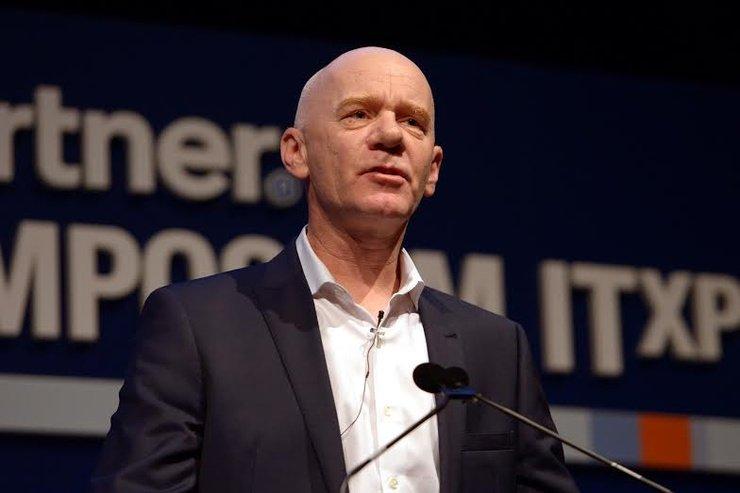
Patrick Maes, CTO of ANZ Bank, talks to Devie Mohan of Banknxt at Sibos 2015 about fintech and the part it plays in the evolution of banks.
Patrick Maes is CTO of ANZ Bank and is responsible for defining the strategy and plan for GTSO, ANZ’s delivery division, which provides all of ANZ’s technology, operations and shared services. He has a doctorate in Applied Economics and a Masters in Artificial Intelligence and Cognitive Sciences, and serves on the advisory board of Melbourne’s RMIT School of Computer Science and Information Technology.
At Sibos 2015, Devie Mohan asked him about his views on blockchain technology, and about the biggest challenges faced by large banks.
What do you think are some of the fintech trends with huge potential impact on how banks function today?
Firstly, I want to highlight that we do not see fintech, as it is called, as a particular threat, but more as a normal evolution of the competitive environment. In addition, our view is that there are more than enough challenges for the world and specifically the financial services industry to address, and that no single entity such as a bank can address all of these challenges on its own. They need to take a more multi-entity collaboration approach, and that’s exactly what we’re doing with vendors, universities, fintechs, and so on. Having said that, there are some obvious trends or developments that will have a large impact:- Blockchain technology – not so much for the exchange of currency such as bitcoin and so on, but more for the ability of the technology to carry richer information about a transaction other than value.
- Cybersecurity – by its nature this is an industry challenge and can only be properly addressed with an industry wide approach.
- Always on – consumers have an expectation that the services we provide in a digital age will be available 24/7, and the challenge for banks and other organisations is to change the traditional measures of performance from internal, often infrastructure-oriented measures to customer-oriented measures.
What do you think are the biggest challenges implementing digitalization within a large bank?
Contrary to much of the commentary lately around digital, the biggest challenges to implementing digitization has little to do with technology or innovation and more to do with culture, risk, and leadership. These challenges are not easy to address and take time to change. However, they must be changed if our efforts around digitization are to be truly transformational, otherwise they risk being just superficial; just ‘shiny toys’. The aspect around leadership involves ensuring a major shift in the way corporates operate, starting with a clear purpose, authentic client-centricity and high velocity learning.What kind of initiatives is ANZ pursuing this year to handle the level of disruption being seen in the industry?
What is described as disruption is, in my view, simply change. However, the pace of that change is accelerating, and it’s this that’s driving fundamental business model change. This year, we took our entire board of directors and management board to Silicon Valley to dive into how to accelerate our digital transformation, through sessions with some of the leading new and incumbent organizations that have succeeded at digital transformation, as well as leading research practitioners of the topic from the wider MIT. We are now developing an executive development program around the content and insights undertaken through these activities, to embed the mindset required to maintain momentum and execution of the transformation. In addition, we continue (or are undertaking) a number of initiatives to address so-called disruption. We are developing a common innovation platform that includes the following capabilities:- an innovation lab environment to develop ‘patterns’ for internal and external activities
- an agile delivery capability
- access to technology platforms and skills.
Do you work closely with startups? If so, to what level do you see yourself getting involved with them? Is it more of a partnership or more of an investment strategy that you would rather pursue?
I don’t think we necessarily need to pursue an investment-oriented engagement model for startups. We are taking a collaborative approach, engaging startups directly and through accelerator programs, as well as leading or participating in multi-party collaboration activities such as those mentioned earlier. These collaboration activities include working with leading universities, research organizations and strategic partners, including software, hardware and consulting partners (among others). At ANZ, we are in the varying stages of building these relationships:- We are undertaking innovative projects with many universities across Asia Pacific. We have explored platforms for co-created apps with internal and external parties, advanced data visualization techniques, usage of gamification in financial advice, advanced analytics, and so on.
- We are beginning to invest in fintech environments across the region, including environments in Australia and New Zealand, among others.
- We are beginning to engage with fintech startups themselves to explore possibilities.
- We are undertaking collaborative events such as hackathons internally and externally.