

Breaking News
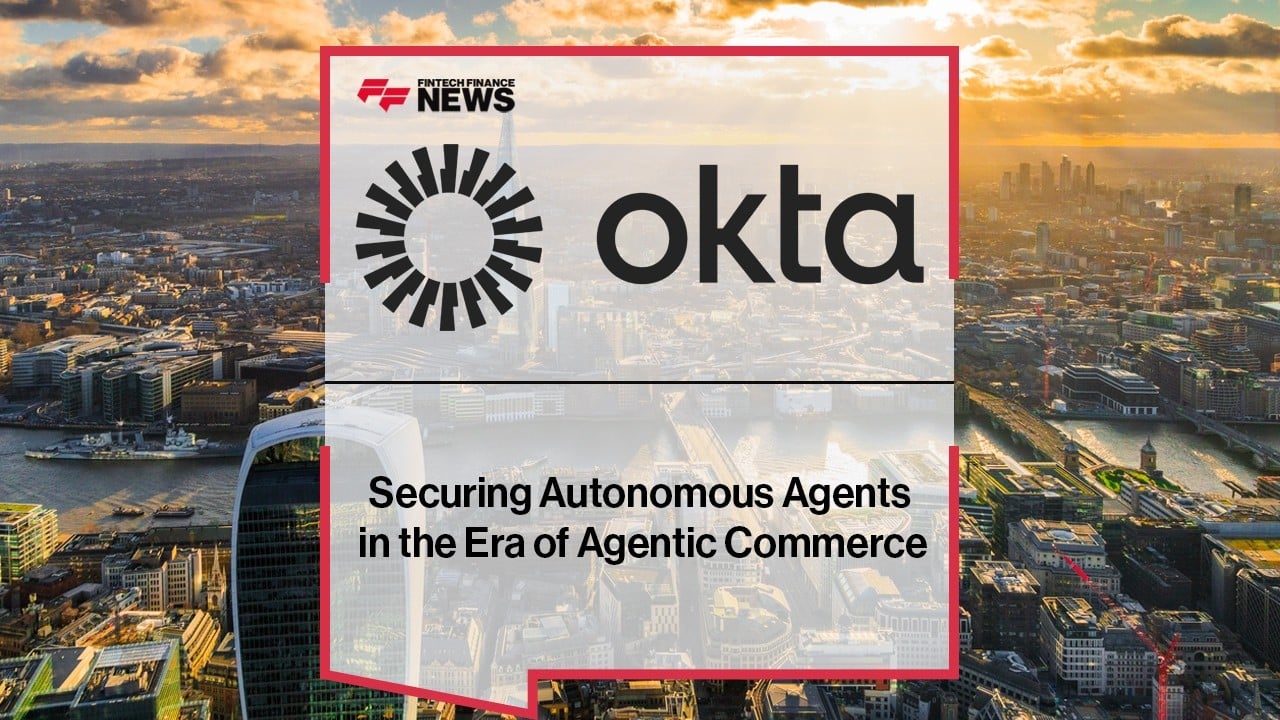
Securing Autonomous Agents in the Era of Agentic Commerce
At the FTT Payments event, the most significant shift projected to impact the transaction landscape over the next 12 months is the rapid emergence of agentic AI. Mike Gibbs, Senior Manager, Solutions Engineering, Auth0 at Okta, highlighted that the industry is moving quickly toward an “agentic commerce” model. In this new paradigm, autonomous AI agents—rather than traditional static interfaces—will actively execute payments and handle commercial transactions on behalf of both individuals and organizations. As these automated entities assume a primary role in financial decision-making, ensuring they can operate with absolute security has become a critical operational requirement for the entire financial ecosystem.
To help the industry safely prepare for this wave of automated commerce, Auth0 and Okta are focusing their identity and access management solutions on securing these AI agents. Because agents act as proxies for humans, traditional static login credentials and open-ended permissions are no longer sufficient, as they create immense fraud and systemic vulnerabilities.
To mitigate these risks, the company is enabling organizations to implement advanced security frameworks designed specifically for autonomous machine interactions, built on three core pillars:
-
Eliminating Standing Privileges: Ensuring that AI agents do not possess permanent, unchecked access to financial accounts or data systems, thereby reducing the blast radius of a compromised agent.
-
Human-in-the-Loop Approvals: Integrating strategic friction into the transaction lifecycle, requiring explicit human validation for high-value, high-risk, or anomalous automated payments.
-
Fine-Grained Authorization: Deploying highly specific, contextual permission models that dictate exactly what an agent can purchase, up to what financial limit, and under what precise parameters.
By combining these identity verification safeguards with granular access control, Auth0 and Okta are providing the underlying security fabric necessary to protect data integrity and prevent fraud. This infrastructure allows banks, fintechs, and enterprises to confidently embrace agentic commerce, turning autonomous transactions into a secure and scalable reality.
Key Highlights from Mike Gibbs:
-
The Agentic Commerce Shift: Gibbs identifies the transition to AI agents executing financial transactions on behalf of humans as the single most disruptive trend in payments this year.
-
Securing Autonomous Proxies: Why financial infrastructure must evolve to authenticate and monitor the identities of automated software agents rather than just human users.
-
Dismantling Standing Privileges: The critical requirement to remove permanent, open-ended access for AI agents to block systemic security exploits.
-
Human-in-the-Loop Interventions: Enforcing human oversight and authorization gates before autonomous systems can finalize sensitive financial outcomes.
-
Fine-Grained Authorization Control: Implementing context-aware, hyper-specific permissions that closely govern the financial parameters of automated machine purchases
Companies In This Post

- AutoRek: Simplifying Real-Time Reconciliations and Data Integrity Read more
- How Banks Can Maintain Core Stability While Driving Innovation Read more
- EXCLUSIVE: “Buy, Build, or Boost: Choosing the Right Path Amidst an Accelerating Agentic Future” – Matthew Barnard, BBD and Theodora Lau , Unconventional Ventures in ‘The Fintech Magazine’ Read more
- Intimate Data Enrichment: Powering Hyper-Personalized Portals and Risk-Mitigated Lending Rails Read more
- The Expansion of Machine Identity: Mapping Digital IDs, Liability Protocols, and Cross-Border Frameworks for IoT and AI Agents Read more

AutoRek: Simplifying Real-Time Reconciliations and Data Integrity
Share this post: Share on LinkedIn Share on X (Twitter) Share on Facebook Share on […]
How Banks Can Maintain Core Stability While Driving Innovation
Share this post: Share on LinkedIn Share on X (Twitter) Share on Facebook Share on […]

Intimate Data Enrichment: Powering Hyper-Personalized Portals and Risk-Mitigated Lending Rails
Share this post: Share on LinkedIn Share on X (Twitter) Share on Facebook Share on […]

The Expansion of Machine Identity: Mapping Digital IDs, Liability Protocols, and Cross-Border Frameworks for IoT and AI Agents
Share this post: Share on LinkedIn Share on X (Twitter) Share on Facebook Share on […]
Why Progressive Modernisation is the Smart Way to Upgrade Core Banking
Share this post: Share on LinkedIn Share on X (Twitter) Share on Facebook Share on […]

Amdocs: End-to-End Core Modernization and High-Impact Agentic Acceleration
Share this post: Share on LinkedIn Share on X (Twitter) Share on Facebook Share on […]
Hardening Agentic Financial Networks: Token Intelligence and Identity Guardrails for Autonomous Systems
Share this post: Share on LinkedIn Share on X (Twitter) Share on Facebook Share on […]
AutoRek: Simplifying Real-Time Reconciliations and Data Integrity
Share this post: Share on LinkedIn Share on X (Twitter) Share on Facebook Share on […]
How Banks Can Maintain Core Stability While Driving Innovation
Share this post: Share on LinkedIn Share on X (Twitter) Share on Facebook Share on […]
EXCLUSIVE: “Buy, Build, or Boost: Choosing the Right Path Amidst an Accelerating Agentic Future” – Matthew Barnard, BBD and Theodora Lau , Unconventional Ventures in ‘The Fintech Magazine’
Share this post: Share on LinkedIn Share on X (Twitter) Share on Facebook Share on […]
Intimate Data Enrichment: Powering Hyper-Personalized Portals and Risk-Mitigated Lending Rails
Share this post: Share on LinkedIn Share on X (Twitter) Share on Facebook Share on […]
The Expansion of Machine Identity: Mapping Digital IDs, Liability Protocols, and Cross-Border Frameworks for IoT and AI Agents
Share this post: Share on LinkedIn Share on X (Twitter) Share on Facebook Share on […]
The Financial Benefits of Nearshoring IT Services and How Greentech Is Reshaping Modern Banking Infrastructure
Share this post: Share on LinkedIn Share on X (Twitter) Share on Facebook Share on […]
ACI Worldwide Powers Next-Generation PSP Expansion in Africa with Kwik Payments Go-Live
ACI Worldwide today announced that Kwik Payments has successfully gone live on the ACI Payments Orchestration Platform