

Breaking News

View from the top

Having kept a watching brief on potential applications for artificial intelligence, machine learning and blockchain in financial services, SmartStream announced towards the end of 2018 that it was to open two new innovation labs. Here, SmartStream CEO Haytham Kaddoura talks technology, strategy and company culture
THE FINTECH MAGAZINE: There’s been a lot of expectation around what artificial intelligence (AI) and blockchain can deliver for financial services. In your opinion, in which operational areas could they prove most useful and how is SmartStream looking to leverage them?
HAYTHAM KADDOURA: With both of these technologies, the net for potential use cases was cast pretty wide. But I think financial institutions and fintech players alike are increasingly trying to get greater focus on what their priorities should be now.
You’ll find divergent paths attached to specific institutions. Tier 1s in Europe, for example, are more focussed on using the technologies to achieve cost efficiencies and handle Brexit (which is still a big uncertainty). In Asia and the US, banks’ priorities might be different. We’ve picked up 13 use cases for AI and are involved in proofs of concept (PoC) with four Tier 1 financial institutions.
Blockchain is a lengthier process than AI because you need to align your partners, bring them all onboard and make sure that the value is effectively realised in collaboration.
We have a longstanding history with multiple financial institutions that have relied on our solutions for years. Some of these solutions are running on an
on-premise basis and a lot of the interaction between the financial institutions happens offline, via phone calls or other communication channels. What we are doing is building bridges, so that the authentication validation or whatever is needed, gets done instantaneously by simply linking what’s already on-premise in a blockchain environment. That results in better operating efficiency.
We have the audience, we have the technology and we have the reputation so, for us, it’s a minor jump to bring those institutions currently running on-premise solutions into a cooperative, distributed ledger structure – to have the banks cooperate fully, as opposed to running some components of the operation on our systems and having to track, through emails or phone calls, with their counterparties. When everybody is on the same blockchain, then it’s much easier to validate, verify and cross-check.
We’re working on a couple of PoCs in the blockchain environment and, by Q3 this year, we’ll be making some major announcements in that space.
TFM: There are a number of (potentially competing) industry-led blockchain initiatives emerging. Does that concern you?
HK: I think a high level of accuracy is what’s needed by a lot of financial institutions – and blockchain addresses the risk measures at a high level. It touches multiple areas, and that’s why I think it’s taking time, across the industry, for blockchain to be adopted, because different pieces within each financial institution need to be tuned in to derive the best value. Having said that, if you look at the clearing systems – SWIFT versus Euroclear, versus different sorts of institutions that are carrying out similar functions in the US – I hope blockchain doesn’t go down that route, because that will not derive the maximum value I spoke of. You’ll have financial institutions in certain parts of the US focussing on one blockchain and similar entities in Europe coalescing around others. I suspect there’ll be different blockchain environments addressing different markets, each with their own key supporters. Deciding who to be aligned with is going to be the big challenge for Tier 1 institutions.
TFM: Banks have always had access to vast and detailed amounts of data; up until fairly recently, they just weren’t doing very much with it. How will applying AI to that data in the ways you are exploring transform the world of finance as we know it?
HK: You’re right. Banks have collected data ever since they existed but it’s only in the last decade that they have started realising the value in it. Having the right data in the right format, updated consistently across their client base and across their operations is now the big challenge. There have been some major reports recently that have looked at the banking infrastructure’s ability to clean and enrich this data, so that it’s useful from an AI utilisation perspective. This is one of the major hurdles we have today, but I trust that the banks, within a short time, will be able to address that, so that they are able to predict the direction their clients’ requirements are going to take.
AI is going to make financial services much smarter and more efficient. It has the ability to pick up data trends faster than any human can and that makes the banks
much more responsive in addressing their own regulatory requirements, their feedback to clients and all their stakeholders.
There are so many different uses of AI, it’s impossible for anybody to actually frame it and say ‘this is where it’s going to be most useful’. While there is a lot of hype out there, few companies actually have anything proven, though. SmartStream is in a fortunate position because more than 2,000 financial institutions already rely on our solution – and that’s a great source of knowledge and support when it comes to rolling out our technology initiatives.
TFM: Can you give us an example of how you might use this technology?
HK: One of the components is allowing banks to predict their cash and liquidity requirements by tracking historical data and analysing variations – across time frames, holiday period, etc – and allowing banks to better understand what their cash position is going be two hours down the line, at the end of the day, at the end of the month. That will make the treasury function much more efficient.
TFM: The opening of the Vienna lab was a step change for SmartStream and, given how the company is embedded within the banking landscape, could have a major impact on financial infrastructure. What’s your vision for the company?
HK: The changes in the sector, in technology and regulation, are creating a perfect storm. There are so many moving parts that it’s pushing us, as a fintech, in a direction that is super-dynamic: to look at new ways to serve the industry around digital payments and reconciliation, and using Cloud environments to do that.
We are very well tied in with the financial institutions that we’ve been serving for almost 20 years now, and so there’s a strong level of trust that’s moving us increasingly into a greater strategic role. I think it’s down to the changing nature of the environment that banks are increasingly wanting to work strategically with a fintech such as SmartStream. Banking IT departments, with all due respect, are not necessarily sufficiently funded, or geared up, to address requirements from a wider industry perspective. It’s much more efficient for a fintech player, that is well embedded with financial institutions on a global basis, to do so. SmartStream is happy to be playing that role.
TFM: One of your flagship products is the Reference Data Utility (RDU) unit. What’s on the horizon for that this year?
HK: The RDU has been growing quite significantly. I’ve seen a ramp up in demand over the last two years, driven by regulatory changes, especially in Europe around the second Markets in Financial Instruments Directive (MiFID II) reporting requirements for financial institutions, and around the systematic internaliser (SI) registry function. We’ve been offering the latter in collaboration with a group of approved publication arrangements (APAs), including Bloomberg, Deutsche Börse, NEX Regulatory Reporting, TRADEcho, Tradeweb and Trax, since April 2018. That service enables SIs to register the financial instruments for which they are providing SI services in a centralised database through their APA, so that they can determine which counterparty must report the trade.
The RDU started out focussed on derivatives. However, in 2019, we’ve launched reference data on equities and towards the end of 2019, into early 2020, we’re providing reference data on fixed income securities, too.
We are currently catering for more than 160 capital markets and it took time to get there, because you need to, effectively, negotiate with every market separately to acquire its data. Now that we’ve achieved that, though, there’s been a tremendous uptick in growth which, I believe, is only going to continue.
TFM: Digital payments is a relatively new area for SmartStream. What’s your USP in that space?
HK: Digital payments is being driven out of our Austria venture, with support from our Bristol team in the UK. Using the Austria team’s product knowledge is critical because they’ve been involved in the evolution of digital payments for at least seven or eight years, historically focussed on emerging markets – places like Africa, the Middle East and
Asia. This is where digital payments are growing and mature markets are followers in this space. But now we’re leveraging that knowledge across the globe.
TFM: Another key area of operation is fees and expense management where you’ve done some major work with Credit Suisse. How is that performing for you?
HK: It took a while for financial institutions to realise its value, but now SmartStream is a significant component of the fees and expense management operation within at least five Tier 1s. This is where we’re talking strategic value added, where financial institutions, including some Tier 2s also, are pushing quite a bit of their strategic data and operations to our teams.
Growth in Europe and the US has been significant, I think simply because banks are working to get greater transparency on their exposure to other financial institutions.
We are in a very sweet spot when it comes to helping banks become more accurate, more relevant and more efficient in their handling of fees and expenses, and we’ve saved them millions of dollars in less than a year. I think the business case is there for the taking.
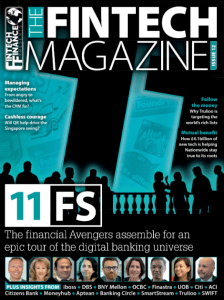
This article was published in The Fintech Finance Magazine: Issue #12, Page 78.
- Worldline and ABN AMRO Extend Partnership to Support Payment Services in the Dutch Market Read more
- RateGain and Juspay Partner to Power ‘RG Pay,’ a High-Performance Financial Technology Platform for the Global Travel and Hospitality Industry Read more
- Travel Providers to Accept UnionPay Cards for Both Direct e-Commerce Bookings and Indirect Sales via Amadeus Travel Platform Read more
- Creditinfo Brings Global Fraud and Identity Solution to Uganda to Strengthen AML and Financial Crime Defences Read more
- BVI Financial Services Conference Examines Global Financial Crime Risks and Reaffirms BVI’s Commitment to Integrity Read more


The platform pulsar
Share this post: Share on LinkedIn Share on X (Twitter) Share on Facebook Share on […]

Simply the best
Share this post: Share on LinkedIn Share on X (Twitter) Share on Facebook Share on […]

Innovation for all
Share this post: Share on LinkedIn Share on X (Twitter) Share on Facebook Share on […]

Staying relevant
Share this post: Share on LinkedIn Share on X (Twitter) Share on Facebook Share on […]

Speakingincode
Share this post: Share on LinkedIn Share on X (Twitter) Share on Facebook Share on […]

The inconvenient truth
Share this post: Share on LinkedIn Share on X (Twitter) Share on Facebook Share on […]
LIBERATING BANKING
Share this post: Share on LinkedIn Share on X (Twitter) Share on Facebook Share on […]

Worldline and ABN AMRO Extend Partnership to Support Payment Services in the Dutch Market
ABN AMRO and Worldline share a distinguished partnership built over decades. In recognition of this strong foundation and proven track record, Worldline will continue to enhance ABN AMRO’s customer payment solutions. This collaboration underscores the value both parties place in their long-term commitment to innovation and operational excellence.

RateGain and Juspay Partner to Power ‘RG Pay,’ a High-Performance Financial Technology Platform for the Global Travel and Hospitality Industry
RateGain Travel Technologies Limited (NSE: RATEGAIN), a global leader of AI-powered SaaS solutions for the travel and hospitality industry, and Juspay, a leading global payments technology company, today announced a strategic partnership to power RG Pay, RateGain’s embedded financial technology platform for the travel and hospitality ecosystem.

Travel Providers to Accept UnionPay Cards for Both Direct e-Commerce Bookings and Indirect Sales via Amadeus Travel Platform
According to ResearchAndMarkets’ recent forecasts, Chinese outbound travel is predicted to grow at a Compound Annual Growth Rate (CAGR) of 13.5%, increasing from $140B today to reach $386B by 2033. UnionPay International helps cardholders to easily make cross-border payments in 183 markets and its payment methods are particularly popular with travelers across Asia Pacific.

Creditinfo Brings Global Fraud and Identity Solution to Uganda to Strengthen AML and Financial Crime Defences
Creditinfo, a global service provider for credit information and risk management solutions, has announced the rollout of its identity, know your customer (KYC) and fraud and ID solution in Uganda. The move supports organisations in the country as they work to strengthen financial crime prevention at a time of rapid digital growth and evolving fraud risk.

BVI Financial Services Conference Examines Global Financial Crime Risks and Reaffirms BVI’s Commitment to Integrity
Government officials, regulators, law enforcement authorities and financial services professionals gathered at the BVI International Arbitration Centre on 5 March for the BVI Financial Services Conference 2026, an event examining the evolving global landscape of financial crime and the responsibilities of international financial centres in safeguarding the integrity of the global financial system.

Glia Launches Industry-First Contractual Guarantee Against AI Hallucinations and Prompt Injections
Glia, the leading platform for intelligent banking interactions, today announced it will offer its more than 700 bank and credit union clients a contractual guarantee against AI hallucinations being presented to customers or members on its Banking AI platform. Glia also now guarantees zero impact from prompt injection attacks on its platform — malicious attempts to trick customer or member care AI into providing information or performing tasks it shouldn’t.
Money20/20 Asia Report: APAC Fintech Ecosystem Shifts from Experimentation to Scale as AI and Digital Assets Drive Leadership
Money20/20, the world’s leading fintech show and the place where money does business, today unveiled its annual Future of Fintech in APAC report ahead of Money20/20 Asia happening in Bangkok on April 21-23 at the Queen Sirikit National Convention Center (QSNCC). The whitepaper is revealing that APAC’s fintech ecosystem has reached a pivotal inflection point. The region is shifting from experimentation to scaled deployment across AI, digital payments, and digital assets, marking a decisive move toward production‑grade innovation.