

Breaking News

The inside track on payments rails

Ebru Pakcan, Treasury and Trade Solutions Head for Citi, explains why SWIFT and blockchain both have roles in improving corporate payments
Instantaneous everything is fast becoming the norm in the consumer financial services space, but less so in the B2B world of corporate finance.
A previous lack of demand combined with the lack of a technological hook to hang them on, mean institutional payments, and particularly cross-border ones, still face a time and transparency lag.
This is about to change dramatically, according to Ebru Pakcan, treasury and trade solutions head for Citi, as changing client expectations force the greatest innovation this sector has seen.
The question is, will new or old rails lead the charge – specifically SWIFT gpi, using the correspondent banking network, or blockchain?
While Citi is a long-term SWIFT supporter, Pakcan is keeping an open mind, recognising blockchain’s vital role in fuelling innovation, with some interesting potential prospects in the pipeline.
SWIFT still holds an advantage as the largest network for payment processing, offering speed, security and transparency to its 165 member banks, with more than 11,000 in its network.
However, it faces competition for the first time, from blockchain-based disruptor RippleNet.
SWIFT gpi’s GPI Tracker, GPI Observer and GPI Directory follow payments using unique end-to-end tracking references (UETR). Meanwhile, Ripple uses distributed ledger technology (DLT) boosted by inter-ledger protocol (ILP) capability for greater interoperability and scalability. Its product selection includes RippleNet, xCurrent, ILP, xRapid and xVia. Setting new standards in tracking, speed, scalability and liquidity, it can confirm payment completion within seconds compared to gpi’s 30 minutes to 24 hours.
Pakcan believes the old, but gpi-enhanced, correspondent banking network still has legs while banks feel their way towards DLT and find the right use cases. Citi itself is dipping its toe into blockchain waters like Komgo, the new DLT platform for trade and commodities finance being developed by Citi and a number of other partners. Founded by a diverse group, including ABN AMRO, BNP Paribas, Citi, Rabobank and energy giant Shell, it aims to digitise the trade and commodities finance sector through a blockchain-based open platform, developed with support from the ConsenSys innovation group. One of its first products will be digital letters of credit, including digital signatures, which Pakcan believes will be part of ‘a great evolution, and in some ways, revolution, of banking activities and financial services activities with our corporate clients’.
In a recent blog, Citi lists the reasons for sticking with SWIFT, including the way it supports the company’s strategyof ‘making communication between our systems and our clients as efficient and future-proof as possible’, smooth implementation and service, positive client feedback and the flexibility to choose between MT 199 messages and APIs as a means of accessing the system.
It is currently adopting phase two of SWIFT gpi, which will bring additional functionality such as instant payment stop and recall. In July 2018, the bank added the Citi Payment Insight app onto its online banking platform, allowing treasury departments to monitor and directly intervene in payments stuck anywhere in the gpi system, thereby maximising a powerful combination of old rails and new tech.
“For us, the most exciting space is our work with institutional clients around real time – not just payments or transactions, but real-time funding, liquidity and information,” says Pakcan.
“For our large corporation and institutional clients, it is critical to know where their payment is,” she adds. “This sounds obvious but historically, especially for cross-border payments, it hasn’t been the case.
“Sometimes the payments they want to trace are critical for a particular supplier or their own purposes, so they need to understand why they are being rejected, for example, and what they can do to influence that.
“Information and speed are important because these institutions are interacting more with customers and the retailers that serve them, and need to be able to respond to their requirement for a real-time response. More real-time infrastructures being rolled out across the globe mean that they now have a way to do it, compared to a decade ago.”
She continues: “When you step back and think about it, SWIFT and its member institutions should probably have been doing this for a very long time, so why hasn’t it happened? Firstly, there was no real impetus for these institutions to say ‘we must evolve’, which is where something like blockchain comes in because the thought processes and ideas around it created the drive among the banks to innovate.
“Secondly, was actual demand and client need. In the institutional payments world, real-time interactivity in the large corporate payments SWIFT was designed for, historically, was not required because those institutions weren’t involved in digital flows or electronic commerce. However, as those trends evolve, the need for real-time information and action increases.
“Those two things were finally put together a few years ago, when SWIFT came together with its largest user banks, of which Citi is among the top ones. When we sat back and said ‘what can we do in this environment?’, it was obvious to respond with ‘what do customers need?’.
“The simple answer was ‘they need to know where their payment is, how it is travelling and what they can do if there’s an issue with it’, and that’s exactly how gpi was born. It’s been evolving very quickly ever since.
“Imagine you’re a corporation making payments to a large group of suppliers, based in the US, in Europe, Asia or elsewhere. When you’re making those payments through SWIFT gpi, we’ll be able to tell you, out of 10 payments you’ve made, eight have made it already and two are still on their way, are with the correspondent or waiting for some sort of a repair, like an issue with the account number. This means you can quickly do something about it,” says Pakcan.
“This is especially important in a globally connected world where electronic commerce is reaching small and medium-sized enterprises, which are becoming suppliers to large corporations. For them, money is everything. When they make a sale, they like to get paid, and this allows our corporations to make their payments more efficiently, have the visibility, get the money out there in real time and actually develop their supplier network in ways that can fuel their own individual growth as well.”
Citi is adapting to this with its flagship Citi Payment Insight application on the Citidirect BE platform to leverage the potential of SWIFT gpi.
“Our customers have been using the Citidirect BE platform for almost two decades now and it has been evolving and growing. With versions on mobile
and tablet, they are able to do all their account transactions, including invoices and statements. We’re now building big data information into the platform, including what comes from SWIFT gpi, giving them end-to-end visibility of the transaction lifecycle,” explains Pakcan.
“If that shows them something they need to interfere with, like stopping, cancelling or redirecting a transaction, they’re going to have that ability online, digitally, and with no paper trail whatsoever.”
So, where do practical considerations like esignatures fit into all of this, when it comes to enabling swifter payments that fit with regulation, and how can Citi help?
“If we can figure out how to bed esignatures into our processes and workflows, it will be very, very powerful. A lot of financial flows have various pieces of bureaucracy that are needed for different reasons. A trade transaction has paperwork like the bill of lading and shipment documents that need to be submitted to an expert authority. These all inform some signing – the actual wet signature and the level of authority needed for a particular transaction. For many years, this meant lots of paperwork and documentation going backwards and forwards, which is painful for our customers because many of them are operating with a large number of legal entities and subsidiaries across the globe, with many bank accounts and lots of mandates they need to give to the banks.
“There is huge efficiency and cost benefit where we can apply an electronic signature or other forms of digitisation and workflow tools, leveraging utilities, Cloud-based documentation or onboarding tools that customers can access, and provide that information and connectivity to the bank.”
So, which out of SWIFT and blockchain does Pakcan see winning through, then?
“It will continue to be a bit of both,” she says. “There’s been a lot of hype about blockchain but people trying to innovate on it have brought that innovation impetus and mindset to a financial services industry that has not necessarily been so.
“Having said that, there are more credible and possibly long-term sustainable solutions and ideas coming to life around blockchain. Fundamentally, innovation will continue, as long as you listen to your clients and make an effort to understand what they actually need.”
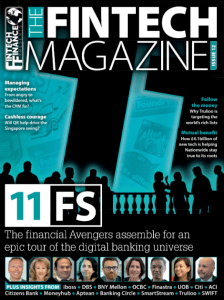
This article was published in The Fintech Finance Magazine: Issue #12, Page 66.
- What Bank Will Still Be Here in 100 Years? Read more
- EXCLUSIVE: “Banking Without Borders” – Richard Ullenius, CSG in ‘The Paytech Magazine’ Read more
- AutoRek & Microsoft: Reconciliation Becomes Strategic Read more
- ReceiptHero Partners with Peach Payments to Enable Digital Receipts on Printer-Less Payment Terminals Read more
- Aviva Launches Insurance App on ChatGPT Read more


The platform pulsar
Share this post: Share on LinkedIn Share on X (Twitter) Share on Facebook Share on […]

Simply the best
Share this post: Share on LinkedIn Share on X (Twitter) Share on Facebook Share on […]

Innovation for all
Share this post: Share on LinkedIn Share on X (Twitter) Share on Facebook Share on […]

Staying relevant
Share this post: Share on LinkedIn Share on X (Twitter) Share on Facebook Share on […]

Speakingincode
Share this post: Share on LinkedIn Share on X (Twitter) Share on Facebook Share on […]

The inconvenient truth
Share this post: Share on LinkedIn Share on X (Twitter) Share on Facebook Share on […]
LIBERATING BANKING
Share this post: Share on LinkedIn Share on X (Twitter) Share on Facebook Share on […]

What Bank Will Still Be Here in 100 Years?
Share this post: Share on LinkedIn Share on X (Twitter) Share on Facebook Share on […]
EXCLUSIVE: “Banking Without Borders” – Richard Ullenius, CSG in ‘The Paytech Magazine’
Share this post: Share on LinkedIn Share on X (Twitter) Share on Facebook Share on […]
AutoRek & Microsoft: Reconciliation Becomes Strategic
Share this post: Share on LinkedIn Share on X (Twitter) Share on Facebook Share on […]

ReceiptHero Partners with Peach Payments to Enable Digital Receipts on Printer-Less Payment Terminals
ReceiptHero has announced a partnership with Peach Payments to introduce digital receipt functionality on the latest generation of Digit Go payment terminals
Aviva Launches Insurance App on ChatGPT
Aviva, is launching an app on ChatGPT, helping new customers to obtain an initial home insurance quote in only a couple of minutes

Clip Now Offers Tap to Pay on iPhone for Merchants to Accept Contactless Payments
Clip now enables its customers to seamlessly and securely accept in-person contactless payments with Tap to Pay on iPhone
Mastercard Advances Agentic Payments in Latin America and the Caribbean With Live Transactions Completed Across the Region
Mastercard announced the successful execution of live, end-to-end agentic payment transactions across Latin America and the Caribbean