

Breaking News
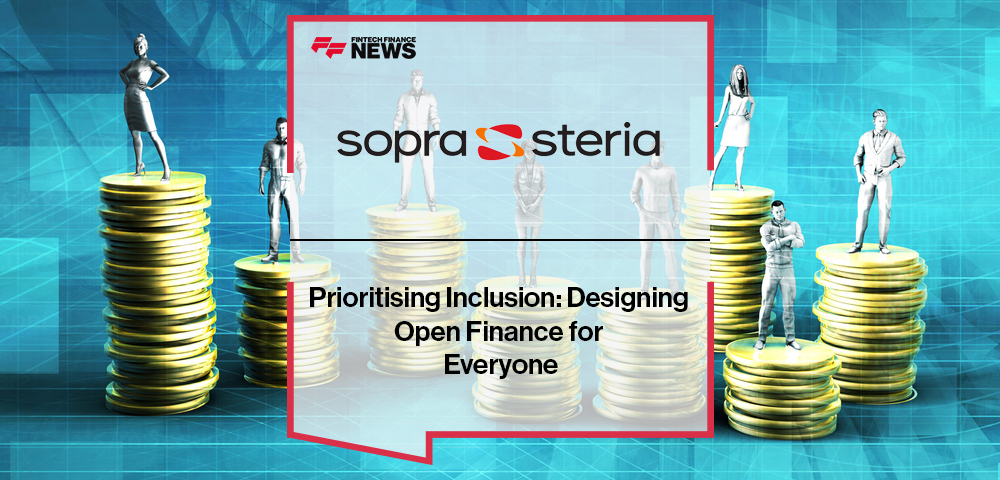
Prioritising Inclusion: Designing Open Finance for Everyone
by Kal Bukovski, Director of Academia & Research at Sopra Steria
The foundations of Open Banking were set out in 2016 following the introduction of PSD2, a pivotal regulation that reshaped the financial landscape. Following on from this, the UK took a bold step towards financial innovation in 2018 by launching Open Banking, a move mandated by the Competition and Markets Authority. Since then, the banking landscape has experienced significant changes. In fact, as of July this year, over 15 million people and businesses are using Open Banking services. Consumers now enjoy a wide range of benefits, such as faster and more secure payments to personalised financial services like budgeting apps, tailored credit offerings, and mortgage products that are custom-made to individual circumstances.
Eight years later, we’re entering the next chapter, Open Finance. While still in its infancy and facing regulatory hurdles across the UK and EU, Open Finance has the potential for the financial industry to provide deeper personalisation for consumers. For example, a single app or central repository that can bring together pension balances, mortgage payments, and ISA savings, offering a unified view of a person’s financial life. Financial planning tools could go further, integrating mortgage details, pension forecasts, and investment performance, to help individuals make decisions about retirement or property moves.
While on the surface this level of personalisation and innovation is to be celebrated, it’s important that any Open Finance offerings or services can cater to customers who are less likely to engage with traditional financial products, such as those in low-income households, to ensure they are not excluded from personalised financial services.
The Open Finance divide
Currently, many propensity and credit scoring models built on Open Banking rely on the secure sharing of customer-permissioned financial data, primarily from current accounts and payment transactions. However, expanding access to additional datasets such as mortgages, investments, and pensions, as envisioned under Open Finance, could significantly enhance the predictive power and inclusivity of these models. However, this approach risks ignoring those whose financial activity is shaped by informal or alternative systems. This could be young adults with limited credit histories, or people from low-income households that rely on government benefits, who would typically be underrepresented in traditional financial datasets.
Many individuals manage their finances responsibly but remain invisible to systems that prioritise structured financial data. As a result, they may sometimes be excluded from personalised financial offerings, such as debt repayment strategies, fair credit assessments, or tailored products like low-fee bank accounts designed for students or low-income users. While this exclusion is unintentional, it creates deeper inequality and undermines financial resilience. Looking ahead, Open Finance must be the catalyst for new financial tools that bridge this gap by recognising the value in everyday financial signals and expanding beyond traditional datasets.
Getting it right from the start
While Open Finance is not yet capable of serving everyone, it’s vital that the data it does handle is applied ethically to minimise the risk of further disadvantaging those already underserved. If not managed correctly, the existing reliance on traditional financial datasets can further exacerbate exclusion.
The immediate priority should therefore be ensuring responsible use of available data. This includes adopting ethical governance frameworks to help ensure consumer wellbeing is placed well ahead of short-term profit. These frameworks can also enshrine privacy-preserving techniques, such as anonymisation and synthetic data modelling, so that institutions can test more inclusive models without exposing individuals to risk.
Looking further ahead, Smart Data represents the next stage of inclusivity within Open Finance. Smart Data can incorporate non-traditional signals like rent, council tax or utility payments that could give financial service providers a more accurate picture of financial health. While this is not yet part of today’s Open Finance ecosystem, understanding and preparing for it will ensure that, when the time comes, Smart Data can be deployed responsibly and ultimately provide a more level playing field and greater financial inclusion for underserved customers.
The power of inclusive finance
From a practical standpoint, a more inclusive financial ecosystem powered by Open Finance unlocks new levels of opportunity, support, and access. It will enable individuals, regardless of their engagement with traditional products, to receive relevant guidance on debt management, savings, and mortgage planning, based on the holistic assessment of their financial health. This can drastically improve day-to-day financial decision-making and long-term resilience.
Crucially, when inclusivity is embedded from the outset, financial institutions gain a far deeper insight into underserved sections of their customer base. Access to non-traditional data, such as rental payments, is critical as it offers a more holistic view of financial behaviour, allowing for fairer credit assessments, tailored product design, and more responsive support.
Looking ahead, initiatives like PSD3 can make cross-border portability increasingly viable. With the right infrastructure, individuals could carry financial health indicators across borders, improving access to fair financial services globally and supporting financial mobility.
Closing the gap for good
Open Finance has the potential to be a powerful accelerator for financial inclusion especially for groups traditionally left behind. But to realise this promise, inclusion must be viewed as a responsibility, not a feature. Ethical design and intentional data use are key to ensuring that innovation doesn’t inadvertently widen existing gaps.
At its core, financial inclusion is more than just access. It’s about empowerment. When consumers receive tailored support and access to tools that improve their financial health, the result is a more resilient and equitable society. That’s a win-win as individuals gain confidence and control over their finances, while financial institutions build trust, loyalty, and long-term value.
People In This Post

Companies In This Post

- 35,000+ Businesses Have Selected GoCardless for Open Banking Payments Read more
- Post Trade Solutions Launches TradeAgent Read more
- Starling Launches Free ‘Making Tax Digital’ Tool to Help Sole Traders Manage New Rules Read more
- TransFi Inc. Raises $19 Million to Build an Emerging Markets–Focused Global Payments Platform on Stablecoin Rails Read more
- BFSI Philippines Summit 2026 to Spotlight AI-Driven Transformation in Financial Services Read more


EXCLUSIVE: “Freedom Calling” – Timur Turlov, Freedom Holding Corp in ‘The Paytech Magazine’
Share this post: Share on LinkedIn Share on X (Twitter) Share on Facebook Share on […]

Track Website Traffic When Establishing New Organic Content
Share this post: Share on LinkedIn Share on X (Twitter) Share on Facebook Share on […]

European Fintech Blackcat Launches Multi-Wallet App Combining Euro and Crypto Accounts, Completing Rebrand
Share this post: Share on LinkedIn Share on X (Twitter) Share on Facebook Share on […]

Gamification in Capital Markets: Why Structured Trading Challenges Are Becoming the New Training Ground for Traders
Share this post: Share on LinkedIn Share on X (Twitter) Share on Facebook Share on […]
Digital Self-Control: How Technology Is Helping Users Avoid Costly Mistakes
Share this post: Share on LinkedIn Share on X (Twitter) Share on Facebook Share on […]

Top Companies Supporting Former Workers with German Pension Refunds
Share this post: Share on LinkedIn Share on X (Twitter) Share on Facebook Share on […]

The Architecture of Modern Neobanking: Why Legacy Cores are the Biggest Barrier to Financial Inclusion
Share this post: Share on LinkedIn Share on X (Twitter) Share on Facebook Share on […]

35,000+ Businesses Have Selected GoCardless for Open Banking Payments
GoCardless has today announced that more than one in three customers have taken open banking payments through its platform, driving growth of ‘Pay by Bank’
Post Trade Solutions Launches TradeAgent
LSEG announced that Post Trade Solutions has launched TradeAgent, a new post trade processing platform

Starling Launches Free ‘Making Tax Digital’ Tool to Help Sole Traders Manage New Rules
Starling has made its proprietary Making Tax Digital for Income Tax tool available to business customers for free
TransFi Inc. Raises $19 Million to Build an Emerging Markets–Focused Global Payments Platform on Stablecoin Rails
TransFi Inc., a global payments infrastructure company on stablecoin rails,, focused on emerging markets, today announced the closing of a $19.2 million financing round, comprising $14.2 million in Series A equity and a $5 million committed liquidity facility.
BFSI Philippines Summit 2026 to Spotlight AI-Driven Transformation in Financial Services
The BFSI Philippines Summit 2026 is set to gather the country’s top banking, financial services, and insurance (BFSI) leaders on April 16, 2026 at the Novotel Manila Araneta City. Building on the decade-long success of the Digital Banking Asia series, the summit will convene over 300 C-level executives, decision-makers, regulators, and technology innovators to chart the next wave of AI-powered financial transformation.
AutoRek & Microsoft: Why Reconciliation Is Becoming Strategic
Share this post: Share on LinkedIn Share on X (Twitter) Share on Facebook Share on […]

EXCLUSIVE: “Freedom Calling” – Timur Turlov, Freedom Holding Corp in ‘The Paytech Magazine’
Share this post: Share on LinkedIn Share on X (Twitter) Share on Facebook Share on […]