


Breaking News
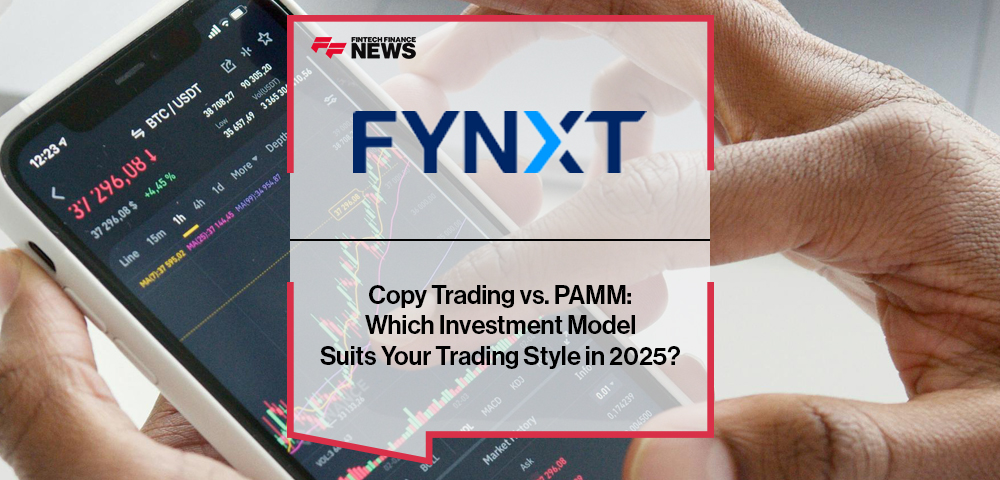
Copy Trading vs. PAMM: Which Investment Model Suits Your Trading Style in 2025?
In 2025, the retail investment landscape is more democratized and automated than ever before. With the rise of automated investment strategies and innovative retail investor trading solutions, traders no longer need to execute every trade themselves to participate in global markets. The two most dominant models enabling this passive participation are Copy Trading and PAMM (Percentage Allocation Management Module) accounts.
While both services allow an investor to leverage the expertise of seasoned professionals, their fundamental structures, the degree of control they offer, and their underlying risk profiles are vastly different. Choosing between a dedicated copy trading platform and a PAMM system is less about selecting the “better” option and more about identifying which model perfectly aligns with your financial goals, risk tolerance, and preferred level of engagement.
This comprehensive analysis pits copy trading vs PAMM to help you determine the optimal solution for your investment portfolio management in the dynamic markets of 2025.
Understanding Modern Investment Models
The core of modern automated investing lies in connecting those with capital (investors) with those with market expertise (traders or money managers). This connection has evolved from traditional managed accounts into sophisticated digital frameworks like PAMM and Copy Trading. Both fall under the umbrella of Social trading platform comparison, yet their implementation is fundamentally distinct.
Copy Trading Mechanisms Explained
Copy trading is a form of mirror trading technology that enables an investor’s account to automatically replicate the trades of a selected “Strategy Provider” or “Lead Trader” in real-time.
Key Mechanism:
- Decentralized Funds: The investor’s capital remains in their own segregated trading account, linked only by the execution technology. Funds are not pooled with the manager’s or other investors’ funds.
- Proportional Execution: Trades are copied proportionally based on the investor’s allocated capital. If the lead trader executes a 1-lot trade with a $10,000 equity, an investor copying with $1,000 will automatically execute a 0.1-lot trade.
- Investor Autonomy: The investor retains complete control. They can pause or stop the copying process, adjust the allocated capital, set individual stop-loss limits on the total copy relationship (often called a Copy Stop-Loss), and even manually intervene or close specific copied positions.
The essence of a copy trading platform is flexibility and transparency, making it one of the most popular retail investor trading solutions for beginners and those who want some level of oversight.
PAMM System Architecture
PAMM (Percentage Allocation Management Module) is a much older, more institutionalized investment structure, originating primarily in the Forex market. It is defined by the pooling of investor capital.
Key Mechanism:
- Centralized Pooled Funds: All capital from the manager (who must invest their own funds, a practice known as “skin in the game”) and all connected investors is deposited into a single, master trading account (the PAMM account).
- Manager-Only Execution: The professional money manager has the exclusive right to trade this pooled capital. The manager executes a single trade, and the profit or loss is automatically allocated pro-rata (by percentage) among the participants.
- Lock-in Periods: Funds are typically subject to specific “rollover” periods, which are set times when profits/losses are distributed and when investors can deposit or withdraw capital. Withdrawal requests outside these periods may incur penalties or be impossible.
The PAMM model is a purely hands-off, fully automated investment strategy that positions the investor as a silent partner in a managed fund.
Comparative Analysis: Features and Benefits
The choice between a copy trading platform and a PAMM system hinges on three critical factors: control, cost, and the way risk is managed. For effective investment portfolio management tools, understanding these differences is paramount.
Control and Transparency Factors
This is the single greatest point of divergence when considering copy trading vs PAMM.
| Feature | Copy Trading | PAMM Account |
| Control over Funds | Highest. Funds remain in the investor’s account. | Lowest. Funds are pooled in a master account. |
| Intervention | Full autonomy. Can stop copying, adjust settings, or close individual trades at any time. | Zero autonomy. The investor cannot interfere with any live trades or manager decisions. |
| Transparency | High. Investors see every trade in real-time in their own account history. | Low/Medium. Investors typically only see overall performance metrics (P&L, equity curve), not individual, real-time trade execution details. |
| Best Suited For | Investors who want a learning tool and appreciate flexibility/intervening capability. | Investors who prefer a truly “set-and-forget,” passive, delegated approach. |
Mirror trading technology inherent in copy trading ensures the investor retains legal and operational control over their funds, offering greater peace of mind. Conversely, the PAMM model requires a deep trust in the money manager, as control is completely relinquished upon investment.
Fee Structures and Cost Efficiency
The fees associated with these models are structured to align with the level of control and service provided.
- Copy Trading: Fees are typically straightforward. The primary charge is a Performance Fee (a percentage of the profits generated, e.g., 20-30%), paid to the Strategy Provider. Some platforms may also charge a small Subscription Fee or a slight markup on the spread or commission for the service itself. Crucially, the investor only pays the performance fee if their account generates profit from the copied trades.
- PAMM: PAMM structures usually involve two main fees:
- Management Fee: A small, recurring fee (e.g., 1-2% annually) charged on the total equity/balance, regardless of performance. This is essentially the manager’s salary for operating the fund.
- Performance Fee: A percentage of the profits (similar to copy trading, e.g., 20-35%).
While copy trading generally appears more cost-efficient as fees are entirely performance-based (excluding potential spreads), PAMM’s Management Fee means the investor pays for the manager’s time even during losing periods. When conducting a social trading platform comparison, it is vital to compare the total potential cost over a year, not just the performance percentage.
Risk Management Capabilities
In the realm of automated investment strategies, risk management is decentralized in copy trading and centralized in PAMM.
- Copy Trading: The risk is Investor-Directed. The investor acts as the ultimate investment portfolio management tool operator. They can:
- Diversify: Copy multiple traders with different strategies (e.g., one Forex trader, one stock trader).
- Set Hard Limits: Implement a “Copy Stop-Loss” to automatically cease copying a specific trader if a predetermined loss threshold (e.g., 30% drawdown) is reached.
- Scale: Easily increase or decrease the capital allocated to a specific trader based on recent performance.
- PAMM: The risk is Manager-Directed. The manager’s risk settings are uniform across the entire pool. An investor cannot dictate the manager’s leverage or risk per trade.
- Uniform Risk: If the manager employs high leverage, all investors in the pool are exposed to that same high level of risk.
- Fund Dependency: The investor’s main risk mitigation tool is careful due diligence on the manager’s past performance and risk score before investing. Once funds are in the pool, the investor is entirely reliant on the manager’s ongoing strategy.
Technology Infrastructure Requirements
Both models rely on advanced fintech, but the technical demands on the broker and the user experience for the investor differ significantly.
Platform Integration Capabilities
A successful copy trading platform must possess deep integration capabilities, often with industry-standard trading software.
- Copy Trading: Systems must facilitate near-instantaneous, seamless execution across multiple individual accounts (the copiers) from a single mirror trading technology source (the provider). This requires a robust, low-latency API connecting the broker’s server to the social trading platform layer. Integration with MetaTrader 4/5 or cTrader is standard, often provided by third-party white-label solutions.
- PAMM: The technical requirement is less about mirroring and more about precise percentage allocation. The system must calculate and distribute profit, loss, and fees across the pooled accounts during a scheduled rollover. This requires complex, secure back-end accounting software integrated directly into the broker’s core management system. The architecture is more rigid but potentially more secure against slippage due to the single-trade execution.
Mobile and Web Application Features
In 2025, mobile accessibility is a non-negotiable feature for all retail investor trading solutions.
- Copy Trading: The investor interface must be mobile-first, allowing users to:
- Browse and filter hundreds of Strategy Providers via a leaderboard.
- View real-time performance statistics, drawdown, and trading history on a mobile dashboard.
- Instantly activate, pause, or terminate a copy relationship on the go.
- Manage their overall risk via mobile settings (e.g., setting a Copy Stop-Loss).
- PAMM: The focus is on simplicity due to the hands-off nature. Mobile apps for PAMM typically offer:
- A dashboard to monitor the manager’s overall P&L and the investor’s percentage share.
- The ability to initiate deposit or withdrawal requests, subject to the rollover schedule.
- Historical performance reports and statements.
Market Preferences by Region
The global adoption of both models is heavily influenced by regulatory clarity, market maturity, and cultural preferences for financial control. The geographic targets—Asia, the Middle East, Australia, and Europe—each show distinct trends.
Asian Markets: Technology Adoption Trends
The high-growth markets in Asia, including Indonesia, Vietnam, and Thailand, alongside the financial hub of Singapore, have embraced copy trading platform solutions with fervor.
- Preference for Copy Trading: The region shows a strong affinity for the high transparency and direct control offered by copy trading. This is often driven by a younger demographic of tech-savvy investors who prefer digital social trading platform comparison tools over traditional, hands-off fund management.
- Regulatory Status: While specific regulations are evolving, copy trading is generally seen as a service where the investor retains control, which is easier for brokers to offer in emerging markets. Automated investment strategies like copy trading appeal to the region’s high rate of mobile technology adoption.
- Key Trend: Diversification via multiple copy relationships, effectively using copy trading as a flexible investment portfolio management tool to capture opportunities in multiple assets (e.g., Forex, Crypto, Local Stocks).
Western Markets: Regulatory Preferences
Markets in Europe (Cyprus, UK) and Australia are characterized by stringent financial regulation designed for maximal investor protection.
- PAMM Regulatory Hurdles: PAMM accounts, where client funds are pooled and traded by a third party, often cross the threshold into “Discretionary Portfolio Management.” This requires the broker or manager to hold specialized, expensive licenses (e.g., the MiFID II license in Europe). As a result, many brokers in the UK and EU prefer to avoid the PAMM model due to regulatory complexity.
- Copy Trading as the Standard: The UK, Cyprus, and Australia overwhelmingly favor copy trading. Because the funds remain in the investor’s personal account and the investor retains the ability to intervene, it is more commonly regulated as a signal service or a form of social trading, which has lower regulatory barriers than portfolio management.
- Focus on Transparency: Western regulations emphasize detailed disclosures, transparent performance metrics, and tools like negative balance protection. The transparency and control offered by a quality copy trading platform aligns perfectly with these regulatory standards.
The Final Verdict: Which Style is Right for You?
The debate between copy trading vs PAMM ultimately comes down to your personal investment philosophy in 2025.
| Choose Copy Trading Platform if… | Choose PAMM if… |
| You prioritize control and flexibility. You want the ability to pause, stop, or intervene in trades. | You seek a truly passive, hands-off model. You are comfortable delegating all trading decisions. |
| Transparency is non-negotiable. You need to see every transaction executed in real-time. | You value institutional management. You prefer the pooled, fund-like structure managed by an established professional. |
| You want to diversify across many strategies. You wish to copy 3-5 different traders with varying risk profiles. | You have a high degree of trust in one manager. You are willing to commit capital for a fixed period based on a single strategy. |
| You want minimal regulatory risk. You prefer a model that is clearly defined as a signal service in regulated markets. | You are comfortable with less intervention. You are happy to check on your investment performance only during withdrawal periods. |
In the modern landscape of retail investor trading solutions, the trend points toward copy trading. Its blend of high-tech execution, investor control, and transparency makes it the ideal automated investment strategy for the contemporary investor across high-growth Asian markets, regulatory-conscious European hubs, and the GCC.
The rise of advanced mirror trading technology has solidified the copy trading platform as the dominant choice for those seeking expert guidance without sacrificing autonomy in their investment portfolio management tools. For the savvy investor, 2025 is the year to choose a solution that puts the power of automated trading firmly back in their own hands.
Companies In This Post

- MPE 2026: Torus on Solving the $13 Billion Card Scheme Fee Problem Read more
- Fire’s Strategy for the Future of Embedded Payments Read more
- Gold IRA “Account Executive” Salesman Tactics Leaked Read more
- NatWest Accelerator Announces New Commitments to Build an Inclusive Entrepreneurial Economy Read more
- Revolut Locks in Paris Headquarters for Western Europe Read more


Gold IRA “Account Executive” Salesman Tactics Leaked
Share this post: Share on LinkedIn Share on X (Twitter) Share on Facebook Share on […]

The Role of Long-Form Knowledge in a Short-Form Financial World
Share this post: Share on LinkedIn Share on X (Twitter) Share on Facebook Share on […]
WeFi Group CEO Maksym Sakharov: Crypto’s Future Depends on Payments
Share this post: Share on LinkedIn Share on X (Twitter) Share on Facebook Share on […]

Beyond the Goldmine: Why Banks Must Move from Data to Dialogue
Share this post: Share on LinkedIn Share on X (Twitter) Share on Facebook Share on […]
Financial Literacy 2.0: Why Market Skills Are Becoming Essential
Share this post: Share on LinkedIn Share on X (Twitter) Share on Facebook Share on […]

EXCLUSIVE: “From Philosophy to Production” – Marco Li Mandri, ING in ‘The Paytech Magazine’
Share this post: Share on LinkedIn Share on X (Twitter) Share on Facebook Share on […]

EXCLUSIVE: “Harvesting Trust” – Marnix van Stiphout, ING in ‘The Paytech Magazine’
Share this post: Share on LinkedIn Share on X (Twitter) Share on Facebook Share on […]
MPE 2026: Torus on Solving the $13 Billion Card Scheme Fee Problem
Share this post: Share on LinkedIn Share on X (Twitter) Share on Facebook Share on […]
Fire’s Strategy for the Future of Embedded Payments
Share this post: Share on LinkedIn Share on X (Twitter) Share on Facebook Share on […]

Gold IRA “Account Executive” Salesman Tactics Leaked
Share this post: Share on LinkedIn Share on X (Twitter) Share on Facebook Share on […]

NatWest Accelerator Announces New Commitments to Build an Inclusive Entrepreneurial Economy
The NatWest Accelerator Female Founders Community and new strategic partners will help unlock growth for diverse founders across the UK

Revolut Locks in Paris Headquarters for Western Europe
Revolut today announced it has signed a ten-year lease for its Western Europe headquarters at the crossroads of the Bourse district, the historic heart of French finance
Mastercard and Krungthai Card Complete First Live Agentic Transaction in Thailand
Mastercard announced the completion of a pilot that delivered its first authenticated agentic transaction in Thailand with KTC

Finastra and Marketnode Transform Credit Agreement Onboarding Through AI
Finastra announced a strategic partnership with Marketnode to digitize and automate the credit agreement onboarding process for corporate lenders