

Breaking News

Spreadsheets in the Bedsheets? Brits Prioritise Financial Compatibility When Searching for Their Valentine’s
WHY THIS MATTERS: This research from Starling Bank, which identifies that two-thirds (66%) of UK couples prioritize financial alignment in their relationships, signals a critical expansion of the financial wellness mandate. For the fintech industry, this is a clear signal that the competitive battlefield is shifting from basic budgeting tools to the realm of behavioral science and emotional intelligence. The most powerful insight is how deeply unaddressed financial differences hinder major life milestones: one in seven couples are delaying buying a home. By creating a “Money Languages” framework, Starling is pioneering a new standard for customer engagement—moving beyond transactional services to offer advisory, relationship-strengthening tools. This is a value-first approach that recognizes money talk is often emotional. The ability of a bank to provide a shared vocabulary to resolve these conflicts becomes a vital differentiator for retaining and attracting high-value, long-term customers.
Financial compatibility is one of the UK’s top priorities when it comes to looking for a partner, with two-thirds (66%) of couples looking for someone in line with them in both the bedsheets and the spreadsheets.
Money talk has benefits for the average couple, according to Starling Bank’s research, with 44% of couples saying that doing so had a positive long-term impact on their bank balances. In fact, most couples (84%) are as transparent about their finances as they are about their sexual history.
But money talk isn’t always easy, according to Starling’s findings, with Valentines in long-term relationships often putting their lives on hold due to differing opinions on household spending. One in seven couples have put off buying a home due to a lack of financial alignment (14%), while one in ten have delayed having children or getting married.
And while financial alignment is a key priority for people in the UK, singles heading for their first date are warned not to give too much away as talking about your salary on a first date has triple the ick factor (27%) as talking about politics (8%) or marriage (8%), and only behind talking about an ex (41%).
Let’s Talk Money
To help both singletons and established couples communicate better and improve their relationship with money, Starling has created an interactive tool that helps people identify and understand their ‘money language’, and offers advice on how to better communicate with other money languages. The tool aims to strengthen financial communication and help couples build stronger long-term foundations.
| Money language | Traits | % of the UK with that money language | The most stressful money language to be with (1st-5th) | Most compatible with |
| Scarcity Mindset | Regular saver; spending makes them uncomfortable | 32% | 5th = (joint least) | Acts of Finance
Scarcity Mindset |
| Money Know How | Open book; makes money work for them | 23% | 5th = (Joint least) | Acts of Finance
Money Know How |
| Financial Avoidance | Hates talking money; buries head in the sand | 10% | 1st = (joint most) | Extravagant affirmation
Scarcity Mindset |
| Protecting Privacy | Hides their habits; values independence and control | 9% | 3rd | Money Know How
Protecting Privacy |
| Acts of Finance | Provides; shows love by taking financial responsibility | 9% | 4th | Extravagant Affirmation
Money Know How |
| Lifestyle Enrichment | Lives in the moment; spends on experiences now | 7% | 1st = (Joint most) | Scarcity Mindset
Money Know How |
| Extravagant Affirmation | Gives generously; connects money to love | 2% | 2nd | Extravagant Affirmation
Money Know How |
Becca Stroud, personal finance expert at Starling Bank, said: “We have Love Languages, and now we have Money Languages, which we’ve created to give couples the vocabulary they need to talk about their finances.”
FF NEWS TAKE: This strategic move significantly moves the needle by proving that “soft” psychological tools are now essential components of modern banking architecture. Challenger banks are leveraging behavioral finance to solve real-world relationship problems, thereby increasing stickiness with co-banking couples. We should watch for traditional incumbents to quickly integrate similar frameworks into their apps. The future of consumer finance will belong to platforms that help customers navigate the complex emotional landscape of shared money management
People In This Post

- EXCLUSIVE: “Staying Real” – Ramon Caracas and Debra LePage, Payment Spayce in ‘The Paytech Magazine’ Read more
- AutoRek & Microsoft: Building Resilient & Compliant Finance Infrastructure Read more
- From Zero to 12 Million Customers. A Decade-Long Partnership of GoTyme Bank and BPC Drives South African Digital Adoption Read more
- Africa’s Crypto Market Matures: Fraud Rates Drop by 28% – New Sumsub Report Read more
- SymphonyAI AI Platforms Deployed for Compliance Environment at Munich Re Read more

Allica Bank Named Most Recommended Business Bank by Over 4,000 Businesses
Allica Bank, the bank built for established businesses, has been named the UK’s most recommended business bank in the 2026 UK Banking & Finance Awards
Starling Launches UK’s First Agentic AI Financial Assistant
Starling Bank has launched the UK’s first Agentic AI financial assistant, which can help manage day-to-day finances and give general banking guidance

Clear Mountain Bank Launches Alkami’s Digital Banking Platform and Expands Partnership with Alkami’s Data & Marketing Solution
Alkami Technology, Inc. (Nasdaq: ALKT) ("Alkami"), a digital sales and service platform provider for financial institutions in the U.S., today announced that Clear Mountain Bank has launched the Alkami Digital Banking Platform (Platform) for its retail and business customers and will further expand its partnership by implementing Alkami's Data & Marketing Solution.

ComplyCube Launches Expanded Fraud Intelligence Suite to Enhance Real‐Time Fraud Detection
ComplyCube has launched an expanded Fraud Intelligence suite designed to help organisations detect and stop fraud earlier
Upgrade Announces Launch of Boost Money™ With Access to Cash Advance and up to 10% APY Savings Account – Our Response to the K-Shape Economy and the Affordability Crisis
Upgrade are proud to announce the launch of Boost Money™, a mobile banking product designed to help consumers get access to cash
Sunstate Bank Partners With InvestiFi to Enable Stock, ETF and Crypto Investing Directly From Checking Accounts
InvestiFi, an award-winning digital investing solutions provider for financial institutions, has partnered with Sunstate Bank to embed its secure, intuitive, and education-driven investing experience directly within the bank's online banking platform. This collaboration will enable members to invest in a variety of assets seamlessly from their checking accounts.
SME Lending Surges to £17.5bn as Small Businesses Fuel UK AI Growth
UK Finance’s latest Business Finance Review shows that UK high street banks increased gross business lending to £17.5bn
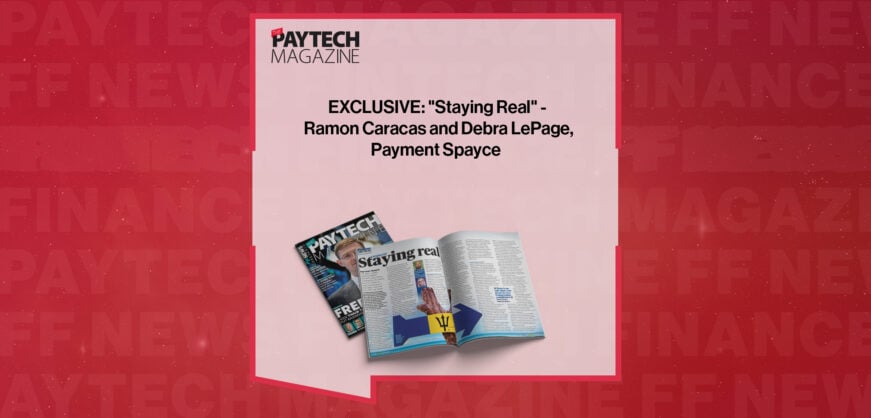
EXCLUSIVE: “Staying Real” – Ramon Caracas and Debra LePage, Payment Spayce in ‘The Paytech Magazine’
Share this post: Share on LinkedIn Share on X (Twitter) Share on Facebook Share on […]
AutoRek & Microsoft: Building Resilient & Compliant Finance Infrastructure
Share this post: Share on LinkedIn Share on X (Twitter) Share on Facebook Share on […]
From Zero to 12 Million Customers. A Decade-Long Partnership of GoTyme Bank and BPC Drives South African Digital Adoption
GoTyme Bank and BPC are marking a decade-long partnership that has taken GoTyme Bank from the start of the project to 12 million customers in South Africa

Africa’s Crypto Market Matures: Fraud Rates Drop by 28% – New Sumsub Report
Crypto platforms across Africa are rapidly improving identity verification performance as the industry moves toward stricter regulation

SymphonyAI AI Platforms Deployed for Compliance Environment at Munich Re
SymphonyAI supports Munich Re, one of the leading reinsurers, and subsidiaries through its financial crime platform

Zocks Launches AI Assistant for Life Insurance to Help Producers Get Policies Issued Faster
Zocks is bringing its AI-automated operational and document intelligence capabilities to the life insurance market
Allica Bank Named Most Recommended Business Bank by Over 4,000 Businesses
Allica Bank, the bank built for established businesses, has been named the UK’s most recommended business bank in the 2026 UK Banking & Finance Awards