


Breaking News
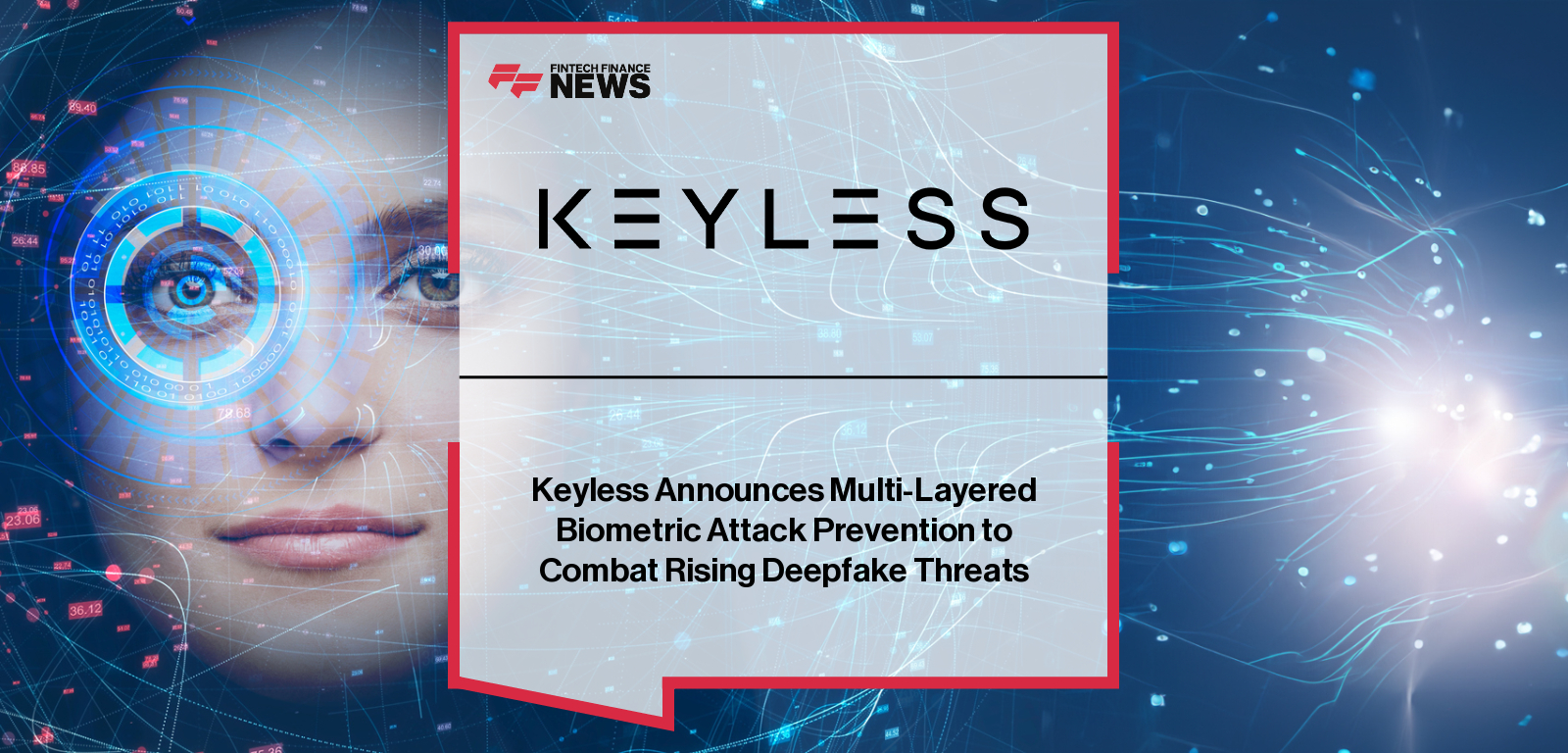
Keyless Announces Multi-Layered Biometric Attack Prevention to Combat Rising Deepfake Threats
Keyless, the leader in privacy-preserving biometrics, has today announced the launch of its Biometric Attack Prevention technology: a multi-layered defense system that virtually eliminates the risk of deepfake attacks on authentication systems.
The Age of Deepfakes
As deepfakes rise, biometric spoofing is now a major threat. According to Accenture, there was a 223% increase in deepfake-enabling tools on dark web forums between 2023 and 2024. And in January 2025, the World Economic Forum reported that 42% of organizations have now experienced deepfake-driven social engineering attacks.
“Traditional biometric systems were never designed to combat the deepfake threats we face today,” said Paolo Gasti, CTO and Co-Founder of Keyless. “While detection technologies have evolved, deepfakes will continue to grow more sophisticated. The future of biometric security lies in prevention. By eliminating the tools fraudsters rely on, we can make these attacks unworkable.”
Multi-Factor by Design: Making Deepfakes Unworkable
Keyless authentication is multi-factor by design, meaning that both the user’s face and the device used for enrollment are needed for a successful authentication. For login, payment, and step-up authentication use cases, without the original device used to sign up to the app – or one securely bound later – even the most realistic deepfake would fail.
Multi-Layered Deepfake Defense
The exception is the Account Recovery step, as organizations allow users to recover their accounts without their phone. This creates an opportunity for remote attackers to spoof the system. In these cases, Keyless’ technology blocks deepfakes attempts using a multi-layered defense system:
-
Presentation Attacks: Keyless prevents these attacks, where a screen with a deepfake is shown to a device’s camera, by looking for subtle signs indicative of a screen, like light reflection and screen texture.
-
Injection Attacks: To inject a deepfake into an authentication system, an attacker first needs to compromise the device. Keyless looks for and proactively blocks tools commonly used to compromise devices, such as the use of emulators, rooted devices, and hooking techniques.
-
Continuous Monitoring: As an additional layer, Keyless also monitors device movement and behavior. These signals help detect unnatural usage patterns not consistent with real users.
This is a marked shift in how biometric authentication can be used to stop AI-driven fraud. Rather than simply detecting spoof attempts shown to a camera, Keyless actively prevents them by shutting down the channels used to create them.
People In This Post

Companies In This Post

- MPE 2026: Torus on Solving the $13 Billion Card Scheme Fee Problem Read more
- Fire’s Strategy for the Future of Embedded Payments Read more
- Gold IRA “Account Executive” Salesman Tactics Leaked Read more
- NatWest Accelerator Announces New Commitments to Build an Inclusive Entrepreneurial Economy Read more
- Revolut Locks in Paris Headquarters for Western Europe Read more


NatWest Accelerator Announces New Commitments to Build an Inclusive Entrepreneurial Economy
The NatWest Accelerator Female Founders Community and new strategic partners will help unlock growth for diverse founders across the UK

Revolut Locks in Paris Headquarters for Western Europe
Revolut today announced it has signed a ten-year lease for its Western Europe headquarters at the crossroads of the Bourse district, the historic heart of French finance
Finastra and Marketnode Transform Credit Agreement Onboarding Through AI
Finastra announced a strategic partnership with Marketnode to digitize and automate the credit agreement onboarding process for corporate lenders

Finova Broker Payments Partners with Mortgage Broker Tools to Deliver Enhanced Research Capabilities for Brokers
Finova Broker Payments, Finova’s mortgage club designed to support brokers with competitive procuration fees and value-added services, has today announced a new partnership with Mortgage Broker Tools (MBT), the leading affordability and criteria research platform for residential and buy-to-let mortgages.
Feynman Point Asset Management Selects Arcesium to Deliver Reconciliation Across Digital and Traditional Assets
Arcesium, a global financial technology company delivering front-to-back office solutions to institutional investment firms, today announces its partnership with Feynman Point Asset Management (FPAM) to enable unified multi-asset infrastructure across digital and traditional assets. With Arcesium's reconciliation solutions, FPAM is positioned to support enhanced settlement cycles allowing it to efficiently scale operations as the business grows.
ClarityPay Adds Fintech Veteran Lynne Laube to Board of Directors as It Scales Growth
ClarityPay, a provider of tailored point-of-sale credit solutions, today announced that Lynne Laube, founder and former CEO of Cardlytics and current Venture Partner at TTV Capital, has joined its Board of Directors.

Cathay FHC Advances AI Adoption Across the Group With OpenAI
Cathay FHC announced a long-term strategic collaboration with OpenAI to strengthen the Group's core capabilities in AI research, deployment, and governance

MPE 2026: Torus on Solving the $13 Billion Card Scheme Fee Problem
Share this post: Share on LinkedIn Share on X (Twitter) Share on Facebook Share on […]

Fire’s Strategy for the Future of Embedded Payments
Share this post: Share on LinkedIn Share on X (Twitter) Share on Facebook Share on […]

Gold IRA “Account Executive” Salesman Tactics Leaked
Share this post: Share on LinkedIn Share on X (Twitter) Share on Facebook Share on […]

NatWest Accelerator Announces New Commitments to Build an Inclusive Entrepreneurial Economy
The NatWest Accelerator Female Founders Community and new strategic partners will help unlock growth for diverse founders across the UK
Revolut Locks in Paris Headquarters for Western Europe
Revolut today announced it has signed a ten-year lease for its Western Europe headquarters at the crossroads of the Bourse district, the historic heart of French finance

Mastercard and Krungthai Card Complete First Live Agentic Transaction in Thailand
Mastercard announced the completion of a pilot that delivered its first authenticated agentic transaction in Thailand with KTC
Finastra and Marketnode Transform Credit Agreement Onboarding Through AI
Finastra announced a strategic partnership with Marketnode to digitize and automate the credit agreement onboarding process for corporate lenders