


Breaking News
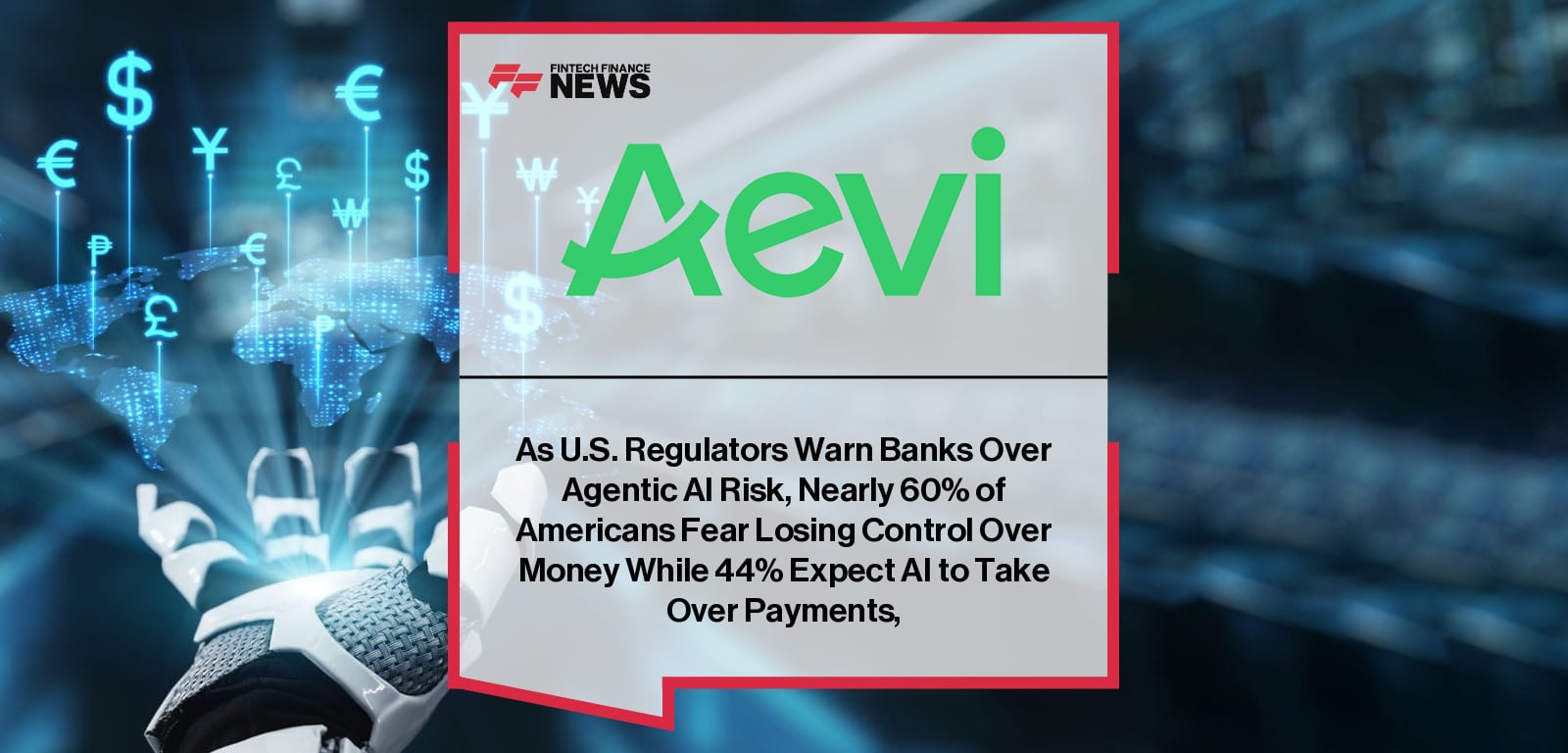
As U.S. Regulators Warn Banks Over Agentic AI Risk, Nearly 60% of Americans Fear Losing Control Over Money While 44% Expect AI to Take Over Payments, New Data Shows
WHY THIS MATTERS: The data confirms a critical hurdle in the race toward fully autonomous financial services. While the industry is rushing to embed sophisticated generative AI and agentic commerce capabilities into payment flows, this research reveals a deep-seated disconnect with the end-user. The core issue is not technology adoption, but consumer trust. A vast majority of Americans fear losing control, opacity in decision-making, and misuse of financial data. This resistance is a vital early warning for developers and regulators alike. The trend toward instant payments and ‘invisible’ transactions (like agent-initiated payments and VRPs) is fundamentally undermined if the customer cannot see the point of consent or override a decision. For a sector built on accountability and controlled execution, this mandates an urgent pivot from prioritizing mere efficiency to engineering transparency and human-in-the-loop governance by design.
As U.S. regulators warn that genAI and agentic AI are becoming a growing risk issue for banks, and prepare further input on how artificial intelligence should be governed in financial services, new research from payment platform Aevi reveals:
- 59% of Americans fear losing control over how or when payments are made if AI is managing them
- 54% worry they would be unable to stop or override AI decisions
- 53% are concerned about AI being hacked, while 50% fear misuse of their financial data
- 49% worry payments could happen without their clear consent, highlighting concerns around transparency and visibility
- Only 5% have no concerns, pointing to near-universal scepticism toward AI-led payments
Aevi’s survey of over 3,000 adults exposes a clear trust gap as AI moves closer to real-world deployment in commerce, and while consumers recognise potential benefits such as faster checkout and fraud protection, most remain uncomfortable with systems that reduce visibility, control, or explicit consent in payments.
51% of Americans wouldn’t feel comfortable with anyone using AI to manage their money on their behalf, reinforcing resistance to delegation regardless of provider.
Crucially, 44% believe AI agents will manage everyday payments within the next decade, a growing disconnect between expectations and consumer readiness.
On what the findings mean for the future of payments, Aevi CEO Mike Camerling highlights a key distinction emerging from the research:
“Agentic commerce isn’t being rejected because it uses AI. It’s being rejected because it removes visibility, perceived control, and a clear moment of consent from payments. When people don’t understand what a system is doing or why a decision was made, trust erodes very quickly.
This distinction appears repeatedly throughout the findings, however, trust breaks down when AI begins to operate invisibly, continuously, or without clear consent.
In-person payments already solve many of the trust challenges around AI. There is a human interaction, a visible device, and a deliberate action to complete the transaction. AI’s role is not to replace that moment, but to enhance it by helping select the right offers, loyalty benefits, or payment methods at the point of sale.”
There is a critical tension for the payments industry: while many consumers expect AI-managed payments to become commonplace, they remain hesitant to embrace systems that reduce control, visibility, or clear consent.
FF NEWS TAKE: This research absolutely moves the needle by providing a human lens on the regulatory landscape. The industry’s push into agentic commerce cannot succeed without solving the control and visibility crisis. The key takeaway is that AI must augment the customer experience, not abstract it entirely. We should watch for regulators in major markets to use this sentiment to accelerate mandatory transparency requirements, pushing providers to build clear audit trails and easy-to-access decision overrides for AI-led payments.
People In This Post

Companies In This Post

- RTS 2026: Eliminating Friction and Enhancing Transparency at the Point of Sale Read more
- Adyen Insurance Report 2026: How Retail-Conditioned Expectations are Shaping Digital Transformation in HK Insurance Read more
- UBX Tanzania Deepens Partnership with ACI Worldwide to Power the Next Phase of the Nation’s Digital Economy Read more
- PPRO Partners With Nubank to Enable NuPay, Unlocking Access to Brazil’s Digital Banking Ecosystem Read more
- Temenos Forward Awards Celebrate Innovation and Impact in Banking Read more
Adyen Insurance Report 2026: How Retail-Conditioned Expectations are Shaping Digital Transformation in HK Insurance
Adyen reveals that Hong Kong consumers are increasingly expecting their insurance providers to deliver the same fast, seamless, and highly personalized digital experiences

UBX Tanzania Deepens Partnership with ACI Worldwide to Power the Next Phase of the Nation’s Digital Economy
ACI Worldwide announced the extension of its long-standing partnership with UBX Tanzania Limited and is focused enhancing scalability and enabling innovation to support Tanzania’s rapidly evolving digital economy.

PPRO Partners With Nubank to Enable NuPay, Unlocking Access to Brazil’s Digital Banking Ecosystem
PPRO announced its partnership with Nubank to provide merchants and PSPs with direct access to its native payment method, NuPay

Temenos Forward Awards Celebrate Innovation and Impact in Banking
Temenos today announced the winners of the Temenos Forward Awards 2026 recognizing financial institutions that are helping to shape the future of the banking

ERGO NEXT Insurance is Making E-Commerce Insurance More Accessible for Sellers on TikTok Shop
ERGO NEXT Insurance is now enabling eligible TikTok Shop sellers to access tailored and affordable small business and e-commerce insurance

Legacy Launches to Bring Fintech-Level Control and Impact to Charitable Giving
UK-based fintech Legacy has launched a non-profit app designed to modernise how people give to charity
1 in 3 UK Customers Comfortable With AI in Insurance but Want Human Checks and Robust Regulation
Guidewire released the latest edition of its annual study* of insurance customers in Europe, revealing their attitudes towards insurers' use of AI

RTS 2026: Eliminating Friction and Enhancing Transparency at the Point of Sale
Share this post: Share on LinkedIn Share on X (Twitter) Share on Facebook Share on […]
Adyen Insurance Report 2026: How Retail-Conditioned Expectations are Shaping Digital Transformation in HK Insurance
Adyen reveals that Hong Kong consumers are increasingly expecting their insurance providers to deliver the same fast, seamless, and highly personalized digital experiences
UBX Tanzania Deepens Partnership with ACI Worldwide to Power the Next Phase of the Nation’s Digital Economy
ACI Worldwide announced the extension of its long-standing partnership with UBX Tanzania Limited and is focused enhancing scalability and enabling innovation to support Tanzania’s rapidly evolving digital economy.
PPRO Partners With Nubank to Enable NuPay, Unlocking Access to Brazil’s Digital Banking Ecosystem
PPRO announced its partnership with Nubank to provide merchants and PSPs with direct access to its native payment method, NuPay
Temenos Forward Awards Celebrate Innovation and Impact in Banking
Temenos today announced the winners of the Temenos Forward Awards 2026 recognizing financial institutions that are helping to shape the future of the banking
ERGO NEXT Insurance is Making E-Commerce Insurance More Accessible for Sellers on TikTok Shop
ERGO NEXT Insurance is now enabling eligible TikTok Shop sellers to access tailored and affordable small business and e-commerce insurance
Legacy Launches to Bring Fintech-Level Control and Impact to Charitable Giving
UK-based fintech Legacy has launched a non-profit app designed to modernise how people give to charity