FinTech: Commission takes action for a more competitive and innovative financial market
By FF Newsroom · 12 March 2018
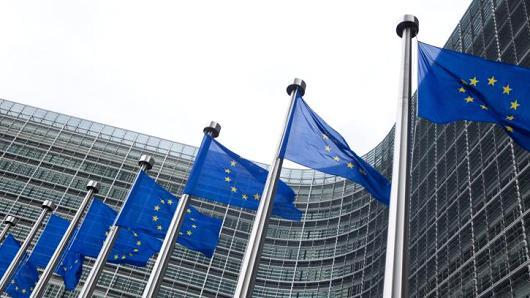
The European Commission is today unveiling an Action Plan on how to harness the opportunities presented by technology-enabled innovation in financial services (FinTech).
Europe should become a global hub for FinTech, with EU businesses and investors able to make most of the advantages offered by the Single Market in this fast-moving sector. As a first major deliverable, the Commission is also putting forward new rules that will help crowdfunding platforms to grow across the EU's single market.
Today's Action Plan envisages to enable the financial sector to make use of the rapid advances in new technologies, such as blockchain, artificial intelligence and cloud services. At the same time, it seeks to make markets safer and easier to access for new players. This will benefit consumers, investors, banks and new market players alike. In addition, the Commission is proposing a pan-European label for platforms, so that a platform licensed in one country can operate across the EU.
The Action Plan is part of the Commission's efforts to build a Capital Markets Union (CMU) and a true single market for consumer financial services. It is also part of its drive to create a Digital Single Market. The Commission aims to make EU rules more future-oriented and aligned with the rapid advance of technological development.
Valdis Dombrovskis, Vice-President responsible for Financial Stability, Financial Services and Capital Markets Union, said: "To compete globally, Europe's innovative companies need access to capital, space to experiment and scale to grow. This is the premise for our FinTech Action Plan. An EU crowdfunding licence would help crowdfunding platforms scale up in Europe. It will help them match investors and companies from all over the EU, giving more opportunities for firms and entrepreneurs to pitch their ideas to a wider base of funders."
Jyrki Katainen, Vice-President for Jobs, Growth, Investment and Competitiveness said: "New technologies are transforming the financial industry by revolutionising the way people access financial services. Alternative sources of funding, such as crowdfunding or peer-to-peer lending, directly link savings with investments. They make the market more accessible for innovative entrepreneurs, start-ups and small companies. This objective is at the heart of the Capital Markets Union."
Mariya Gabriel, Commissioner for the Digital Economy and Society said: "Digital technologies have an impact on our whole economy – citizens and businesses alike. Technologies like blockchain can be game changers for financial services and beyond. We need to build an enabling framework to let innovation flourish, while managing risks and protecting consumers."
The FinTech Action Plan:
The financial sector is the largest user of digital technologies and a major driver in the digital transformation of the economy. Today's Action Plan sets out 23 steps to enable innovative business models to scale up, support the uptake of new technologies, increase cybersecurity and the integrity of the financial system, including:
- The Commission will host an EU FinTech Laboratory where European and national authorities will engage with tech providers in a neutral, non-commercial space;
- The Commission has already created an EU Blockchain Observatory and Forum. It will report on the challenges and opportunities of crypto assets later in 2018 and is working on a comprehensive strategy on distributed ledger technology and blockchain addressing all sectors of the economy. A distributed ledger is an information database that is shared across a network. The best-known type of distributed ledger is blockchain.
- The Commission will consult on how best to promote the digitisation of information published by listed companies in Europe, including by using innovative technologies to interconnect national databases. This will give investors far easier access to key information to inform their investment decisions.
- The Commission will run workshops to improve information-sharing when it comes to cybersecurity;
- The Commission will present a blueprint with best practices on regulatory sandboxes, based on guidance from European Supervisory Authorities. A regulatory sandbox is a framework set up by regulators that allows FinTech startups and other innovators to conduct live experiments in a controlled environment, under a regulator's supervision. Regulatory sandboxes are gaining popularity, mostly in developed financial markets.